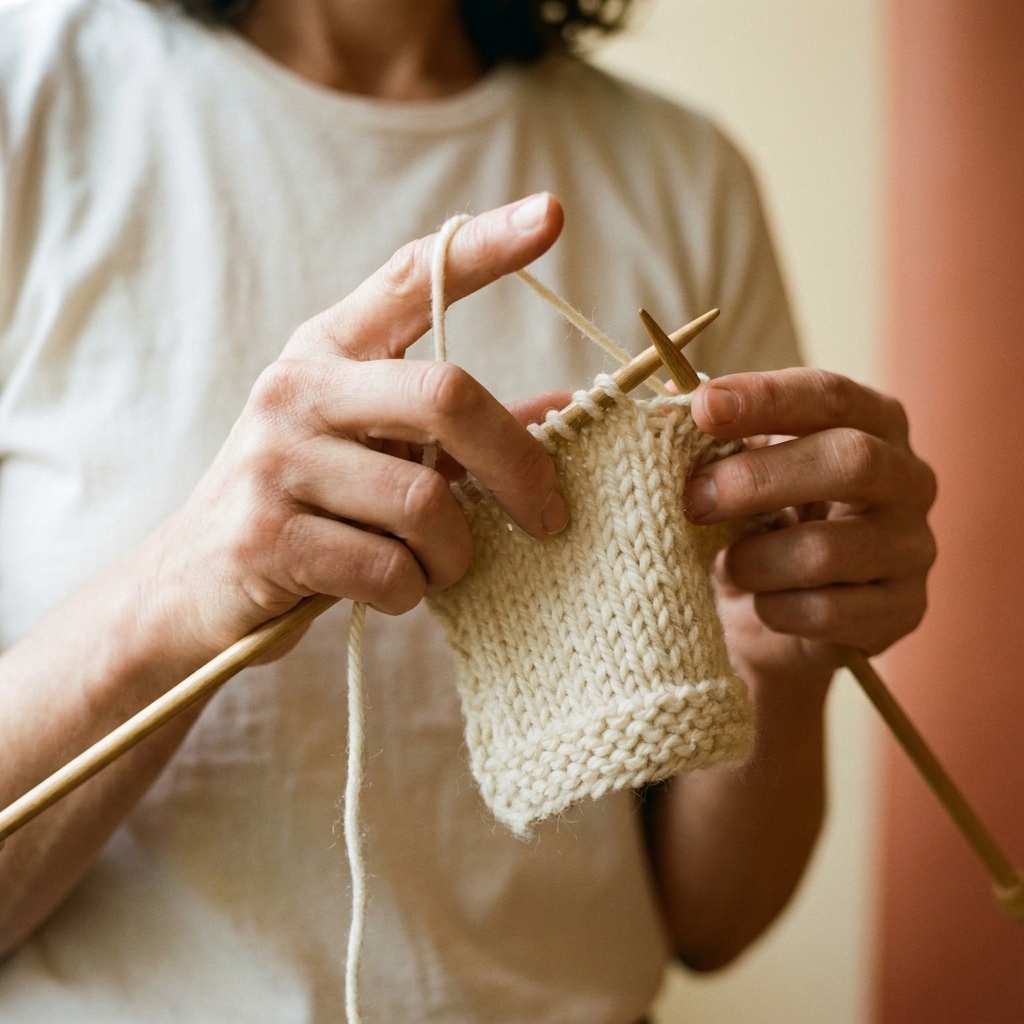
If knitting decreases have ever made you squint at your fabric and whisper, “Why do you look… crooked?” you are in very good company. The good news is that most of that “crookedness” is actually the point. Decreases lean on purpose, and once you know which way, you can use that lean to make shaping look crisp, intentional, and beautifully symmetrical.
Two of the most common decreases are k2tog (knit two together) and ssk (slip, slip, knit). They show up everywhere from hat crowns to sweater waist shaping, and understanding how they lean will instantly level up your knitting.
The quick answer
K2tog leans right. It pulls the top of the decrease toward the right as the stitches merge.
SSK leans left. It pulls the top of the decrease toward the left.
When patterns say things like “decrease 1 st each side” or “work paired decreases,” what they usually mean is: place the decreases so the lines mirror each other and angle inward.
One important orientation note: on a right-side row worked right to left (the most common setup for right-handed knitters), the beginning of the row is the right edge of the fabric, and the end of the row is the left edge. That is why mirrored shaping is typically:
SSK near the beginning of a right-side row (right edge, left-leaning)
K2tog near the end of a right-side row (left edge, right-leaning)
Together, they form a clean inward \ / look that points toward the center.
What “lean” means
Picture two stitches becoming one. The stitch that ends up “on top” creates a tiny diagonal slant. That slant is the lean.
Right-leaning decreases angle like
/Left-leaning decreases angle like
\
This is most visible in stockinette stitch. In garter stitch or textured patterns, the lean can be more subtle, but it still affects how clean the shaping looks.
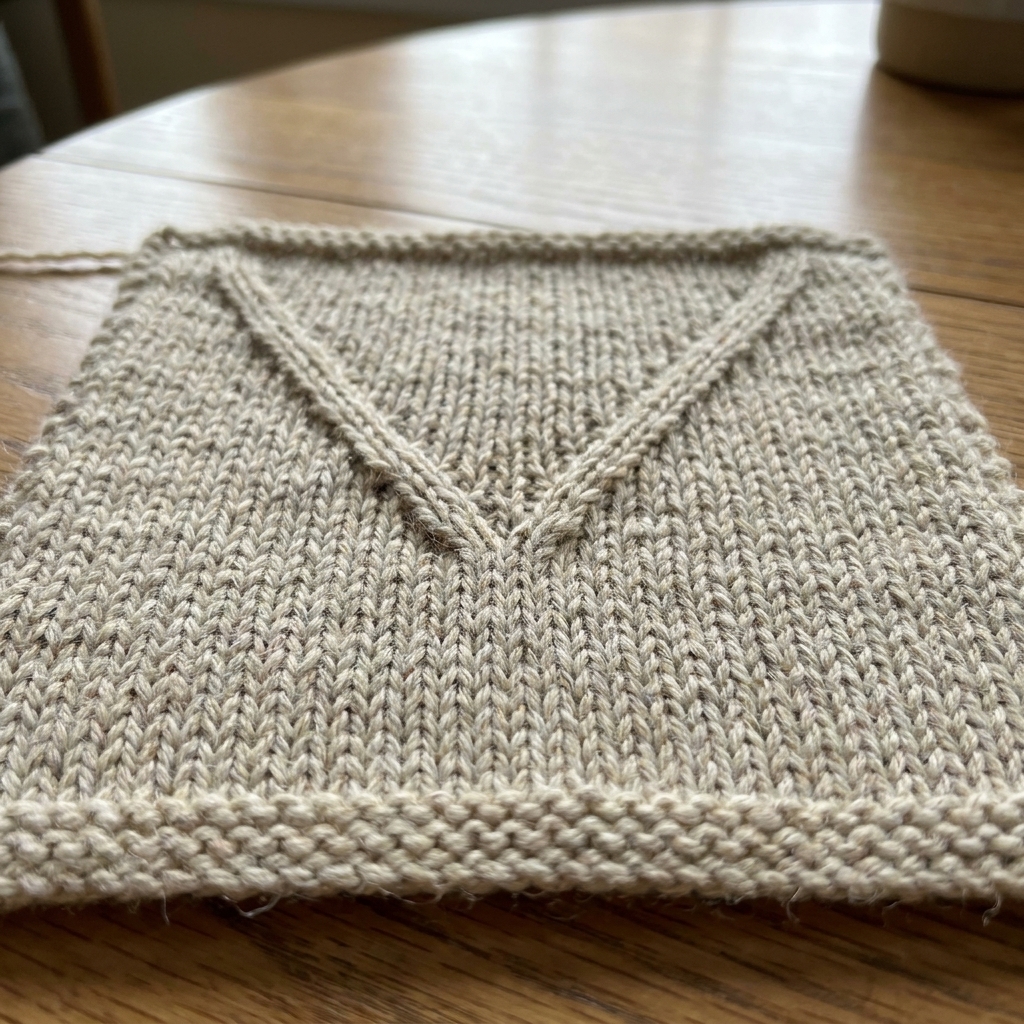
K2tog
How to work k2tog
Step-by-step:
Insert your right needle knitwise through the next two stitches on the left needle, as if you are going to knit them together.
Wrap the yarn as usual for a knit stitch.
Pull the new loop through both stitches.
Slide both old stitches off the left needle.
That’s it. K2tog is simple, tidy, and tends to look a bit tighter than SSK in many yarns.
Why k2tog leans right
Because of how the stitches sit on the needle and which loop ends up in front as you knit them together, the resulting stitch stack angles to the right.
Where k2tog shines
Left edge of mirrored shaping (necklines, armholes, waist shaping)
Hat crowns where decrease lines spiral or radiate neatly
Raglan lines when paired with a left-leaning decrease on the other side
SSK
How to work ssk
SSK stands for “slip, slip, knit.” The slips re-orient the stitches so that when you knit them together, the decrease leans left.
Step-by-step:
Slip 1 knitwise (insert right needle as if to knit, move stitch over).
Slip 1 knitwise again.
Knit the two slipped stitches together through their front loops.
Two common ways to do that: (1) insert the left needle into the front loops from left to right and knit them together, or (2) insert the right needle into the front loops and knit them together directly. Either way, you are aiming for “knit together through the front loops.”
If that last part feels like finger gymnastics, you’re not alone. This is one of those moves that becomes smooth only after you’ve done it a bunch of times. Tea helps. So does swatching.
Why ssk leans left
Those knitwise slips change the stitch orientation so the decrease angles to the left.
Where ssk shines
Right edge of mirrored shaping (to mirror a k2tog on the left edge)
Decorative decrease lines where you want a clean, left-tilting column
Any project where paired decreases matter, like top-down raglans or fitted pullovers
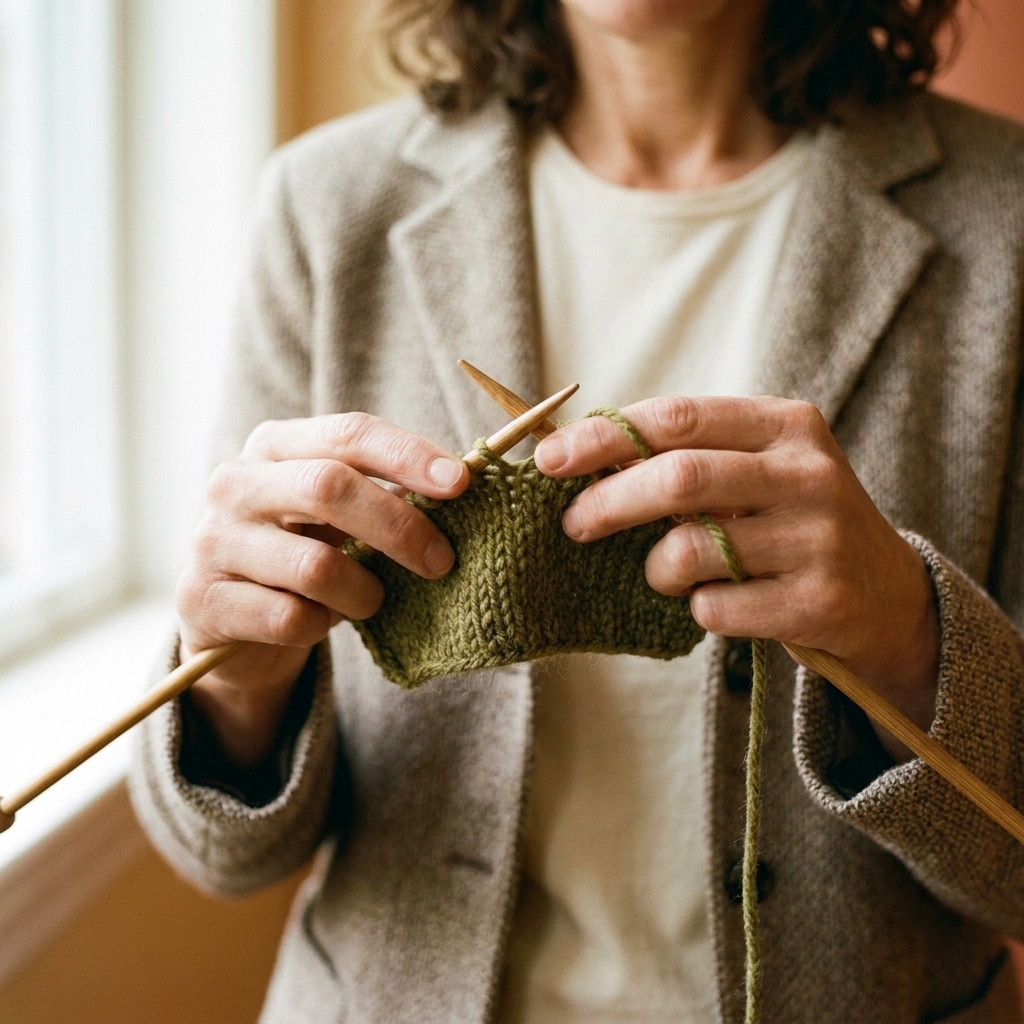
SSK vs. k2tog
Both decreases reduce one stitch. The difference is the direction of the slant and the overall “tidiness” depending on your yarn, tension, and stitch mount.
What you may notice
K2tog often looks tighter and more compact.
SSK can look slightly looser or more open if your slipped stitches relax.
SSK can look a bit twisty (not always bad), especially in slick yarns or at tight gauge.
If your SSKs look a little messier than your K2togs, you’re not doing anything wrong. It’s a super common difference, and there are a couple easy fixes below.
When to use which
Here is the rule of thumb that will keep your shaping looking balanced.
For mirrored shaping (worked flat)
Most patterns assume you work right-side rows from right to left. In that very common case:
Near the beginning of a right-side row (right edge): use SSK for a left-leaning decrease.
Near the end of a right-side row (left edge): use k2tog for a right-leaning decrease.
This creates decrease lines that angle inward toward the center of the work, which is what you want for things like:
Sweater waist decreases and increases
V-necks and neck shaping
Armhole shaping
Raglan decreases
If you knit left-handed or your pattern has you work right-side rows in the opposite direction, flip the placement. You still want the decreases to lean inward toward the center, no matter which direction you are traveling across the row.
For decorative effects
Sometimes you intentionally stack decreases to create a spiraling or directional look, like on a hat crown. In that case, follow the pattern’s design logic, not just mirroring. Still, knowing the lean helps you read your knitting and spot mistakes quickly.
Neater SSK
If your SSKs look a touch loose, try this small tweak: after you work the SSK, give the working yarn a gentle snug. Not a yank. Just enough to match the tension of your surrounding stitches.
You can also experiment with alternative left-leaning decreases that some knitters find cleaner. Just know that different methods can look slightly different in the finished fabric.
SKP
skp (slip 1, knit 1, pass slipped stitch over) is also left-leaning, but it is a one-over-one style decrease. It can look more pronounced and may not match an SSK column stitch-for-stitch, especially in smooth stockinette. If your pattern specifically calls for SSK, do a quick swatch before substituting.
K2tog tbl
k2tog tbl can often produce a left-leaning decrease, but it depends a lot on stitch mount and how your stitches are oriented (Western, Eastern, combined). It can also look tighter or more twisted than an SSK.
How: Insert your needle through the back loops of the next two stitches and knit them together.
Important: It’s lovely in some yarns and annoying in others. Swatch first if you can, especially if you are trying to match a standard SSK.
Problems and fixes
“My decreases are leaning the wrong way.”
Most often, this happens when:
You swapped the decreases on each side of the work.
Your stitches are mounted differently than the pattern assumes (common with Eastern or combined knitting).
Your SSK slips are not done knitwise.
Fix: Confirm you are slipping both stitches knitwise for SSK and knitting them together through the front loops. Then check placement. For inward-leaning mirrored shaping on right-side rows worked right to left, SSK is typically near the beginning of the row (right edge) and k2tog is near the end (left edge).
“My SSK looks loopy compared to my k2tog.”
Fix: Keep your slipped stitches close together on the needle (avoid stretching them), and snug the working yarn gently after completing the decrease. Also consider trying SSK on a slightly pointier needle tip if you have options.
“My k2tog looks twisted.”
Fix: Make sure you are knitting the two stitches together through their front loops in the usual way. If you knit through back loops accidentally, you can introduce a twist.
In real projects
Sweaters
For waist shaping or armholes, you usually want decreases that angle inward toward the body. That is where the classic pairing shines:
SSK on the wearer’s right side
K2tog on the wearer’s left side
If you are working flat, this generally translates to SSK near the beginning of a right-side row and k2tog near the end of a right-side row, assuming you work right-side rows right to left.
Hats
Hat crowns often use repeating decrease sections. A pattern may use only one decrease for a specific spiral look, or it may use paired decreases for clean spokes. If your crown looks like it’s twisting when you expected symmetry, check whether the pattern alternates SSK and k2tog.
Socks and mittens
Gussets and thumb shaping often rely on mirrored decreases to keep lines tidy. If you have ever wondered why one side of a gusset looks sharper than the other, it is usually a decrease choice issue, not a “you can’t knit” issue.
A quick swatch
If you have 15 minutes and some spare yarn (I know, I know, we all have some), try this:
Cast on 24 stitches.
Knit 2 rows.
Row (RS):
k3, ssk, k14, k2tog, k3.Row (WS): purl across.
Repeat those 2 rows 6 times.
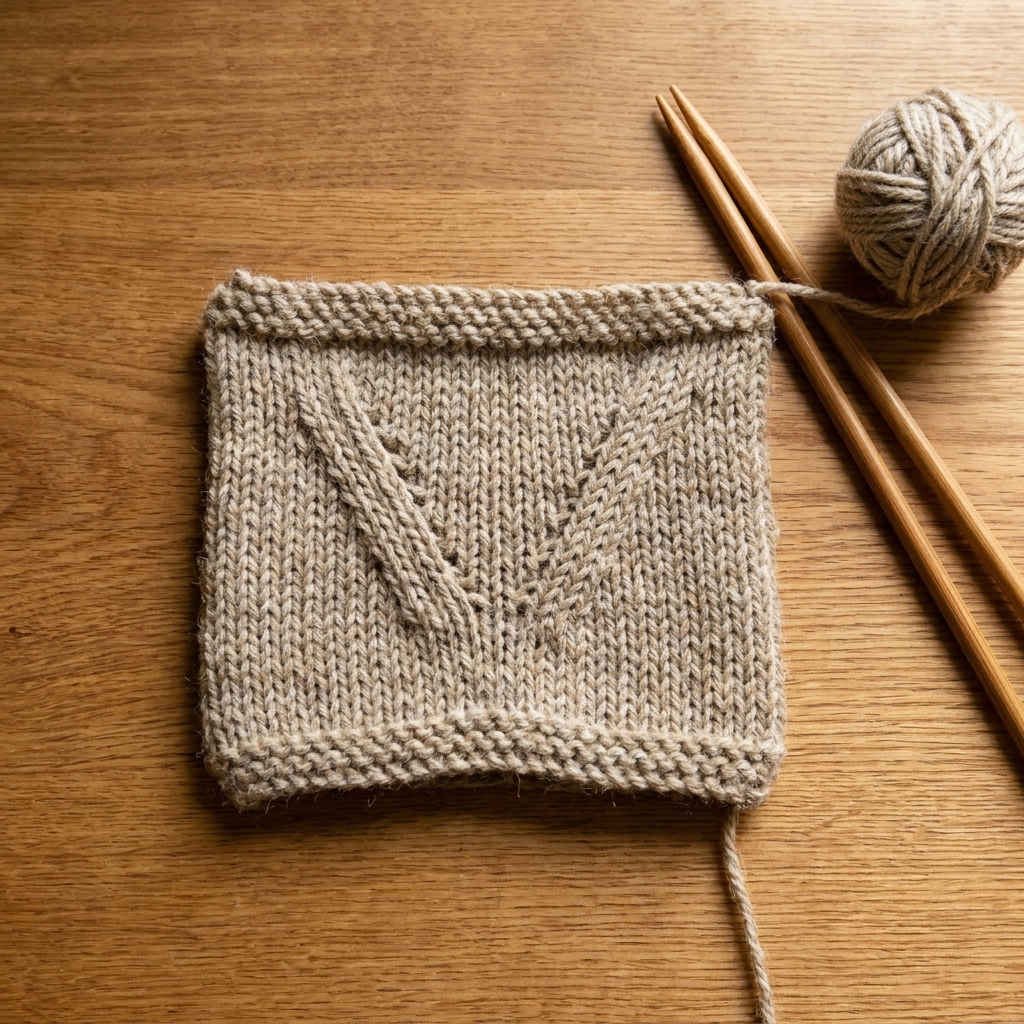
You’ll get two beautiful decrease columns that angle toward the center. Once you see it in your own fabric, you’ll never unsee it.
FAQ
Are SSK and k2tog interchangeable?
Technically they both decrease one stitch, so yes, your stitch count will work out. But they are not interchangeable if the pattern relies on the lean for symmetry or for a specific design line. If you swap them, the shaping can look subtly off, especially on fitted garments.
Which decrease is better for beginners?
K2tog is usually easier at first. SSK is still beginner-friendly, but it takes a bit more hand memory. If SSK feels awkward, practice it in a small swatch rather than waiting until you’re mid-sweater sleeve.
My pattern says “ssk” but I like k2tog tbl or skp. Can I substitute?
Often, yes, but do a quick swatch check. k2tog tbl can be tighter and twistier depending on stitch mount, and skp can look more pronounced than SSK. If your pattern’s design depends on neat mirrored lines, test before you commit.
Do decreases lean differently on the wrong side?
The lean is created by the structure of the stitches, so it still exists, but it can read differently because you are looking at the back of the fabric. If a pattern specifies decreases on wrong-side rows, follow the instructions carefully and consider placing a marker so you always know which side is which.
Wrap-up
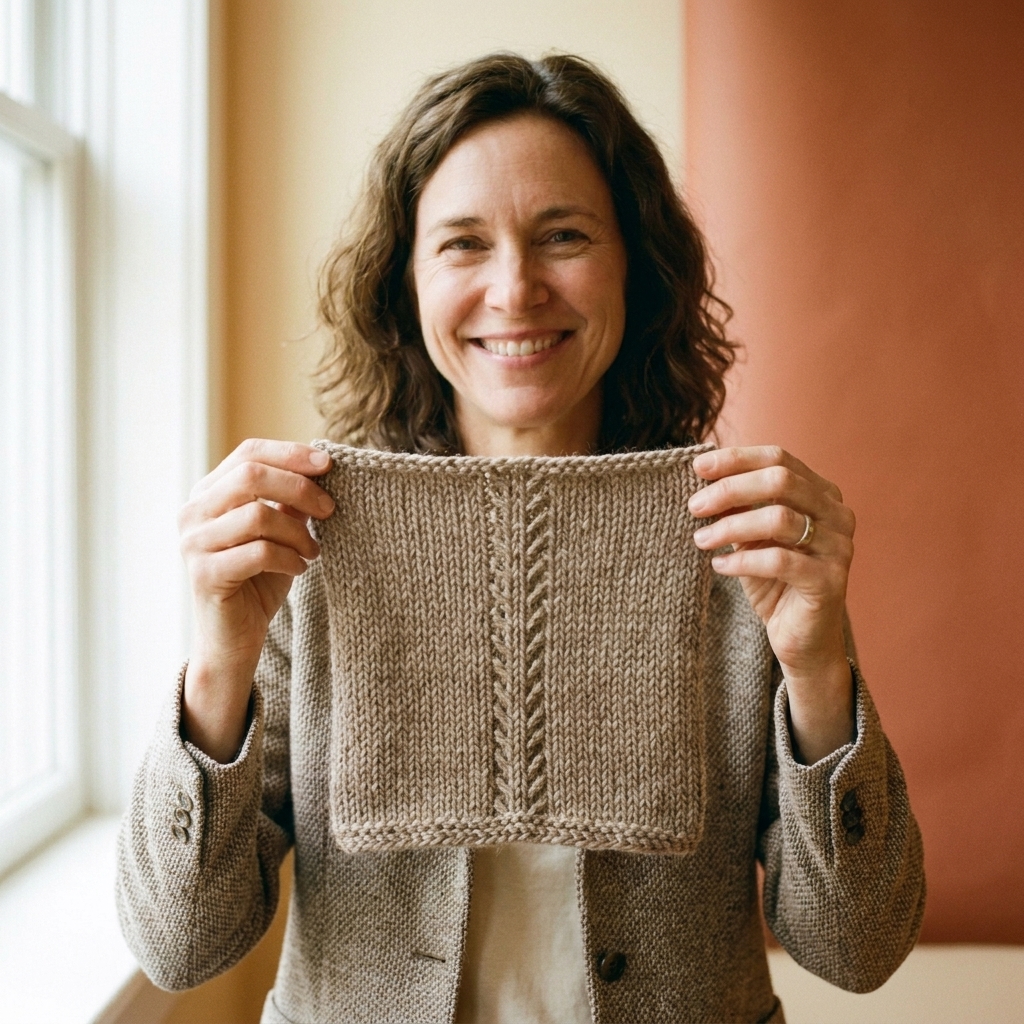
If you take nothing else from this: k2tog leans right, and ssk leans left. When you pair them thoughtfully, your decreases stop looking like random shrinking and start looking like clean design lines.
And if your first few SSKs look a little scruffy, welcome to the club. That’s not failure, that’s your hands learning a new pathway. Give it a few rows, a little patience, and maybe a cup of tea, and it’ll click.