If you have ever stood in a craft store aisle holding a crochet hook in one hand and knitting needles in the other, wondering which one is going to make you feel like a magical yarn wizard faster, welcome. I have been there. (Possibly with a basket already full of yarn I did not technically “need,” so no judgment.)
The good news is: there is no wrong choice. Knitting and crochet are both wonderful, calming, practical skills. The better news is: once you learn one, the other becomes much less intimidating. But if you are picking your very first fiber craft, this guide will help you choose based on how you like to learn and what you want to make.
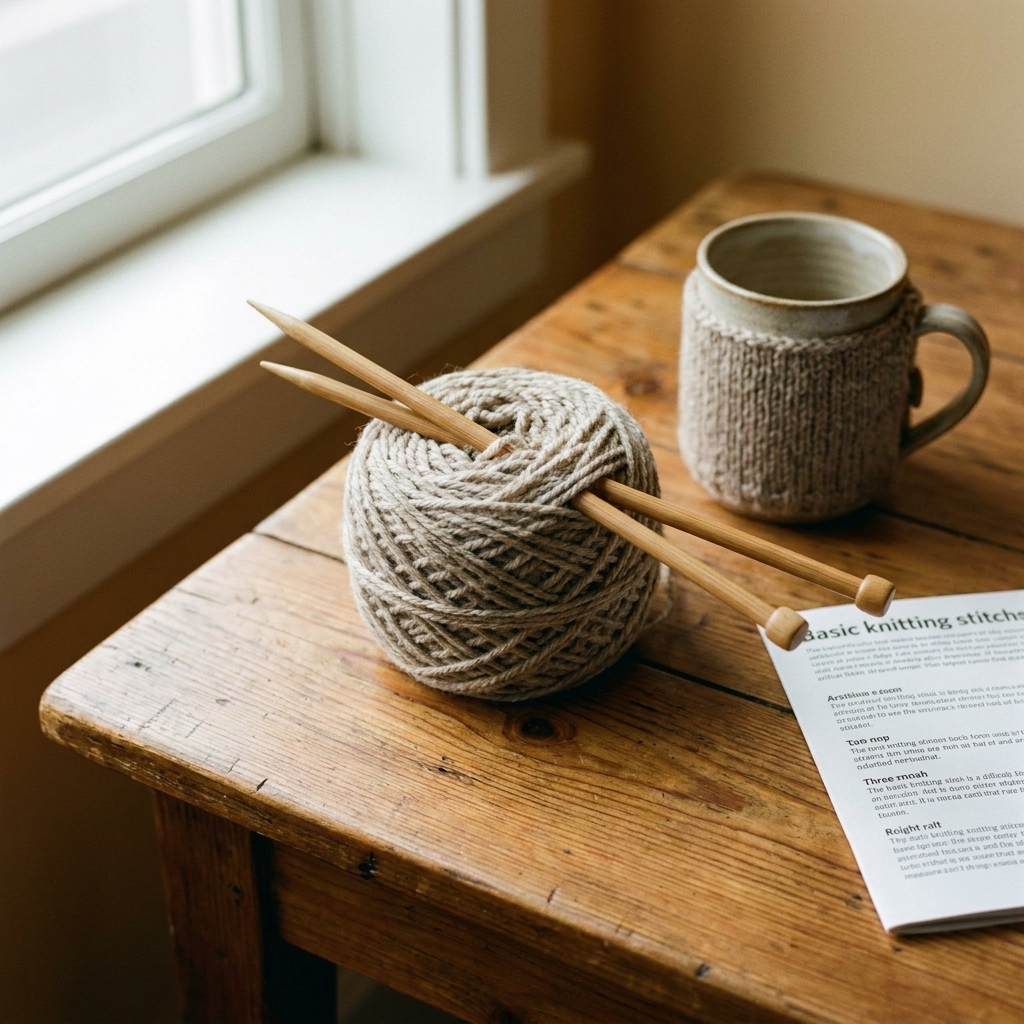
The quick difference (in plain English)
Knitting
Knitting uses two needles to hold many active loops at once. You build fabric by moving stitches from one needle to the other.
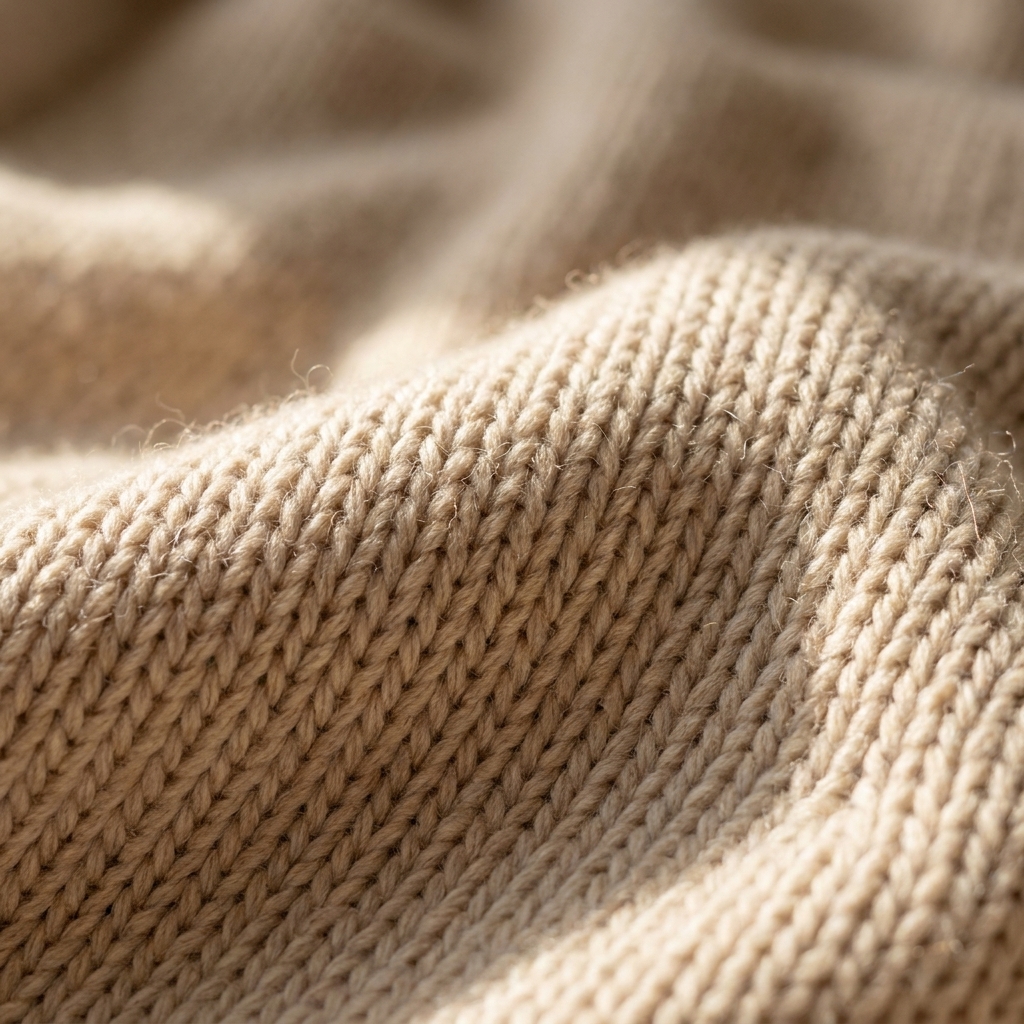
- Typical look: smooth V-shaped stitches (stockinette) or bumpy ridges (garter)
- Common strengths: drape, stretch, and classic sweater fabric
Crochet
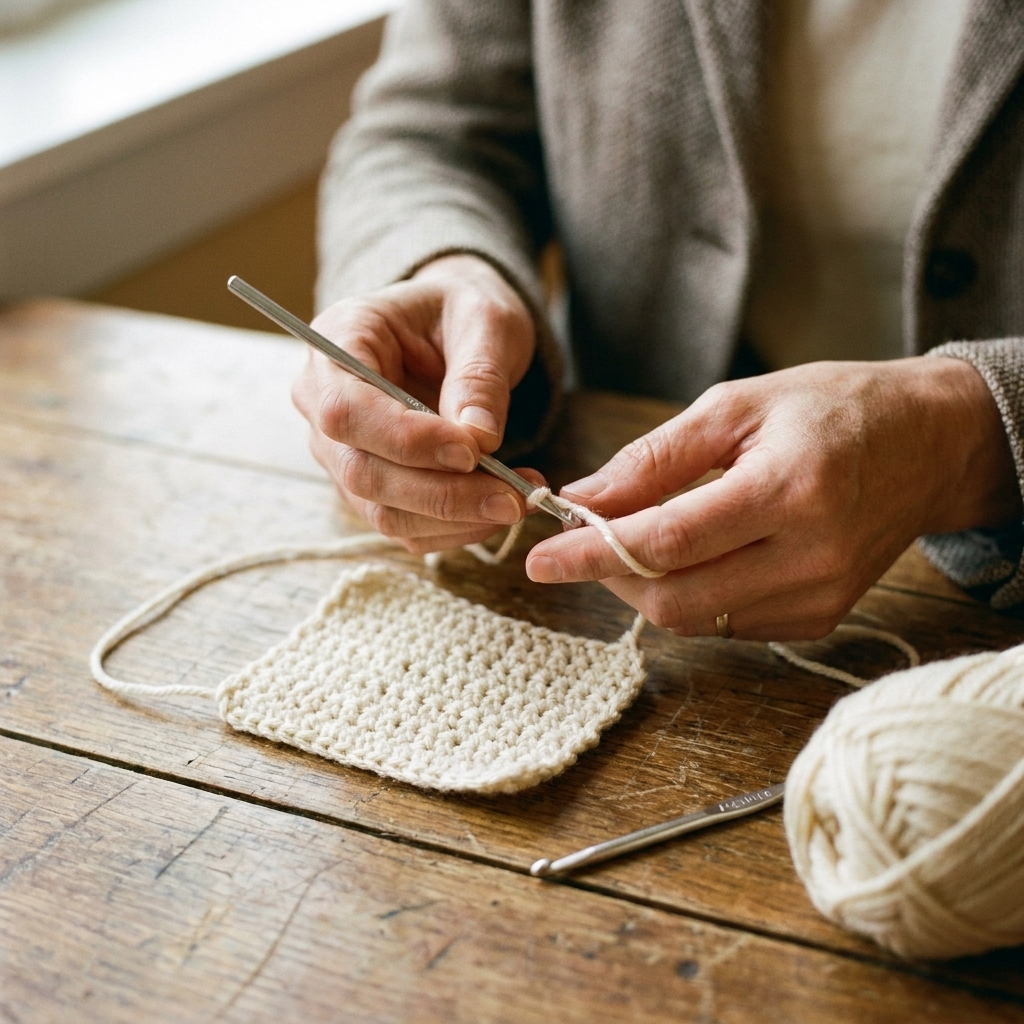
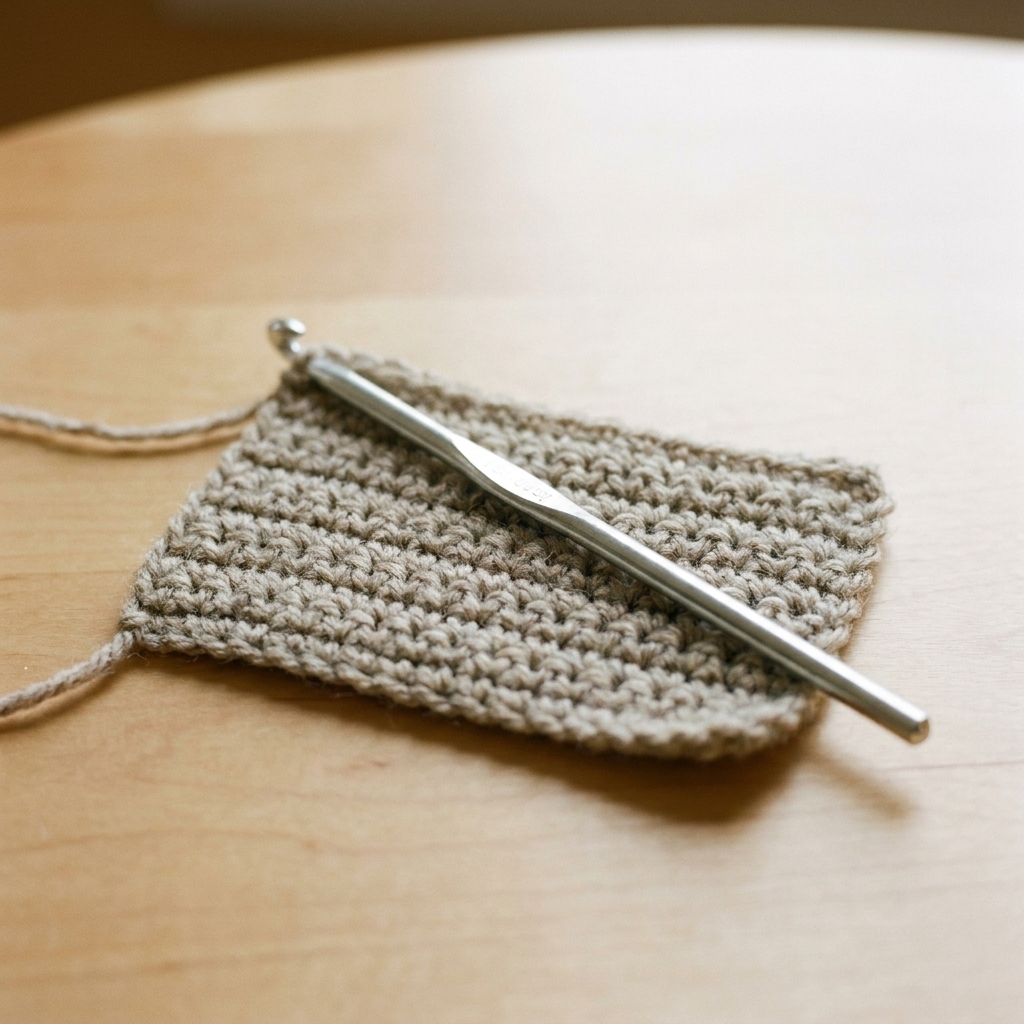
Crochet uses one hook and usually works with one active loop at a time. You build fabric by pulling loops through loops.
- Typical look: more textured stitches and distinct rows
- Common strengths: speed, structure, shaping, and quick wins like hats and blankets
Which is easier for absolute beginners?
This is the question everyone asks, and my teacher brain wants to gently say: “easier” depends on what tends to frustrate you.
Crochet often feels easier at the start
Because you only manage one live loop most of the time, crochet can feel more forgiving. If you set your work down and come back, you are less likely to have a whole line of stitches trying to escape.
Crochet may be easier first if you:
- Want fast progress and visible results early on
- Get stressed when lots of stitches are sitting on a needle
- Like learning one stitch at a time in a very “do this, then this” way
Knitting can feel simpler once the motion clicks
Knitting has fewer “big” foundational stitches to start. Once you learn knit and purl, you can make an impressive amount of fabric. The challenge is that early knitting can feel fiddly until your hands learn the rhythm.
That said, crochet is not a huge list of stitches either. Most beginners build a lot with a small core set: chain, single crochet, half double crochet, and double crochet.
Knitting may be easier first if you:
- Like repetitive, soothing motions
- Want a smooth, classic fabric for wearables
- Prefer fewer stitch types to memorize at the beginning
My honest take: Crochet is often easier to start. Knitting is often easier to keep simple for a long time. Both get dramatically easier after your first few hours of practice.
Tools and cost
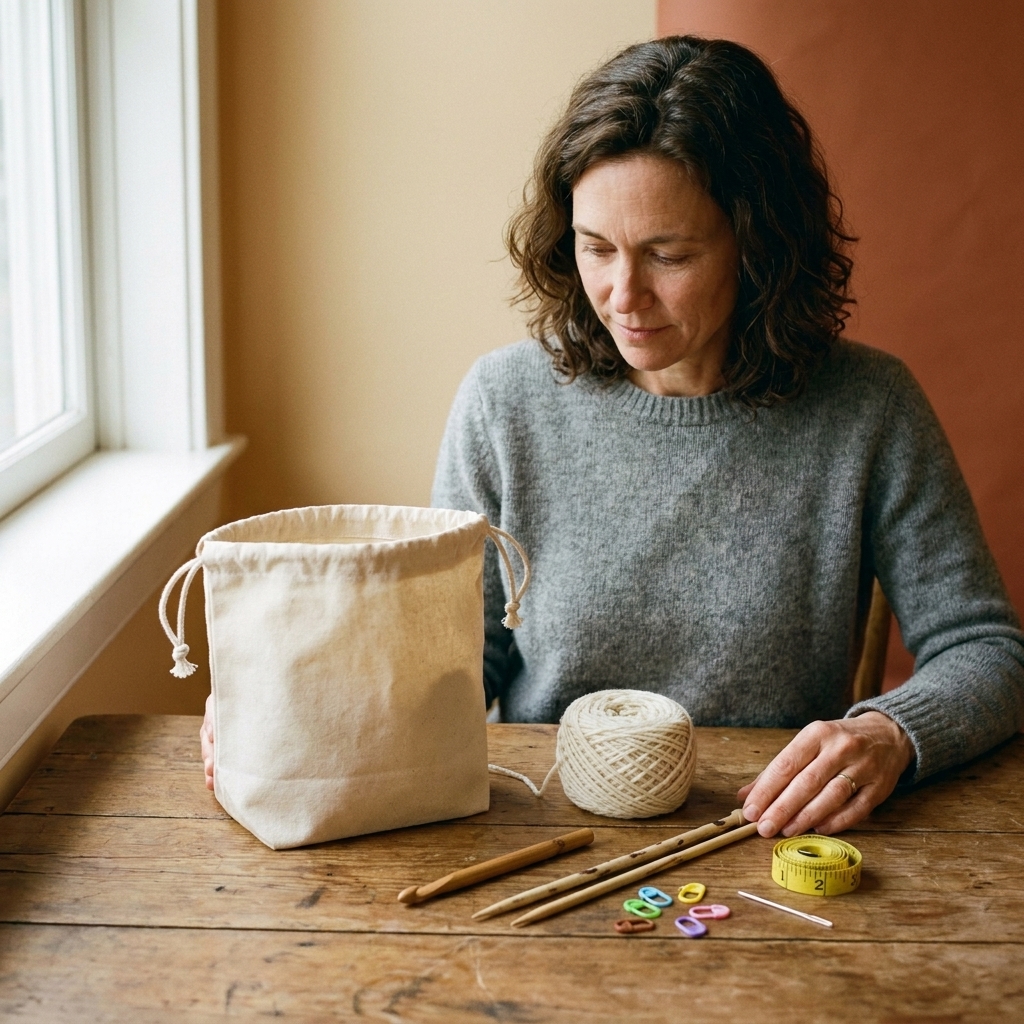
What you need to start knitting
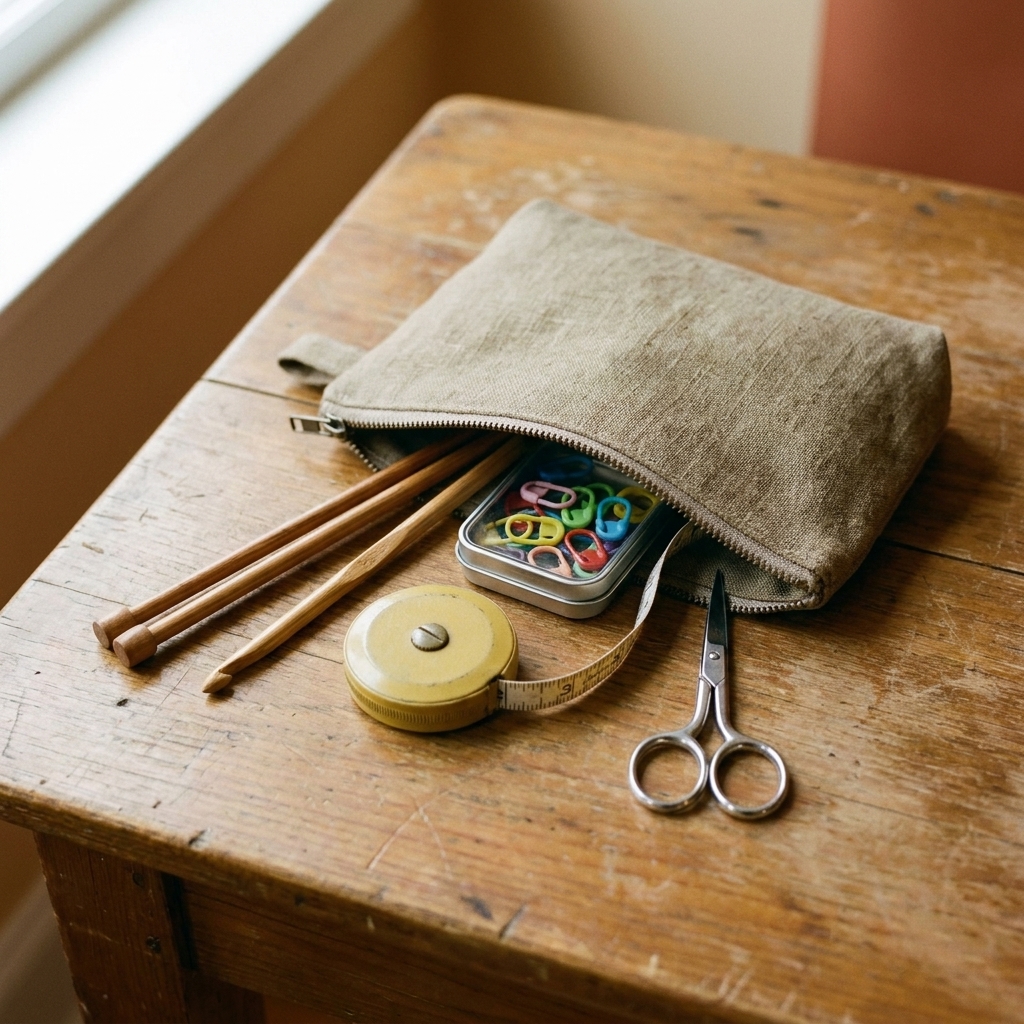
- Needles: one pair of straight needles or a circular needle (circulars can knit flat too)
- Yarn: a smooth, medium-weight yarn (look for worsted weight)
- Extras: scissors and a tapestry needle for weaving in ends
Beginner tip: bamboo or wood needles are grippier and can make early learning less slippery.
What you need to start crocheting
- Hook: one hook in a beginner-friendly size (check your yarn label; worsted weight is often around 5.0 to 6.0 mm)
- Yarn: the same smooth, medium-weight yarn
- Extras: scissors and a tapestry needle
Beginner tip: crochet is slightly simpler to buy for because you only need one hook to begin.
Speed
In general, crochet often works up faster for many people, especially for blankets, scarves, and chunky projects. Crochet stitches are frequently taller and use more yarn per stitch, which can create fabric quickly.
That said, speed is not universal. A dense single crochet fabric can feel slow, and a smooth knit stockinette can fly once your hands find the rhythm. Stitch choice and experience matter a lot.
Knitting can feel slower at first, but it has a wonderful “train track” rhythm once your hands learn the movements. And for lightweight garments, knitting’s drape can be worth the extra time.
If you want quick wins: crochet often has the edge.
If you want meditative repetition: knitting is a classic choice.
Fabric feel
Knitted fabric
- Drape: typically softer and more fluid
- Stretch: naturally stretchy, especially with ribbing
- Great for: sweaters, socks, beanies, lightweight scarves
Crocheted fabric
- Drape: can be drapey, but often more structured and a bit thicker
- Stretch: less stretch in many basic stitches (with exceptions)
- Great for: blankets, bags, home decor, sturdy hats, amigurumi
If you are dreaming about making a cardigan that moves like your favorite store-bought knit, knitting will usually get you there more easily. If you want a tote bag that holds its shape or a cozy textured throw, crochet is brilliant.
Fixing mistakes
Because we are learning humans, not yarn robots, mistakes will happen. The difference is mostly in how dramatic they feel.
Knitting mistakes
- If a stitch slips off the needle, it can unravel down the column (a “ladder”).
- Fixing can feel scary at first, but it is absolutely learnable.
- Many people find knitting’s stitch structure consistent and easy to track once the basics click.
Crochet mistakes
- Because you usually have one live loop, accidental unraveling is less catastrophic.
- It is often easier to rip back a few stitches and redo them.
- Counting stitches matters a lot, especially at the ends of rows.
If you tend to panic when you see a loose loop, crochet may feel calmer at first. If you like a tidy “grid” of stitches that is easy to count and track, knitting can feel more predictable after the initial learning curve.
Best first projects
A first project should be small, useful, and forgiving. These are my favorite beginner-friendly wins.
Great first knitting projects
- Garter stitch scarf (knit every row)
- Simple dishcloth (small rectangle, quick practice)
- Chunky headband (fast, wearable, satisfying)
Great first crochet projects
- Single crochet washcloth (excellent practice for tension)
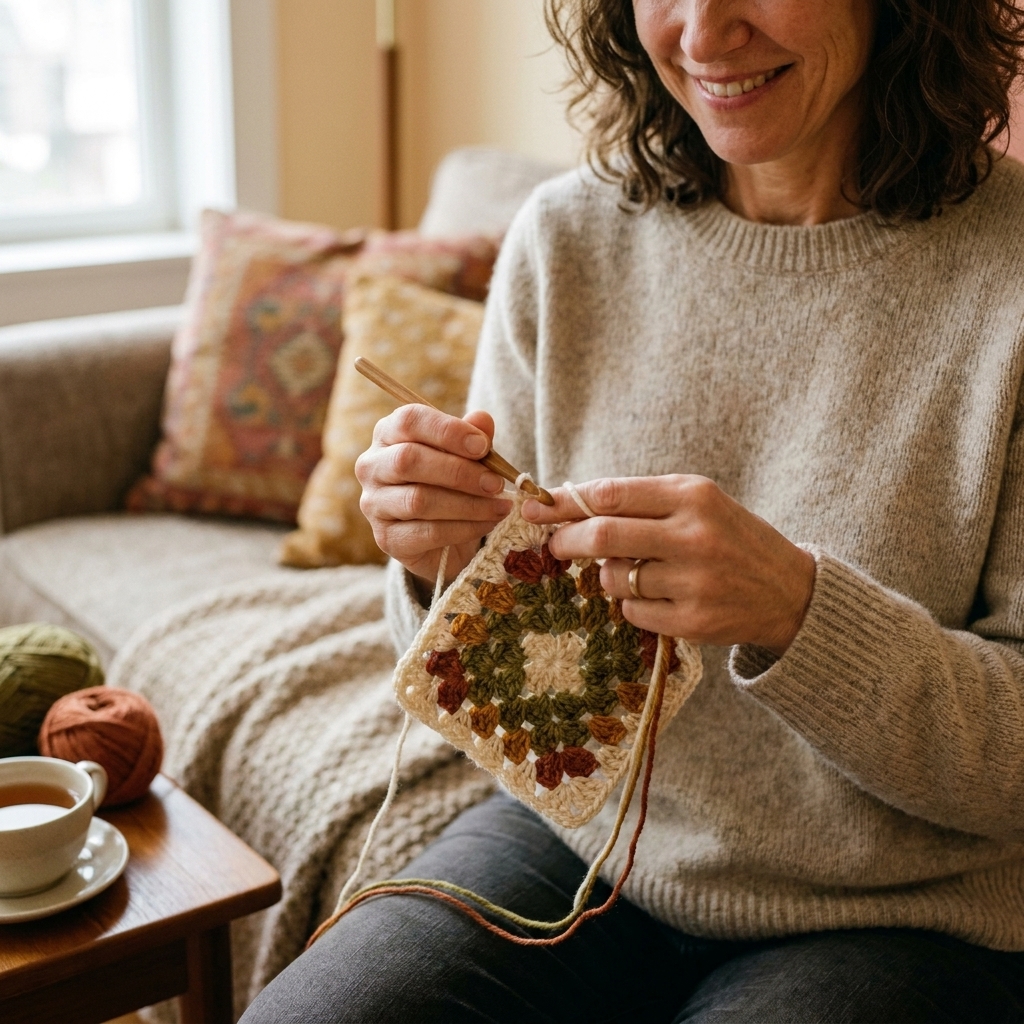
- Granny square (iconic, portable, easy to build on)
- Simple beanie (great for learning working in the round)
Choose by your goal
Sweaters and wearables
Lean knitting first. Knitted fabric tends to be lighter and drapier, which makes it ideal for garments you will actually want to wear all day.
Blankets and home decor
Lean crochet first. Crochet builds fabric quickly and creates beautiful texture for throws, pillows, and decor.
Plushies (amigurumi)
Crochet first. Amigurumi is overwhelmingly crochet because it creates a dense, structured fabric that holds stuffing well.
Socks
Knitting first. Knit socks shine because of stretch and fit. Crochet socks exist and can be wonderful, but knitting is the more common path for a classic sock.
Lace and delicate accessories
Either works. Knitted lace is airy and drapey. Crochet lace can be crisp and intricate. Pick based on which tool you want in your hands.
Learning style
Pick knitting if you like:
- Repeating a simple set of movements for long stretches
- Fabric that looks smooth and “store-bought knit”
- Following patterns where small changes create big design shifts
Pick crochet if you like:
- Seeing progress quickly
- Texture, sculptural shaping, and playful stitch variety
- Learning in steps and building skills in bite-sized pieces
Also, consider your hands. Some people find knitting gentler because the work rests on the needles. Others find crochet gentler because one hand does most of the looping and there is less needle management. If you have wrist or hand pain, try both briefly and listen to your body.
If you can, experiment with technique styles too. Crochet has different grips (often called knife hold and pencil hold). Knitting has different styles (English and Continental are the two most common). Tiny changes in hand position can make a big difference in comfort.
Tension and gauge
One beginner concept that saves a lot of frustration later is gauge, which is just how many stitches and rows you get per inch with a specific yarn and tool size.
- For blankets, scarves, and dishcloths, gauge is usually relaxed. If it looks good and feels good, you are doing it right.
- For wearables, gauge matters because it affects fit. A sweater that is two stitches per inch off can end up wildly bigger or smaller than you planned.
This is why patterns ask you to make a small swatch. It is not busywork. It is the fastest way to figure out whether you need to go up or down a needle or hook size.
Left-handed note
If you are left-handed, you can absolutely knit or crochet. The tools are neutral, but tutorials are not always. When you search for help, add “left-handed” to your query, and look for instructors who mirror the movements clearly. If a method feels awkward, it is okay to try a different teacher, not just a different project.
A simple decision guide
- Choose crochet first if you want fast results, fewer dropped-stitch emergencies, plushies, bags, or blankets.
- Choose knitting first if you want sweaters, socks, a classic knit look, and a rhythmic, calming process.
- Choose both if you are curious and cannot decide. Learn one basic square in each craft and see which feels more natural.
If you want the coziest possible path: start with crochet to build confidence, then add knitting when you are ready for wearables. That is not the only route, but it is a very friendly one.
Beginner FAQs
Is knitting or crochet more beginner-friendly?
Many beginners find crochet easier at first because there is usually only one live loop. Many beginners find knitting simpler long-term because you can do a lot with just knit and purl. The best choice is the one that matches what you want to make.
Which uses more yarn?
Crochet often uses more yarn for the same size project because the stitches are generally thicker. That can be a plus for warm blankets and structured items, but it is something to keep in mind for large projects.
Can I learn both at the same time?
Yes, but I recommend learning one for a couple of weeks first so your hands can build muscle memory. Once the motions feel less new, adding the other craft is much less confusing.
What yarn should I start with?
Pick a smooth, light-colored, medium-weight yarn (often labeled worsted weight). Avoid fuzzy novelty yarn at first. It is not you. It is the yarn.
What is the easiest first stitch?
For knitting, start with garter stitch (knit every row). For crochet, start with single crochet rows. They are not fancy, but they teach your hands everything important.
My gentle recommendation
If your goal is clothing with a classic, wearable fit and drape, start with knitting. If your goal is to relax, finish projects faster, and make cozy gifts without a steep learning curve, start with crochet.
And if you are still stuck, pick the one that makes you want to sit down and try today. The best craft to learn first is the one you will actually practice. Your future self, and your future handmade wardrobe, will be very proud of you.