If you have ever stood in the yarn aisle holding two skeins that look identical but somehow promise wildly different results, you are not alone. Yarn shopping is basically a choose-your-own-adventure book, except the villain is a tiny label with abbreviations.
In this guide, I will show you how to read yarn labels (without squinting like a raccoon at midnight), how yarn weights actually work for knitting and crochet, and how to pick a fiber that feels good to work with for your very first project.
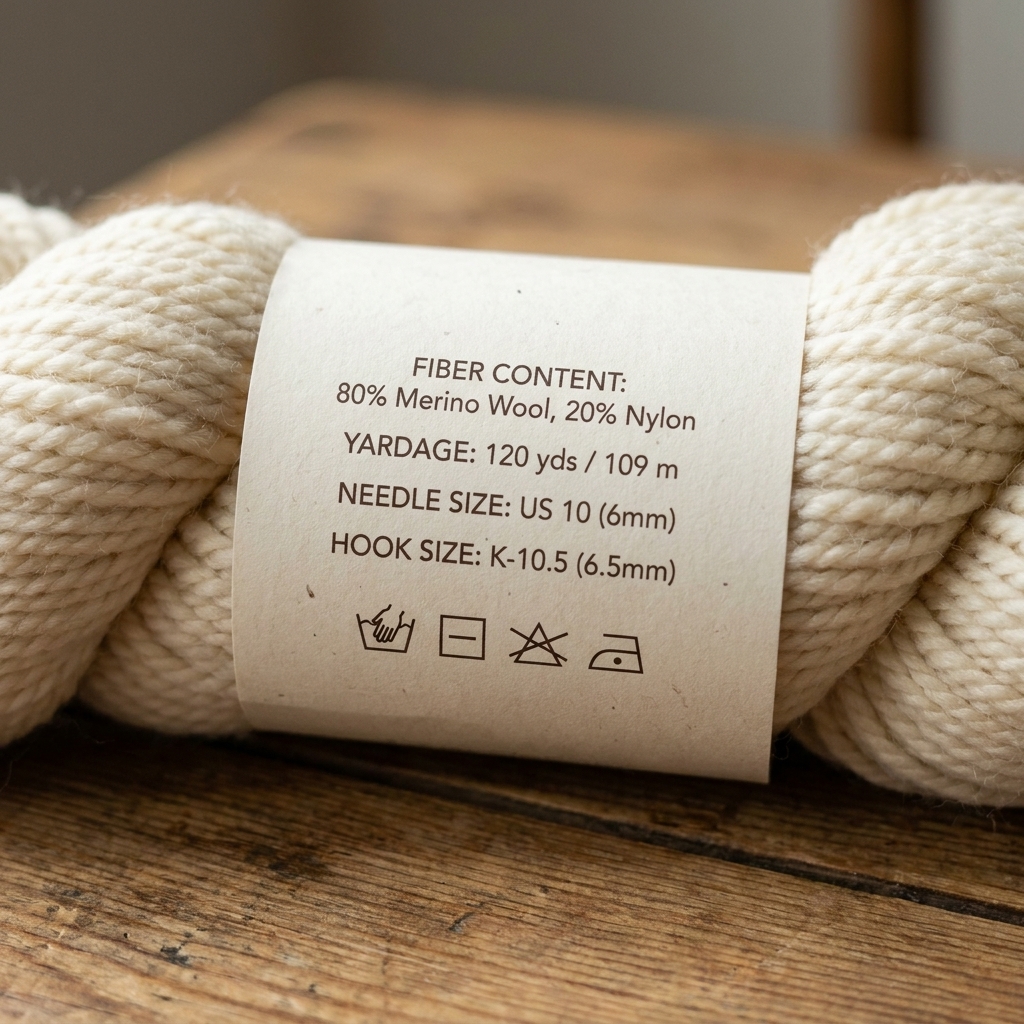
How to read a yarn label
Yarn labels vary by brand, but most include the same key details. Once you know what you are looking for, you can make great choices even when you are shopping online.
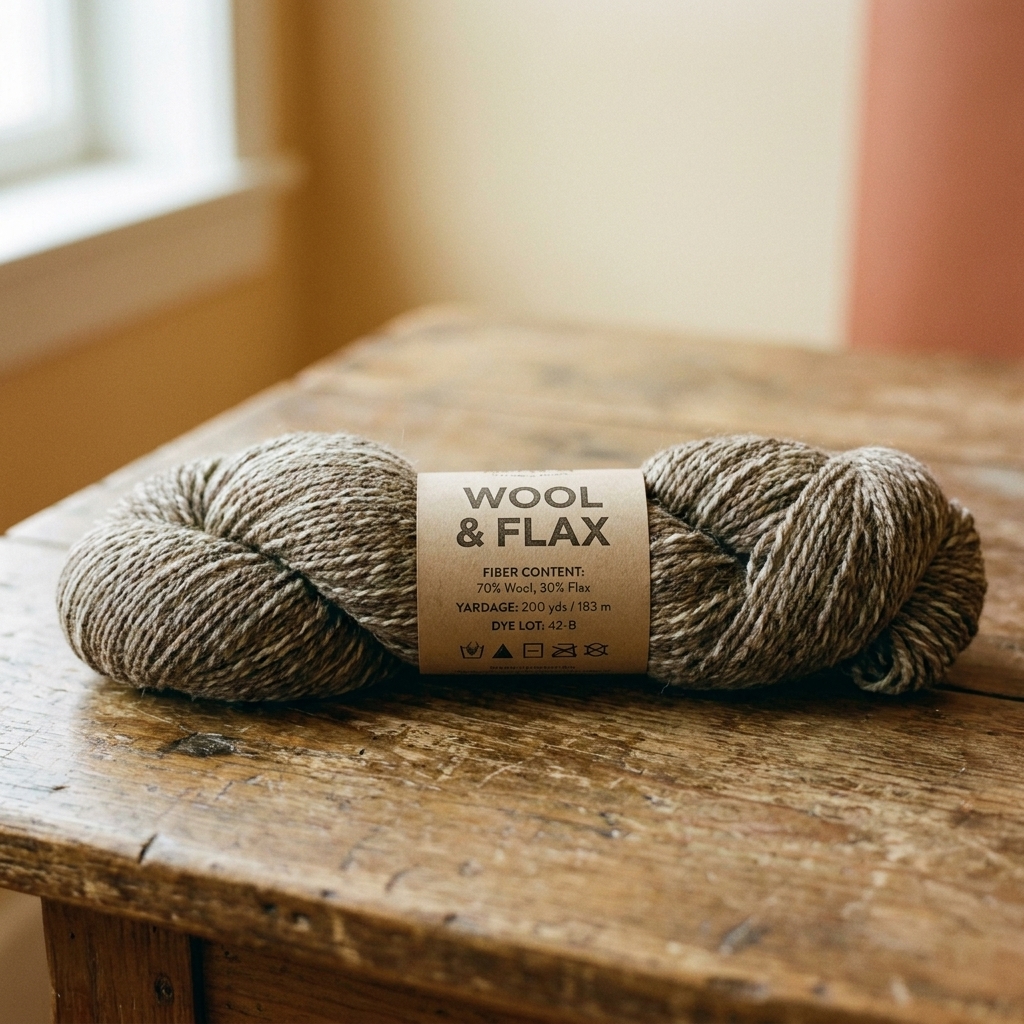
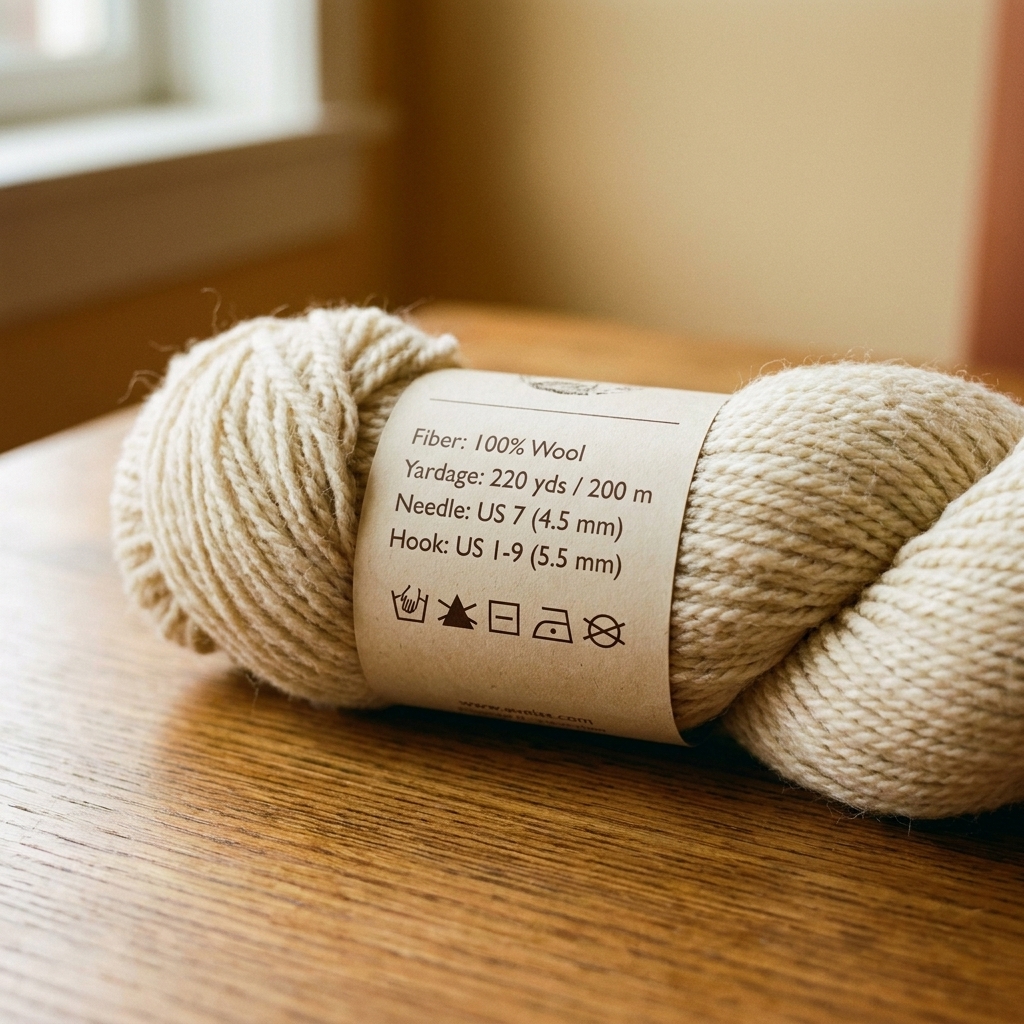
1) Fiber content
This tells you what the yarn is made of, usually as percentages, like 100% wool or 80% acrylic, 20% wool. Fiber affects:
- How it feels (soft, rustic, slippery, fluffy)
- How it behaves (stretchy, drapey, sturdy, fuzzy)
- How it washes (machine washable vs hand wash only)
- How warm it is (wool is warmer than plant fibers, generally)
2) Weight category
“Weight” means thickness, not how heavy the skein feels in your hand. In the Craft Yarn Council (CYC) system commonly used in North America, weights are numbered 0 to 7 (lace through jumbo). Some brands only print words (like “DK” or “bulky”), and some countries lean on “ply” terms instead, so use the number as a helpful clue, not a universal law.
3) Yardage or meterage
This is how much yarn you are actually getting. Two skeins can be the same weight category but contain very different yardage. When planning a project, yardage matters more than skein count.
4) Recommended needle or hook size
Think of this as a starting suggestion, not a rule. Your personal tension, stitch pattern, and fabric goals may lead you to size up or down.
5) Gauge information
Gauge is usually shown as a small square with a stitch count and a row count, often over 4 in / 10 cm. Example: 18 sts x 24 rows = 4 in. This matters most for wearables, anything fitted, and anything where size is important.
One more tiny-but-mighty detail: label gauge is typically measured using the recommended needle or hook size and a basic stitch (often stockinette for knitting, and single crochet for crochet). Treat it as a baseline, then let your swatch tell you the truth.
6) Care instructions
Look for text or laundry symbols. If you are making gifts, baby items, or anything that will be washed often, care instructions can make or break your long-term happiness.
Beginner sanity tip: If you only remember three label details, make it these: fiber content, yardage, and care.
Yarn weight, explained
Yarn weight categories help you predict fabric thickness, stitch size, and how quickly a project will grow. They also help you match yarn to patterns.
Here is the common CYC system (especially in North America). Other countries may use different terms, and brands do not always agree at the edges, but these categories show up widely on labels and patterns.
0: Lace
- Looks like: very thin, delicate
- Often used for: lace shawls, delicate accessories
- Beginner-friendly? Not really. It is gorgeous but unforgiving if you are still learning to see your stitches.
1: Super fine (Fingering, Sock)
- Often used for: socks, lightweight sweaters, shawls
- Beginner-friendly? If you are patient. Small stitches mean slower progress and more counting.
2: Fine (Sport)
- Often used for: baby garments, lightweight hats, fine blankets
- Beginner-friendly? Better than fingering, still a bit small for a first project.
3: Light (DK)
- Often used for: sweaters, hats, scarves, amigurumi
- Beginner-friendly? Yes. DK is a sweet spot: not too tiny, not too bulky.
You may also see phrases like “light worsted.” That is not a strict standard term, and it can overlap with DK or a lighter worsted depending on the brand. When in doubt, check the label’s yardage and recommended needle or hook size.
4: Medium (Worsted, Aran)
- Often used for: basically everything, especially beginner projects
- Beginner-friendly? Absolutely. Easy to see, easy to handle, widely available.
Quick note: “worsted” and “aran” can be used differently depending on region and brand. They are usually close neighbors, but do not panic if one label’s “aran” looks chunkier than another’s “worsted.” Labels are helpful, not sacred texts.
5: Bulky
- Often used for: quick hats, cozy cowls, chunky scarves, home decor
- Beginner-friendly? Often yes, with one caution: very bulky yarn can make your stitches look a bit uneven while you are learning.
6: Super bulky
- Often used for: ultra-fast accessories, thick blankets
- Beginner-friendly? Yes for learning the motions quickly, but big stitches show every wobble. That is not bad, just honest.
7: Jumbo
- Often used for: arm-knit blankets, big statement baskets
- Beginner-friendly? It can be fun, but it is a specialty category and not ideal for learning consistent tension.
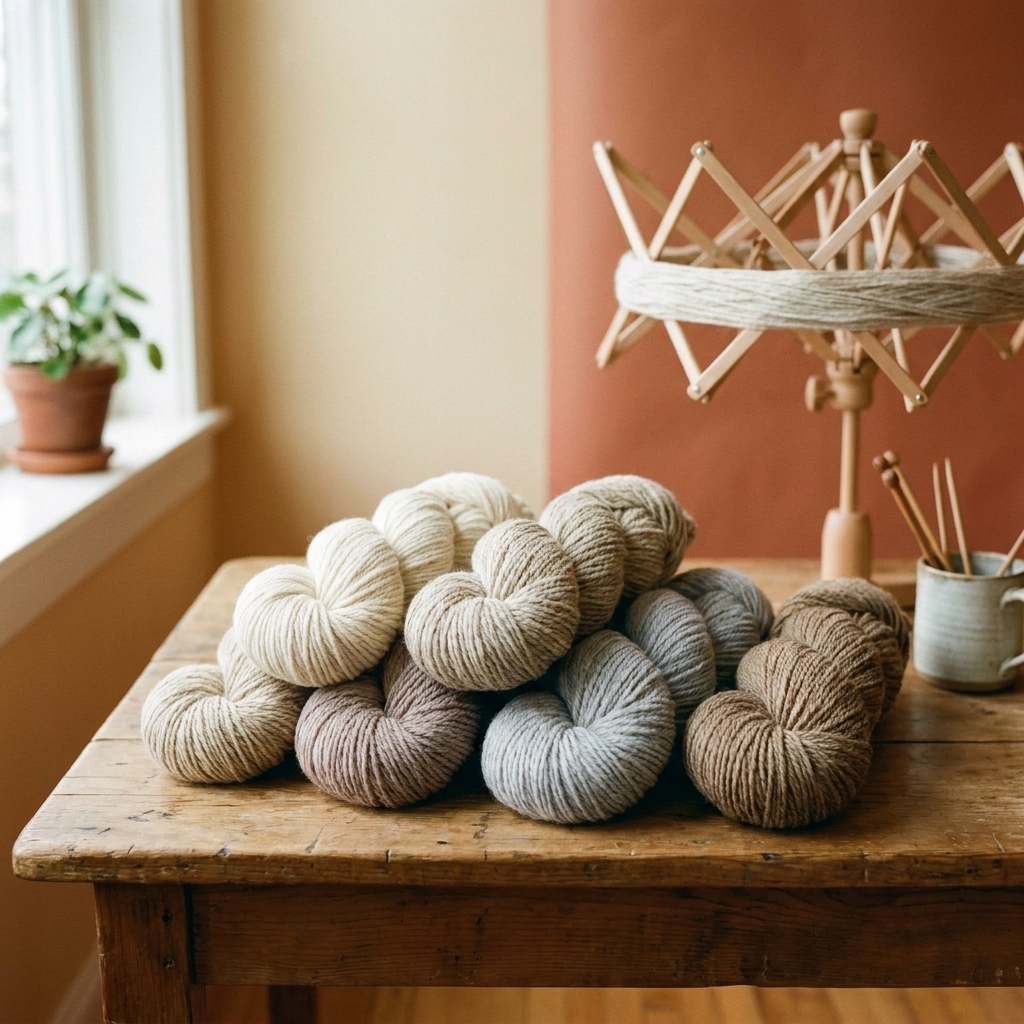
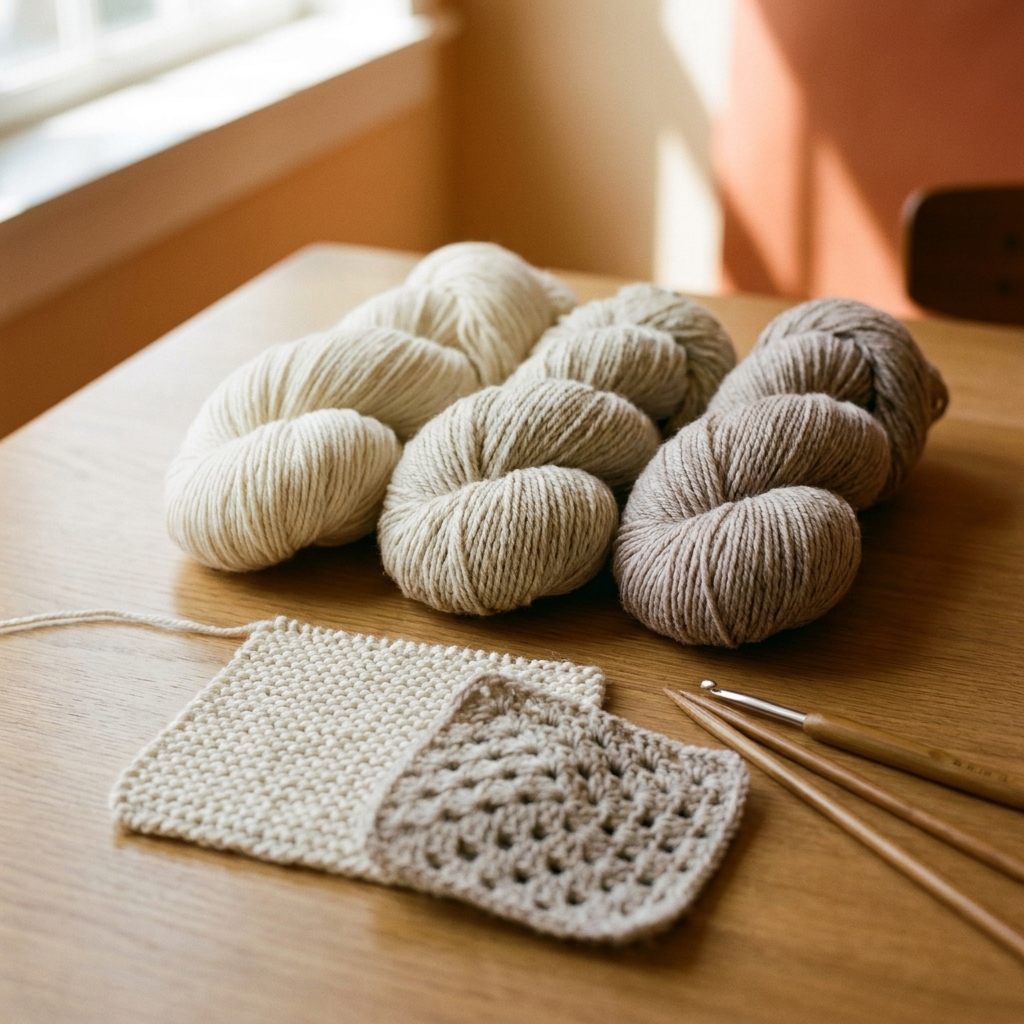
Knitting vs crochet
Knitting and crochet use yarn in different ways, so the fabric you get will not be identical even with the same skein.
- Crochet often makes a thicker, firmer fabric than knitting when worked at a comparable gauge, because of how loops are built.
- Crochet often uses more yarn than knitting for a similarly sized item.
- Knitting often drapes more easily in many stitch patterns, especially with smooth fibers.
What this means for beginners: if you are crocheting a wearable and you want flowy drape, consider a slightly lighter weight yarn, a larger hook, or a drapier fiber. If you are knitting and you want structure (like a sturdy tote), a firmer fiber or tighter gauge can help.
Yarn fiber basics
Fiber is the “personality” of the yarn. Two yarns can be the same weight and still feel totally different in your hands.
Wool (and other animal fibers)
Wool is springy, warm, and forgiving. That springiness makes it excellent for beginners because it helps even out tension over time and holds stitches nicely.
- Pros: elastic, warm, great stitch definition, blocks well
- Cons: can be scratchy for some, may felt if washed incorrectly, some is hand wash only
- Beginner pick: a “superwash” wool if you want easier care
Acrylic
Acrylic is budget-friendly, widely available, and usually machine washable. It is a great training yarn and a practical choice for blankets and gifts.
- Pros: affordable, easy care, widely available, comes in every color
- Cons: can feel squeaky on some hooks or needles, less breathable, can pill
- Beginner pick: a smooth, medium-weight acrylic in a light color (so you can see stitches)
If you are sensitive to animal fibers, acrylic is a common alternative, although of course sensitivities can vary from person to person.
Cotton
Cotton is strong and crisp with very little stretch. It makes fantastic dishcloths and summer items, but it can feel harder on hands because it does not “give” much.
- Pros: cool, absorbent, sturdy, great stitch clarity
- Cons: less elastic, can feel heavy, shows uneven tension more
- Beginner pick: cotton for washcloths, market bags, and potholders
For potholders, the usual recommendation is 100% cotton. Skip acrylic for anything that touches heat, because it can melt.
Alpaca
Alpaca is soft and warm with beautiful drape, but it has less bounce than wool. It can grow with wear in some projects, especially heavy items.
- Pros: soft, warm, lovely drape
- Cons: less elastic, can stretch out, sometimes fuzzier so stitches blur
- Beginner pick: alpaca blends (alpaca plus wool) for more resilience
Silk, bamboo, and other slippery fibers
These fibers can feel cool and luxurious and drape beautifully, but they are slick. That means stitches can slide off tools and it can be harder to keep consistent tension when you are brand new.
- Pros: drape, sheen, softness
- Cons: slippery, less forgiving, can split
- Beginner pick: blends that include wool or acrylic to add grip
Blends
Blended yarns are designed to combine the best traits of multiple fibers, like wool for bounce plus acrylic for easy care, or cotton plus acrylic for softness with a bit more give.
If you are overwhelmed, blends are often the most friendly middle ground.
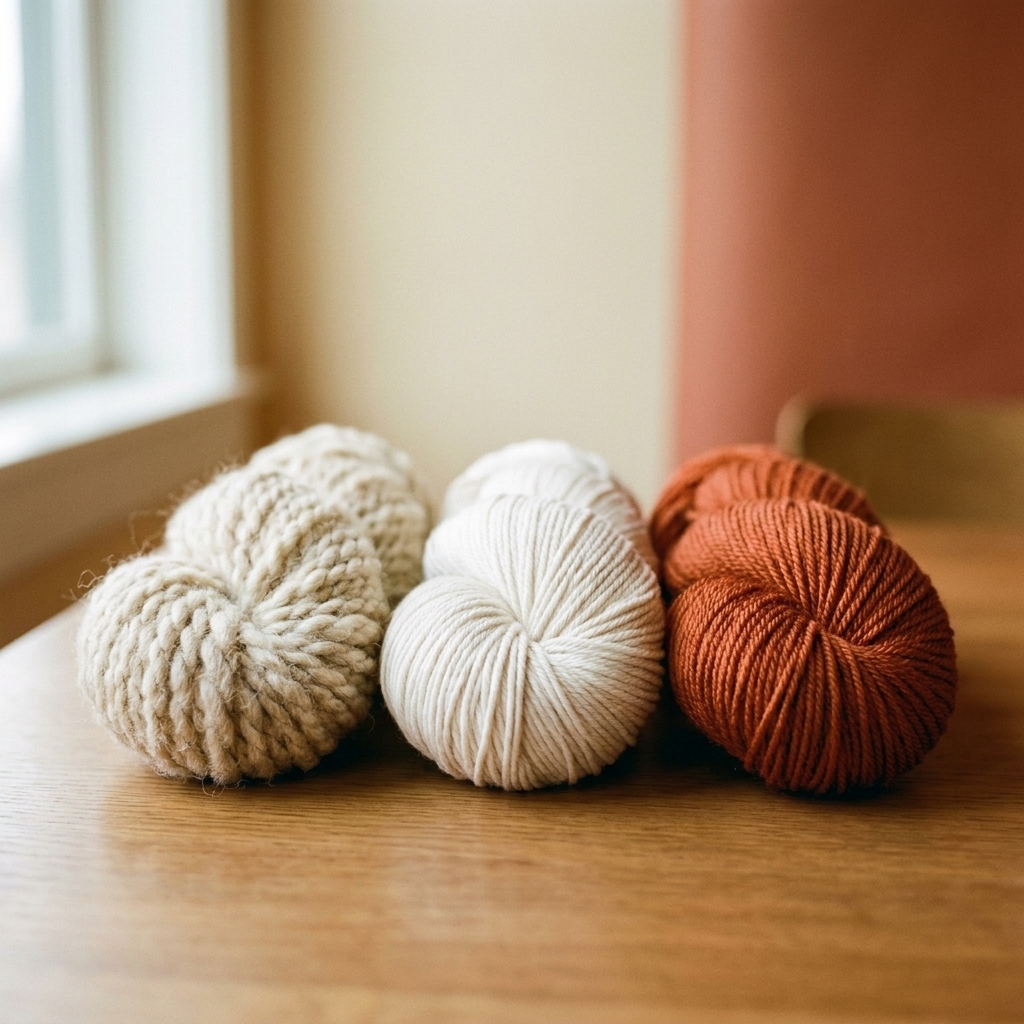
Beginner-friendly yarn picks
If you want the easiest learning experience for both knitting and crochet, here is the combo I suggest most often:
- Weight: DK (3) or Worsted (4)
- Fiber: smooth wool, superwash wool, acrylic, or a wool-acrylic blend
- Color: light to medium solid (cream, oatmeal, pale gray, soft blue)
- Texture: not fuzzy, not eyelash, not heavily slubbed
Those textured novelty yarns can be adorable, but they make it harder to see your loops. Learn with a “boring” yarn first. Future you will have plenty of time to adopt chaotic yarns into the stash. (Ask me how I know.)
Yarn details beginners miss
Twist and “splitty” yarn
Some yarns are tightly spun (the strands are twisted together firmly), and some are loosely spun. Looser yarns can look dreamy and soft, but they are more likely to split when your hook or needle slides between strands instead of through the whole stitch.
If you want fewer rage moments while learning, choose a yarn that feels smooth and firmly twisted, not airy or fragile.
Skein vs hank
Most big-box store yarn comes as a skein you can use right away. Many fancier yarns come as a hank, which is basically a pretty yarn loop. Hanks need to be wound into a ball or cake before you work with them, unless you enjoy spontaneous tangles as a hobby.
Picking yarn for your first project
Dishcloth or washcloth
- Best yarn: worsted cotton
- Why: sturdy, washable, great practice for tension
Simple scarf
- Best yarn: worsted wool or acrylic
- Why: quick progress and easy stitch visibility
Hat
- Best yarn: worsted wool or superwash wool
- Why: wool’s elasticity makes hats comfy and forgiving
Baby blanket
- Best yarn: machine-washable acrylic or superwash wool blend
- Why: easy care matters more than almost anything else
Amigurumi (crochet toys)
- Best yarn: DK or worsted cotton or acrylic, smooth and tightly spun
- Why: good stitch definition and structure
Label terms that trip beginners
“Worsted” does not mean “wool”
Worsted is a weight category, not a fiber. You can have worsted wool, worsted acrylic, worsted cotton, and so on.
Ply is not the same as weight
In some places, yarns are described by “ply” (like 8-ply). This can be helpful, but it is not a universal standard. When in doubt, check yardage, recommended needle or hook size, and any printed weight category.
Lot or dye lot matters
Dye lots are batches of yarn dyed at the same time. Even the same color name can vary slightly between lots. If you are buying yarn for a larger project, try to get skeins from the same dye lot for consistent color.
And yes, even heathered, multi, and self-striping yarns can vary between lots. If you are on the edge of “do I need one more skein,” the answer is usually yes.
Self-striping and heathered
- Self-striping: color changes as you work, creating stripes
- Heathered: blended flecks of color, often more forgiving for uneven stitches
How to substitute yarn
Sometimes you fall in love with a yarn and then realize the pattern calls for something else. Substitution is possible, and beginners can absolutely do it with a few guardrails.
Step 1: Match the yarn weight first
If the pattern calls for worsted, start by looking at worsted yarns.
Step 2: Compare yardage
Make sure you have enough total yardage, not just the same number of skeins.
Step 3: Check fiber behavior
Ask yourself what matters most for this project:
- Warmth: wool or alpaca
- Drape: alpaca, silk, bamboo blends
- Structure: cotton, firmer wool
- Easy care: acrylic or superwash wool
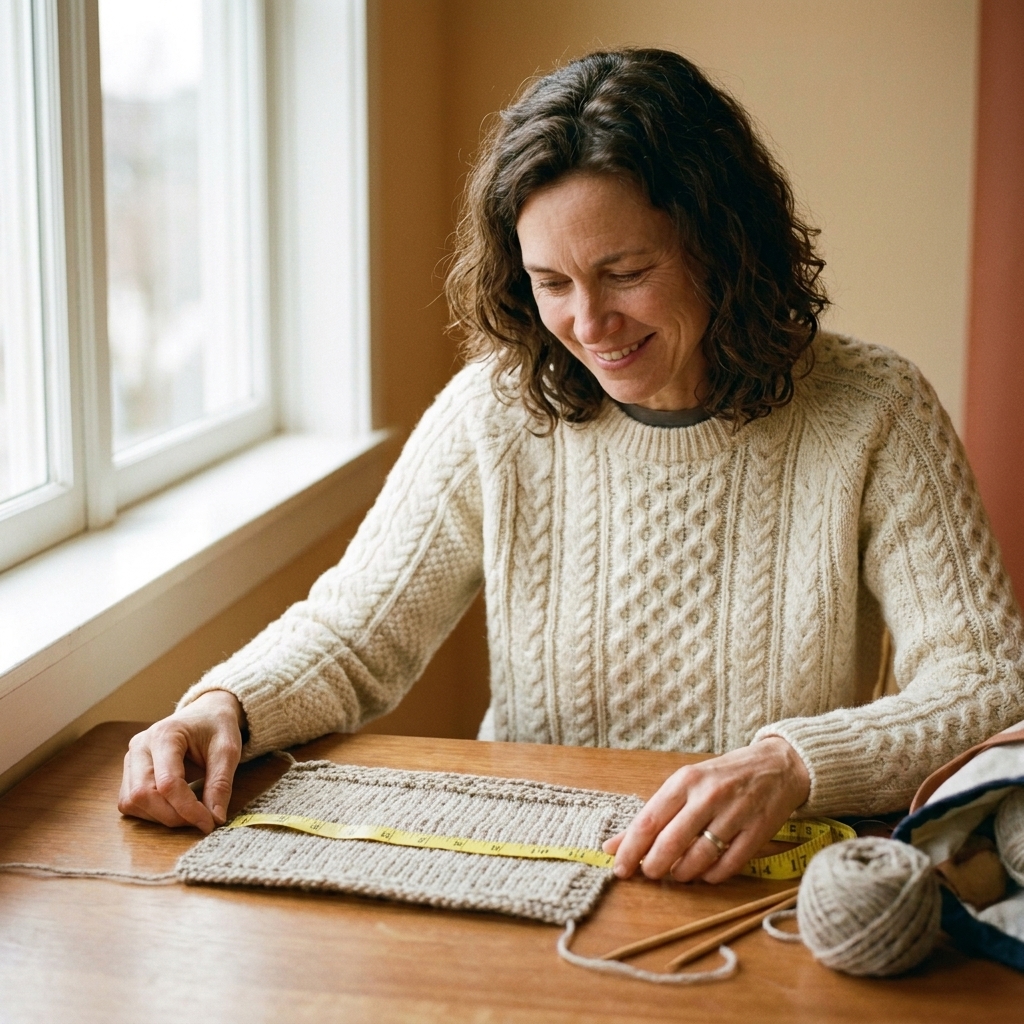
Step 4: Swatch (yes, even for crochet)
A small swatch can save you from making a hat that fits a cantaloupe. Wash and dry it the way you plan to treat the finished item, then measure gauge.
Swatching mindset: It is not homework. It is a tiny, low-stakes practice run with snacks.
Beginner mistakes to avoid
- Choosing a dark color first. Navy and black hide stitches. Start lighter, then go moody later.
- Buying by skein count, not yardage. Always total yardage.
- Picking a very fuzzy yarn. It is hard to see mistakes, and ripping back is… an experience.
- Ignoring care instructions. If you hate hand washing, choose a yarn that matches your real life.
- Assuming hook or needle size on the label is the size. It is a suggestion. Your fabric goals are the boss.
Quick shopping checklist
- What am I making, and how will it be used?
- Do I need machine washability?
- What yarn weight does my pattern call for?
- How much total yardage do I need?
- Am I choosing a smooth, stitch-friendly yarn to learn with?
- Are all my skeins from the same dye lot (if relevant)?
FAQ
What is the best yarn for absolute beginners?
DK or worsted weight in a smooth wool, superwash wool, acrylic, or a wool-acrylic blend, in a light solid color. This combo is easy to see and forgiving while you learn tension.
What yarn should beginners avoid?
Very fuzzy yarns (mohair, eyelash), very dark colors, lace weight yarn, and super slippery yarns, at least for your first couple projects.
Is “chunky yarn” the same as bulky?
Often “chunky” is used casually to mean bulky or super bulky, but it is not a strict standard term. Check the label for a weight category number (if given) and compare the recommended hook or needle size.
Can I use knitting yarn for crochet (and vice versa)?
Yes. Yarn is yarn. The important part is choosing a yarn weight and fiber that match your pattern and the fabric you want to create.
Do I really need to learn all of this before I start?
Nope. You can start with one good beginner yarn choice and learn the rest as you go. The goal is confidence, not trivia night perfection.
A cozy next step
If you want the simplest possible start, pick a smooth worsted yarn in a light color and make a small swatch with basic stitches. That tiny square teaches your hands more than any article ever could.
And if you end up with a yarn stash that multiplies when you turn your back, welcome. There is tea on the counter and absolutely no judgment here.