If you have ever stood in the yarn aisle squinting at a tiny paper band like it is a secret code, you are in excellent company. Yarn labels look simple, but they pack in information that determines whether your sweater fits, your blanket matches, and your hard work survives laundry day.
Let’s decode the most important parts of a yarn label for both knitting and crochet: dye lots, gauge, hook and needle size suggestions, and care instructions. By the end, you will be able to pick yarn like a calm, capable fiber wizard. Or at least like someone who can stop buying an extra skein “just in case” (no promises, because… my stash).
The quick tour: what a yarn label tells you
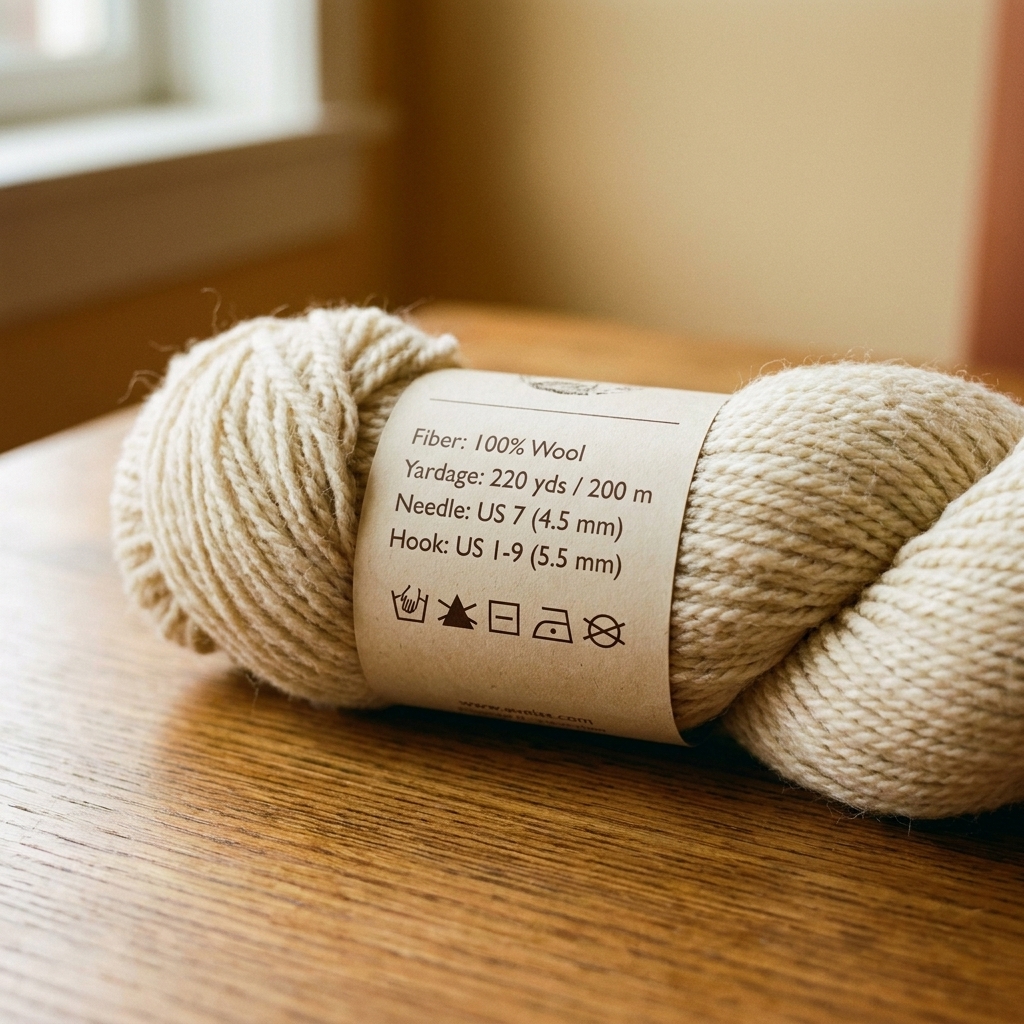
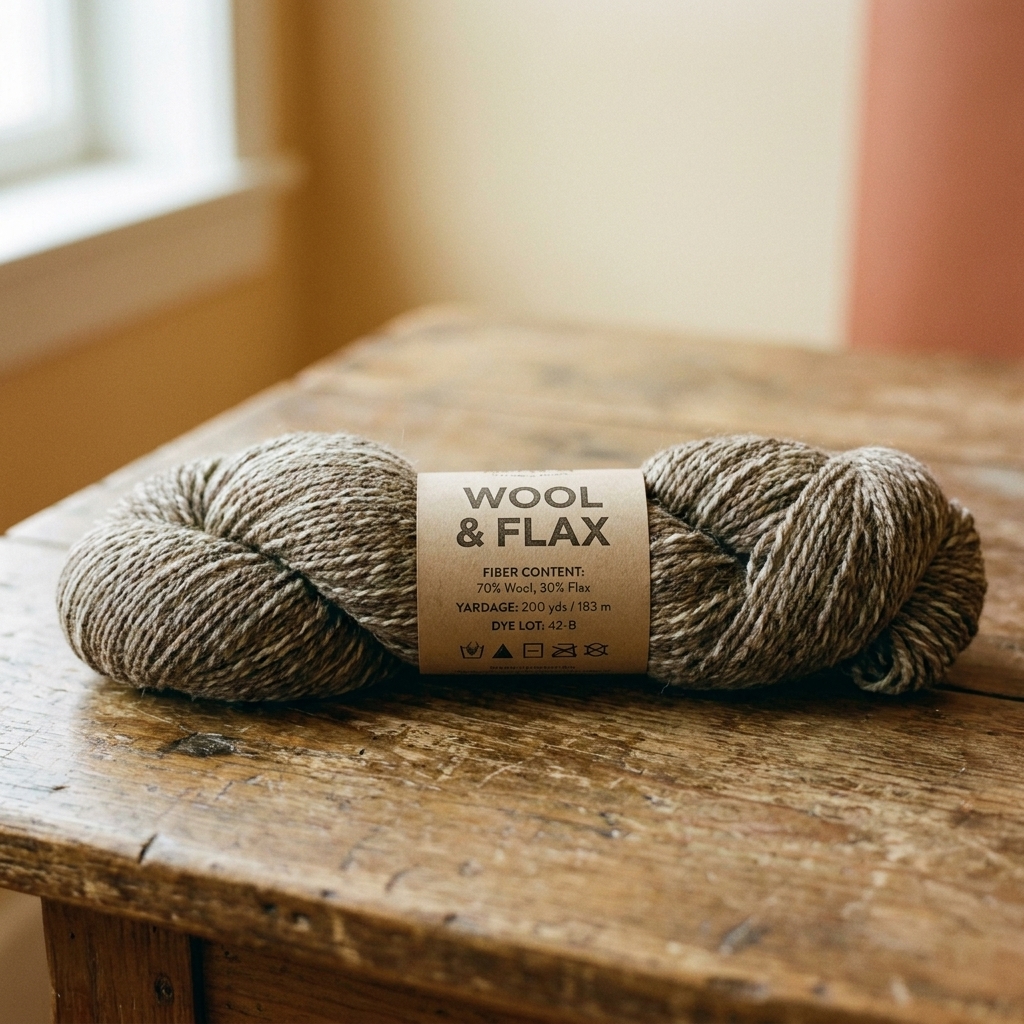
Most yarn labels include the same core details, even if the layout changes brand to brand. Here is what to look for:
- Brand and yarn name (helpful for reordering)
- Color name and color number (helpful for matching)
- Dye lot (critical for consistent color)
- Fiber content (how it behaves, feels, and washes)
- Weight category (lace, fingering, DK, worsted, bulky, etc.)
- Yardage or meterage (how much yarn you are getting)
- Grams or ounces (useful for substitutions and leftovers)
- Recommended needle and hook sizes (starting point, not a rule)
- Gauge info (how to get the intended fabric size)
- Care instructions (the “please do not ruin me” section)
- Construction or style (sometimes: plied, single, chainette, heather, tonal, variegated)
Now let’s slow down and translate the parts that cause the most confusion.
Dye lots: why “same color” can differ
A dye lot is a batch number that indicates the skeins were dyed together under the same conditions. Even with the same recipe, dyeing is a little like baking. Tiny differences in temperature, time, or dye concentration can shift the final color.
Where to find it
Look for text like “Dye Lot,” “Lot,” or a short code printed near the color number. It may be numbers, letters, or a mix.
What to do in the store
- Match dye lots for the same project. If you need 6 skeins, try to get all 6 with the exact same dye lot.
- Check every skein. One “odd one out” can sneak in if someone mixed stock on the shelf.
- If there is no dye lot listed, it may be a “no dye lot” yarn or a brand that does not track lots for consumers. Big production runs can be fairly consistent, but variation can still happen. When in doubt, buy what you need at once.
If your dye lots do not match, you still have options
Sometimes you inherit yarn, order online, or fall in love with the last skein on the shelf. If dye lots differ, you can often disguise the shift:
- Alternate skeins every 1 to 2 rows (or every few rounds) to blend. This is especially helpful in stockinette knitting or large single-color crochet sections.
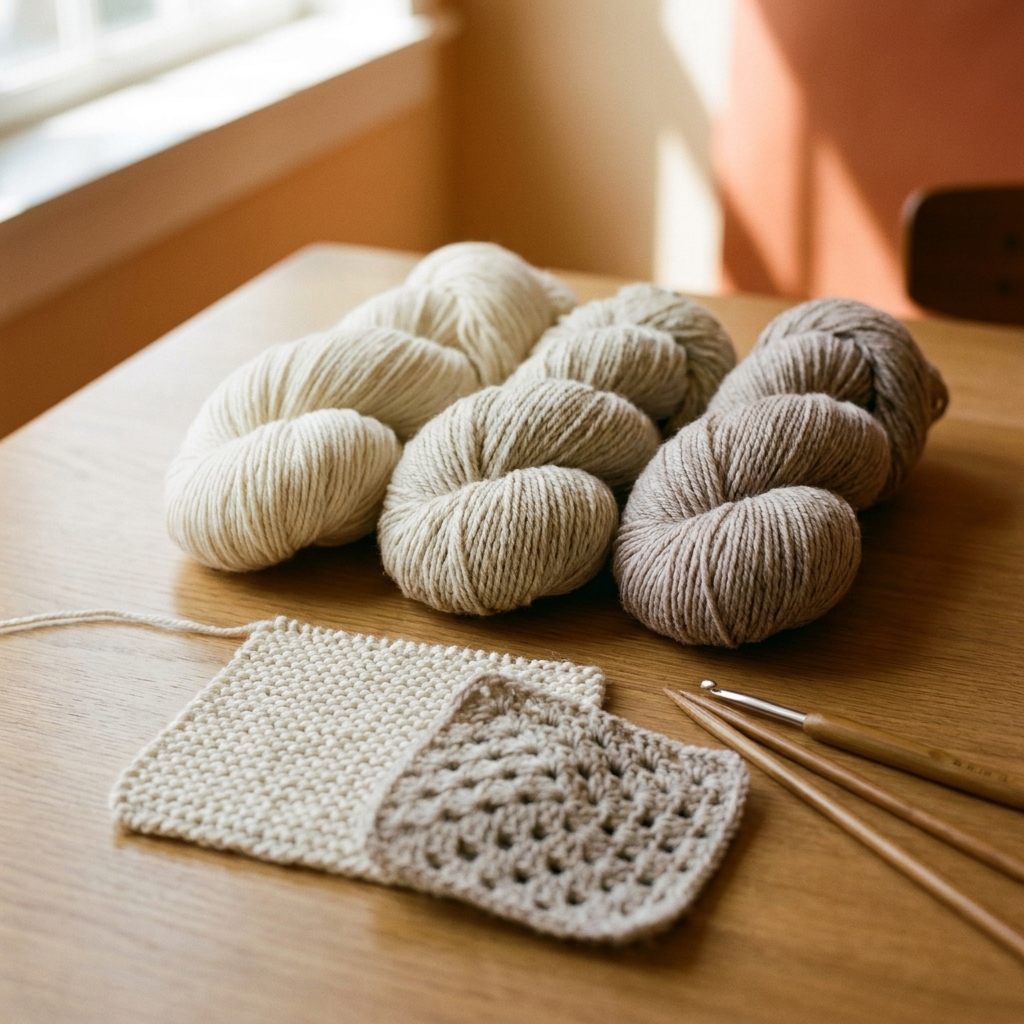
- Use the different lot as a feature: cuffs, collars, pockets, stripes, or a contrasting border.
- Reserve the slightly different skein for an area that is less noticeable (underarms, side panels, the back of a garment).
Yarn weight: a thickness category
On a yarn label, weight usually means the thickness category, not how heavy it feels in your hand. You might see words like fingering, sport, DK, worsted, bulky, or a number system (often 0 through 7).
Two important beginner notes:
- Weight categories are guidelines. “Worsted” can vary between brands.
- Your gauge matters more than the category name. Always. Especially for wearables.
Some labels also show a little ball-of-yarn icon with a number (for example, 4 for worsted). That is helpful for quick sorting, but do not stop there. Keep reading for gauge.
Yardage and meters: how much you have
Yardage or meterage is the “quantity” you are buying. This is usually printed as yd and m, plus the skein weight in g or oz.
Why you should care about both yards and grams
- Yards or meters tell you how far the yarn goes.
- Grams or ounces help you compare yarns when substituting. Two skeins can both be 100 g and have totally different yardage if one is thicker or denser.
If a pattern says you need 1200 yd, you can divide by the yardage per skein to estimate how many skeins to buy, then round up if you are between numbers. (If you are making something with sleeves, colorwork, cables, or a fluffy halo like mohair, rounding up is often the wise, peaceful choice.)
Needles and hooks: a starting point
Most labels list a suggested knitting needle size and crochet hook size. This is the manufacturer’s starting point for a “typical” fabric in that yarn.
Use it like you would use a recipe’s bake time. It gets you close, but your oven (and your hands) are unique.
How to use this info well
- Start with the suggested size when swatching.
- Go down a size if your fabric is too loose or your stitches are larger than the label gauge.
- Go up a size if your fabric is too stiff or your stitches are smaller than the label gauge.
A quick knit vs crochet reality check
Crochet fabric is often thicker and less drapey than knitting at the same yarn weight, depending on the stitch pattern, and crochet gauge varies a lot from person to person. If you crochet wearables, swatching is extra worth it. If you knit wearables, swatching is non-negotiable. (I say this gently while holding your hand. I also say it as someone who has absolutely ignored this advice and then acted surprised when a cardigan fit my teapot better than me.)
Gauge: the tiny box that controls fit
Gauge tells you how many stitches and rows make up a standard measurement of fabric, usually 4 in x 4 in (10 cm x 10 cm). A yarn label might show:
- Knitting gauge, like “18 sts x 24 rows = 4 in”
- Crochet gauge, sometimes listed separately, sometimes not listed at all
Gauge is not just about size. It also affects drape, density, warmth, and how much yarn you use.
What label gauge is based on
Label gauge is usually measured in a basic stitch, often stockinette for knitting or a simple crochet stitch, unless the label says otherwise. If your project uses cables, lace, moss stitch, bobbles, or any other texture, expect your gauge to shift. That is normal.
How label gauge should be used
Label gauge is best for:
- Planning (Is this yarn in the ballpark for the pattern?)
- Starting your swatch (Which needle or hook size should you try first?)
Label gauge is not a promise that you will get that gauge. Your hands, your tools, and even your mood can change it.
Beginner-friendly gauge steps (knit and crochet)
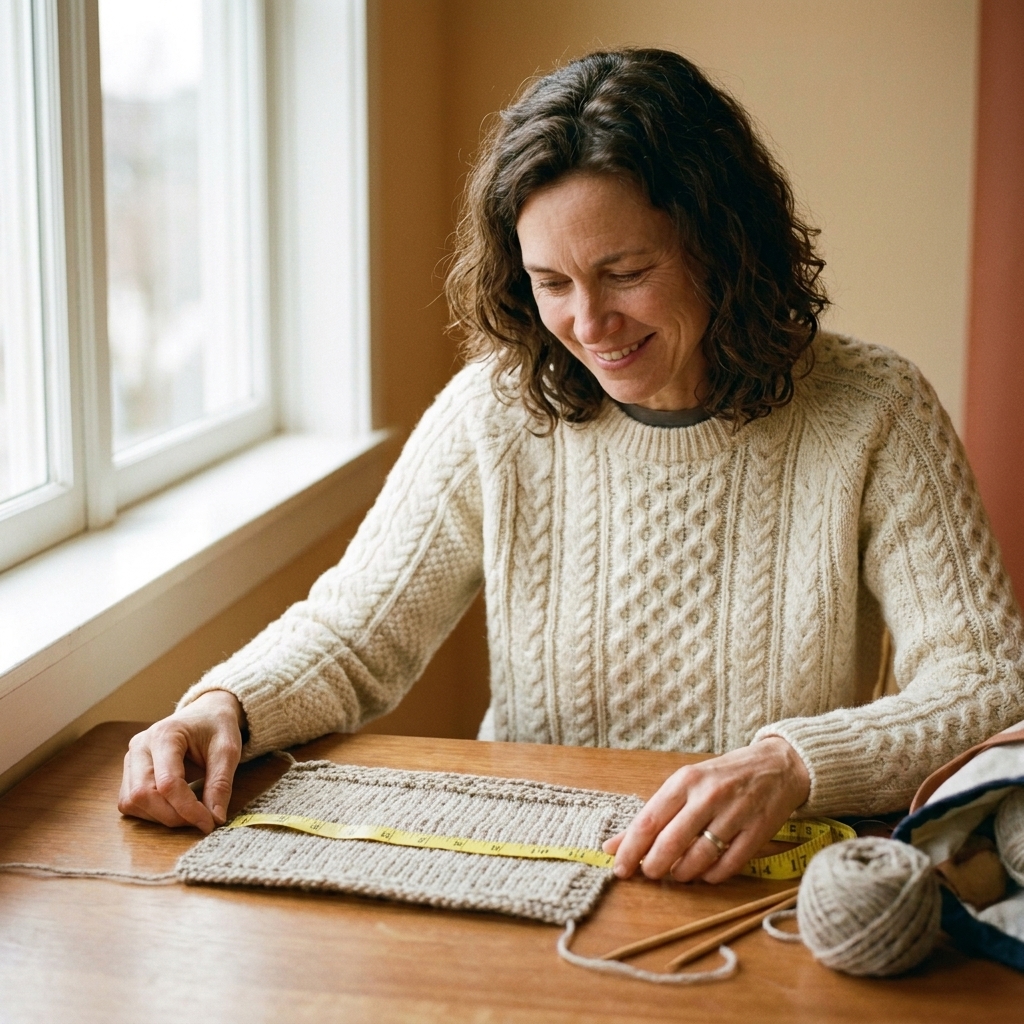
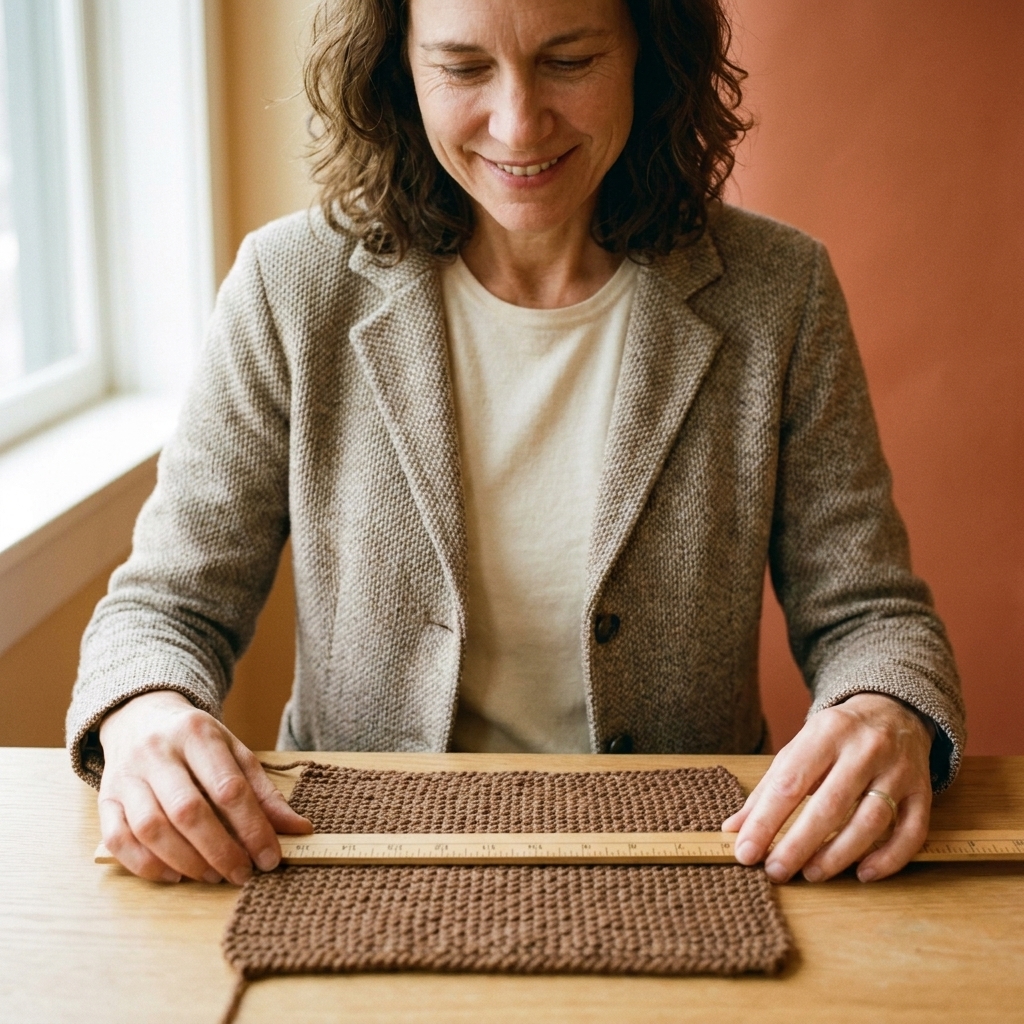
- Make a swatch bigger than 4 inches. Aim for at least 5 to 6 in so your edges do not mess with your measurements.
- Use the stitch pattern your project uses. Stockinette for stockinette, moss stitch for moss stitch, your chosen crochet stitch for that crochet project.
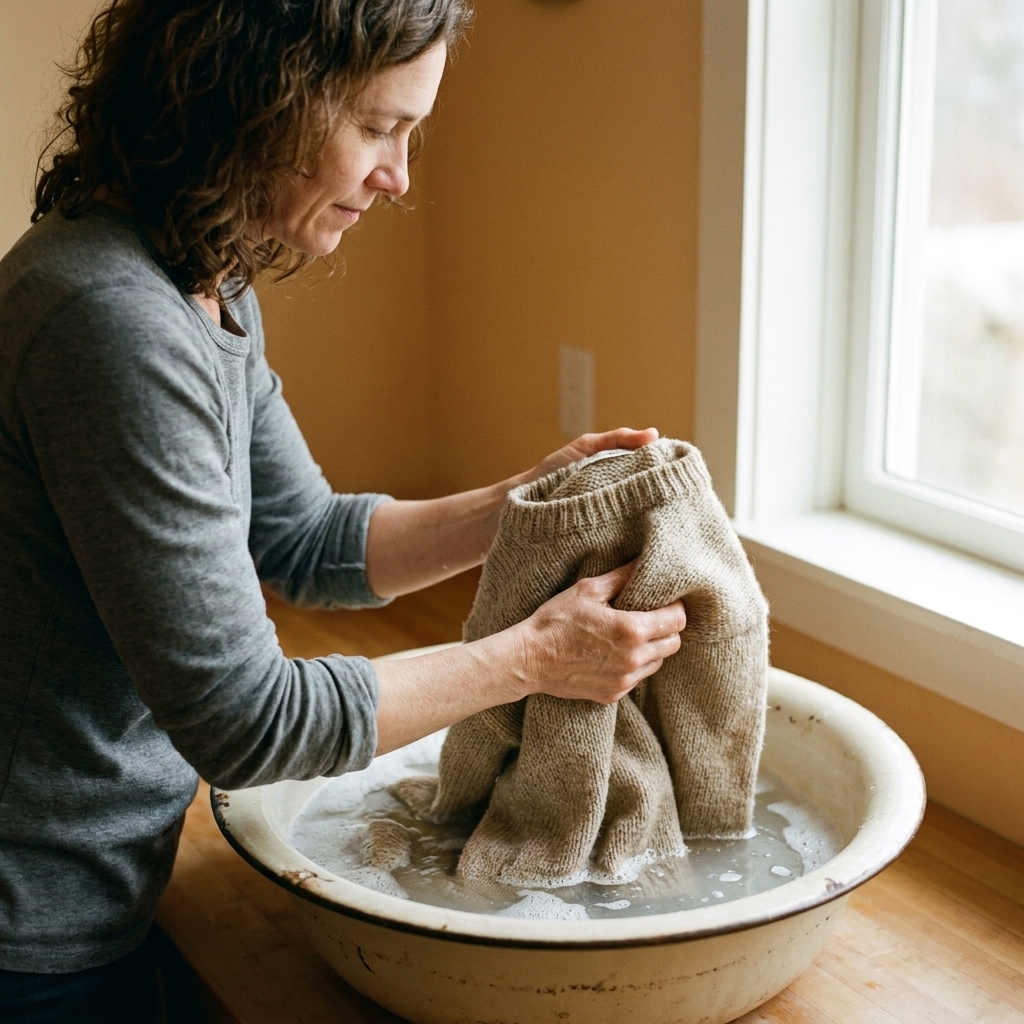
- Wash and dry the swatch the way you will wash the finished item. This is where yarn tells the truth.
- Measure stitches across the center 4 inches. Count stitches and rows.
- Adjust hook or needle size if needed and swatch again if fit matters.
Tea-time truth: Swatching feels like homework until you have a sweater that fits perfectly. Then it feels like magic you made on purpose.
Fiber content: how yarn behaves
Fiber content impacts nearly everything: softness, elasticity, drape, warmth, durability, stitch definition, and care needs. It is usually listed as percentages, like 100% wool or 80% acrylic, 20% wool.
Common fibers and what they mean for you
- Wool: Elastic, warm, often great stitch definition. Can felt if mishandled. Some wools are machine washable if labeled superwash.
- Superwash wool: Treated to resist felting. Often easier care, sometimes a bit more drapey and can grow with wear.
- Cotton: Cool, breathable, less stretchy. Great for dishcloths and summer tops. Can feel heavy in large projects and may stretch.
- Acrylic: Budget-friendly, usually machine washable. Can be wonderfully practical for blankets and kids’ items. Can be less breathable and can soften or melt under high dryer or iron heat.
- Alpaca: Soft and warm, less elastic than wool. Can drape and grow.
- Nylon blends: Added strength, common in sock yarn.
If you are aiming for a slow-fashion kind of wardrobe, fiber content is where you make a big, values-aligned choice. The most beautiful yarn in the world is not a great match if it needs hand washing and your real life only has “toss it in with the towels” energy.
Care instructions: keep projects happy
The care section is usually a row of symbols, sometimes with words like “machine wash” or “dry flat.” These symbols matter because they reflect the manufacturer’s recommended care based on the fiber, dye, and whatever standards or testing the brand follows.
The most common care messages on yarn labels
- Washing: machine wash allowed or hand wash only, plus suggested water temperature
- Bleach: whether bleach is safe (often it is not)
- Drying: tumble dry allowed, low heat only, or dry flat
- Ironing: whether ironing is safe and at what heat level
- Dry cleaning: whether professional cleaning is allowed
If you only remember one care rule
Match your care routine to the most delicate fiber in the blend. If a yarn is 80% washable acrylic and 20% wool that felts, you treat it like wool unless the label clearly says otherwise.
Extra care notes for knit and crochet
- Wet projects are heavier. This can stretch cotton, alpaca, and superwash wool. Support items while washing and consider drying flat.
- Heat is a troublemaker. High heat can felt wool and can damage acrylic. If the label says low heat or no tumble dry, believe it.
- Colorwork and dark colors: If the yarn is deeply saturated, consider a quick colorfastness test with your swatch before you mix it with lighter colors.
Hanks, skeins, and cakes: the put-up
Sometimes the label also hints at how the yarn is packaged, and that matters more than it sounds.
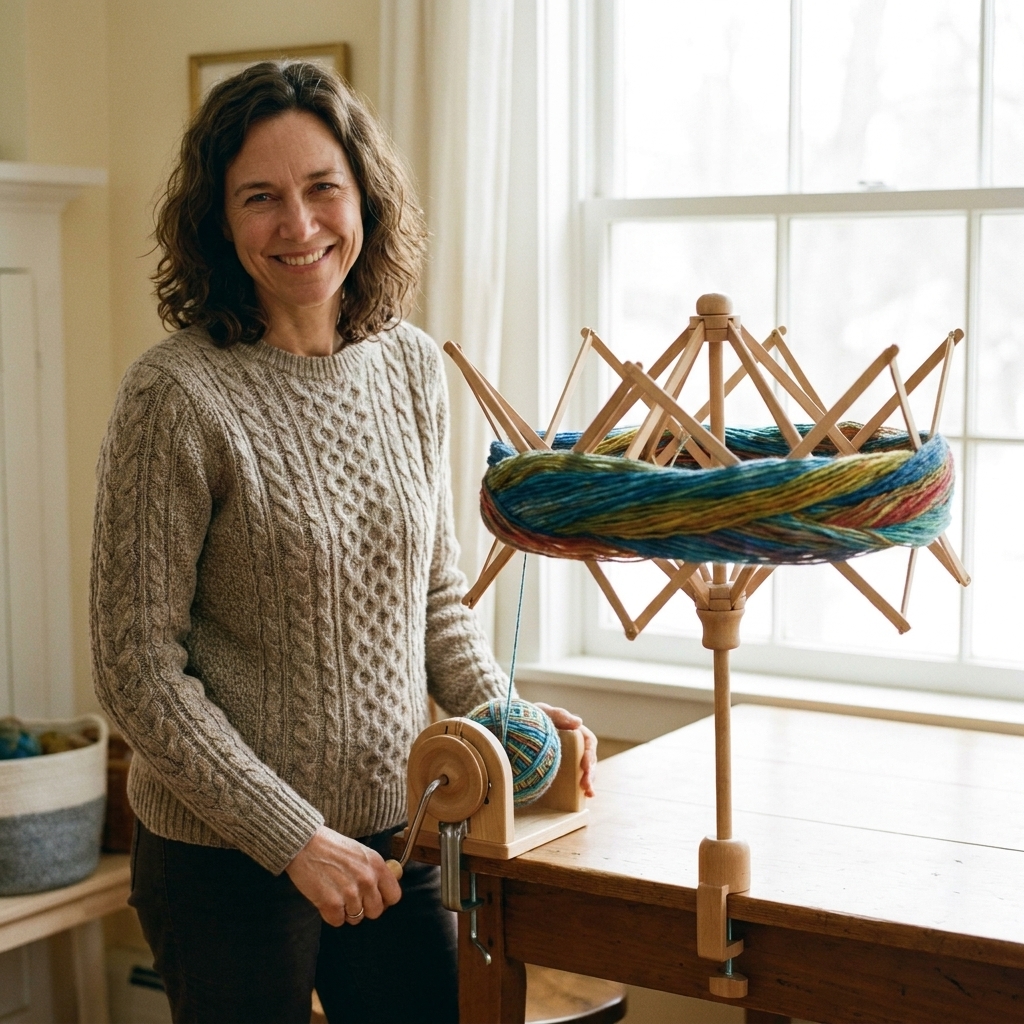
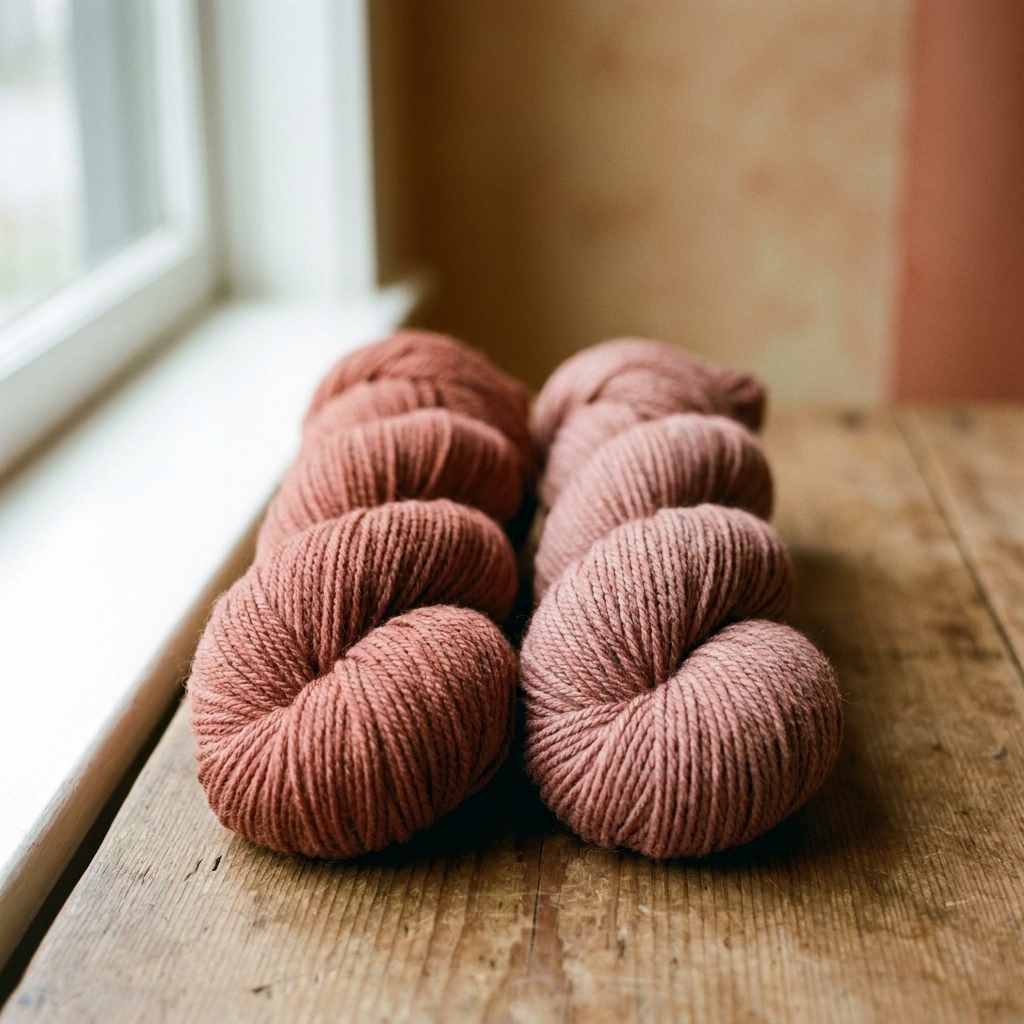
- Hank: A big loop of yarn (often twisted into a pretty braid). It usually needs to be wound into a ball or cake before you can use it, unless you enjoy yarn spaghetti as a lifestyle choice.
- Skein: The classic pull-from-the-center or pull-from-the-outside option, depending on how it is wound and how cooperative it feels that day.
- Cake: A flat cylinder shape, often designed for easy center pull.
If your yarn is in a hank, plan on winding it (with a winder and swift, or by hand around a chair back) before you start. Future you will be grateful.
Color style: solids, tonals, and pooling
Some labels describe the color style: solid, heather, tonal, speckled, variegated, and so on. This is not just marketing, it helps you predict how the fabric will look.
- Solids and heathers tend to show stitch definition clearly.
- Tonals and variegated yarns can create beautiful movement, but they can also pool or stripe in unexpected ways, especially in simple stitches.
If you are unsure, a quick swatch is the fastest way to see whether your “dream yarn” turns into “why is it doing that” in your chosen stitch pattern.
Putting it together: choosing yarn
When you are planning a project, here is the order I like to check things. It keeps you from falling in love with a yarn that will not cooperate with your plans.
- Fiber content: Does it suit the purpose and the wearer?
- Care instructions: Can you realistically care for it the way it needs?
- Yardage per skein: Will it take a reasonable number of skeins for your pattern?
- Dye lot: Can you buy enough in the same lot right now?
- Gauge and suggested tools: Is it a good match for the fabric your pattern wants?
Buying yarn with intention is not about being strict. It is about giving your time and your hands a project that will last, and that you will actually enjoy wearing or using when it is done.
Common yarn label questions
What if my label does not list crochet gauge?
That is common. Use the knitting gauge as a rough reference for yarn thickness, then swatch with the stitch you plan to use and adjust your hook size until you like the fabric. If you are matching a pattern gauge, the pattern gauge wins.
Can I mix dye lots for a blanket?
Yes, and it can be totally fine. For large flat projects, alternating skeins is your best friend. If the difference is noticeable and you do not want to alternate, you can intentionally place the shift as stripes or blocks so it looks designed.
Is the recommended hook size the “right” one?
It is the suggested starting point. The right hook is the one that gives you the fabric you want and meets gauge when gauge matters.
Why does my gauge match in stitches but not rows?
Very common in both knitting and crochet. Row gauge affects length, like sleeve length or body length. You can sometimes adjust length by working more or fewer rows, but if the difference is big, consider adjusting your tool size, your technique, or choosing a different yarn.
A final cozy tip: keep the label
When you start a project, tuck at least one yarn label into your project bag. Future you will want it for:
- Reordering the exact yarn and color
- Checking dye lot info
- Confirming care instructions
- Remembering fiber content if you gift the item
If you are feeling extra organized, snap a quick photo of the label too. I like to think of it as leaving breadcrumbs for the next time I fall head-over-heels for a yarn and cannot remember what it was called.