One more row. Then just one more.
And then you look down and think: why do my stitches look a little crossed? Why is my stockinette pulling on a diagonal like it is trying to scoot off the needle?
Those are classic signs of twisted stitches. The good news is that twisted stitches are one of the most fixable knitting quirks once you know what to look for: the leading leg of the stitch.
What it means to twist a stitch
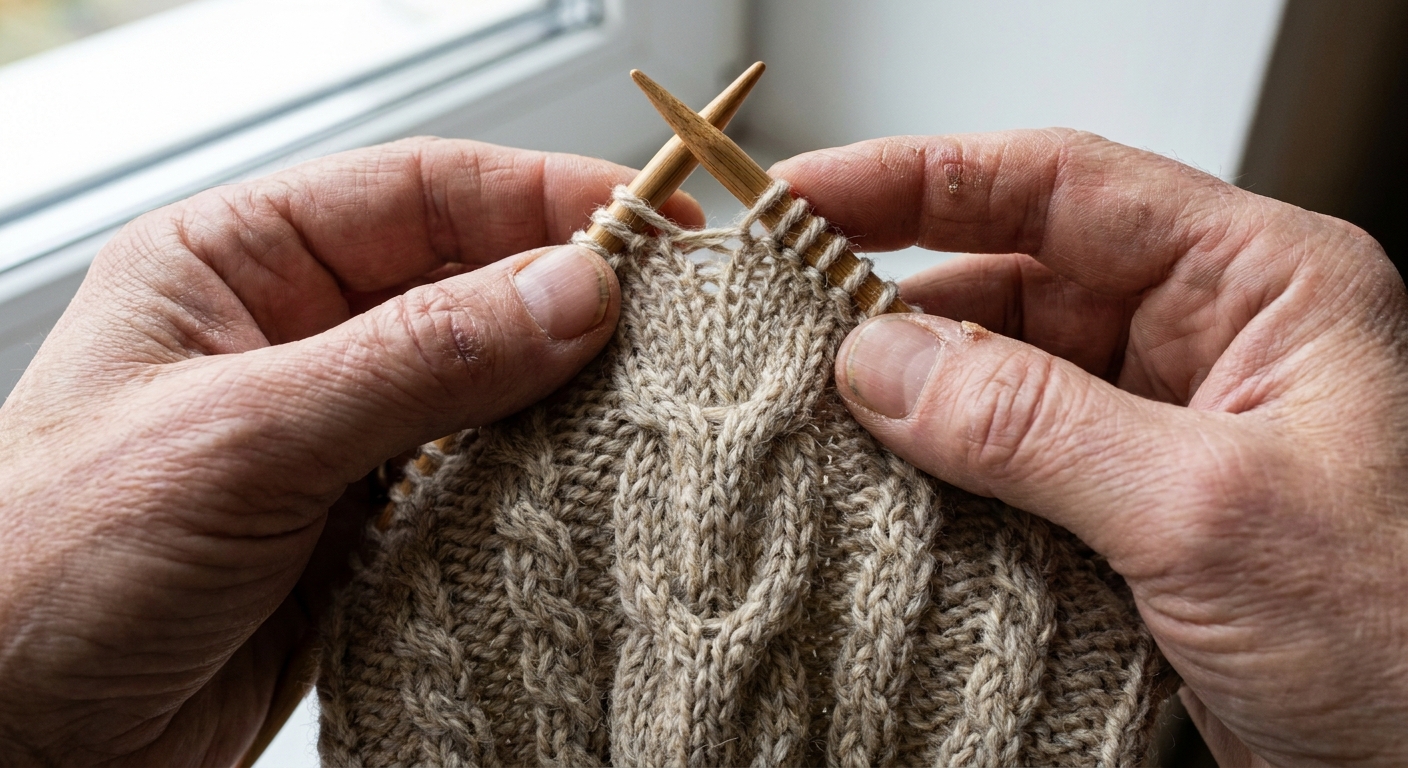
A stitch is “twisted” when its two legs cross each other at the base instead of sitting open like a tiny V. In knitted fabric, that crossing usually happens because the stitch is worked through the “wrong” leg for how it is mounted on the needle.
Here is the core idea I keep in my stitch-counting head:
- The leading leg is the leg of the stitch that sits closest to the tip of your needle.
- In most Western-style knitting, stitches sit with the front leg leading (the leg in front of the needle is closer to the tip).
- If the stitch is mounted with the back leg leading, and you knit it the usual way through the front, you will twist it.
Twisting tightens the stitch, reduces stretch, and can make fabric look ropey or pinched. If it happens consistently across a row or the whole project, it can also make stockinette bias (lean diagonally) because every stitch is slightly pulling the fabric in the same direction.
The quickest visual check
Before you even knit it, you can tell whether the next stitch is mounted in a twist-prone way.
Check on a knit row
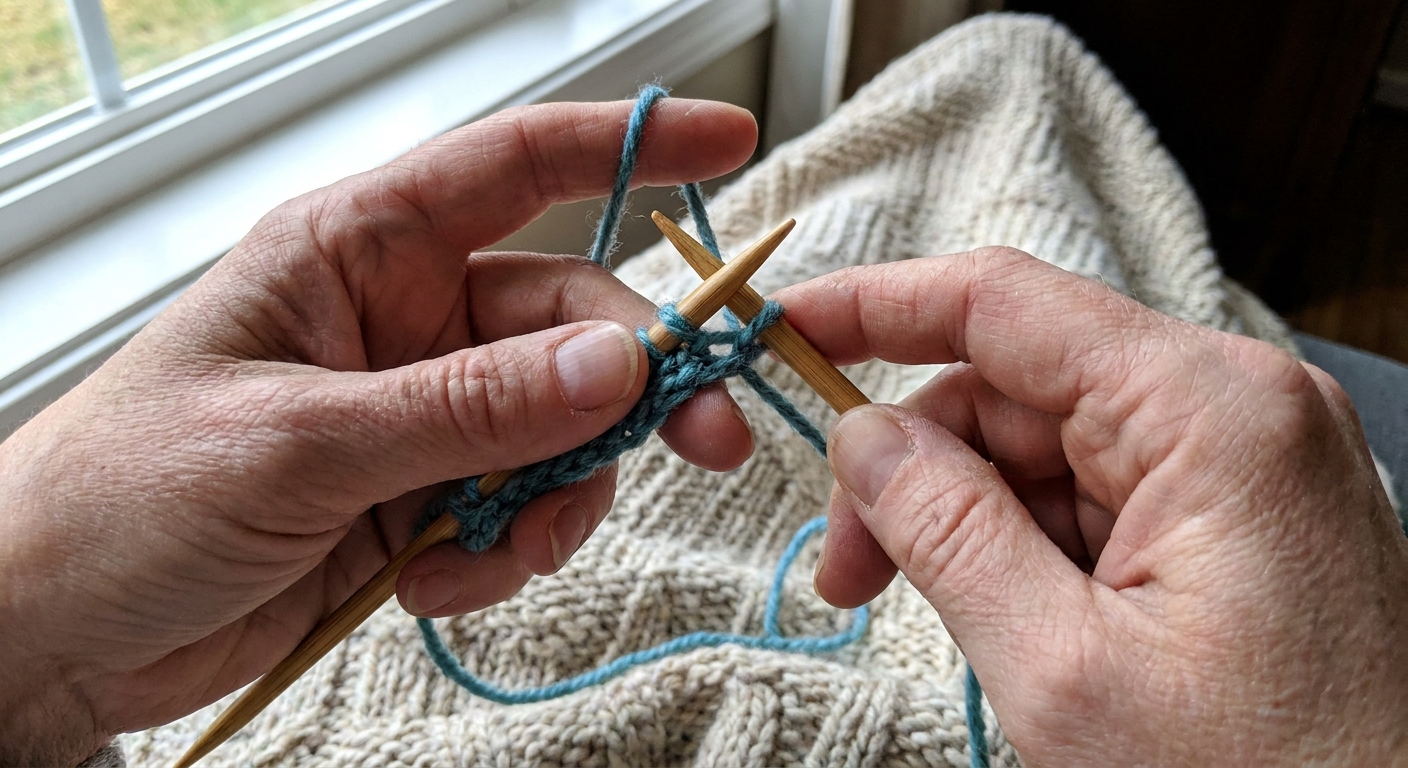
With your working needle holding stitches, look at the next stitch as it sits on the left needle:
- If the front leg is in front and closest to the needle tip, it is mounted in the common Western orientation. Knitting through the front loop (the usual way) will not twist it.
- If the back leg is closest to the needle tip, the stitch is mounted “backwards.” If you knit through the front loop as usual, that stitch will twist.
Check on a purl row
A whole lot of accidental twisting starts on the purl row. Why? Because the direction you wrap the yarn when you purl controls how the stitch mounts on the needle for the next row.
After you finish a purl row, pause and look at the newly formed stitches on your needle:
- If the front leg is leading, your purl wrap is producing stitches in the standard orientation for Western-style knitting.
- If the back leg is leading all across, your purl wrap direction is likely reversed, and the next knit row will twist if you knit through the front loop.
If your knit rows look fine but every stitch that came from a purl row looks crossed, this is the clue.
Why twisted stitches slant
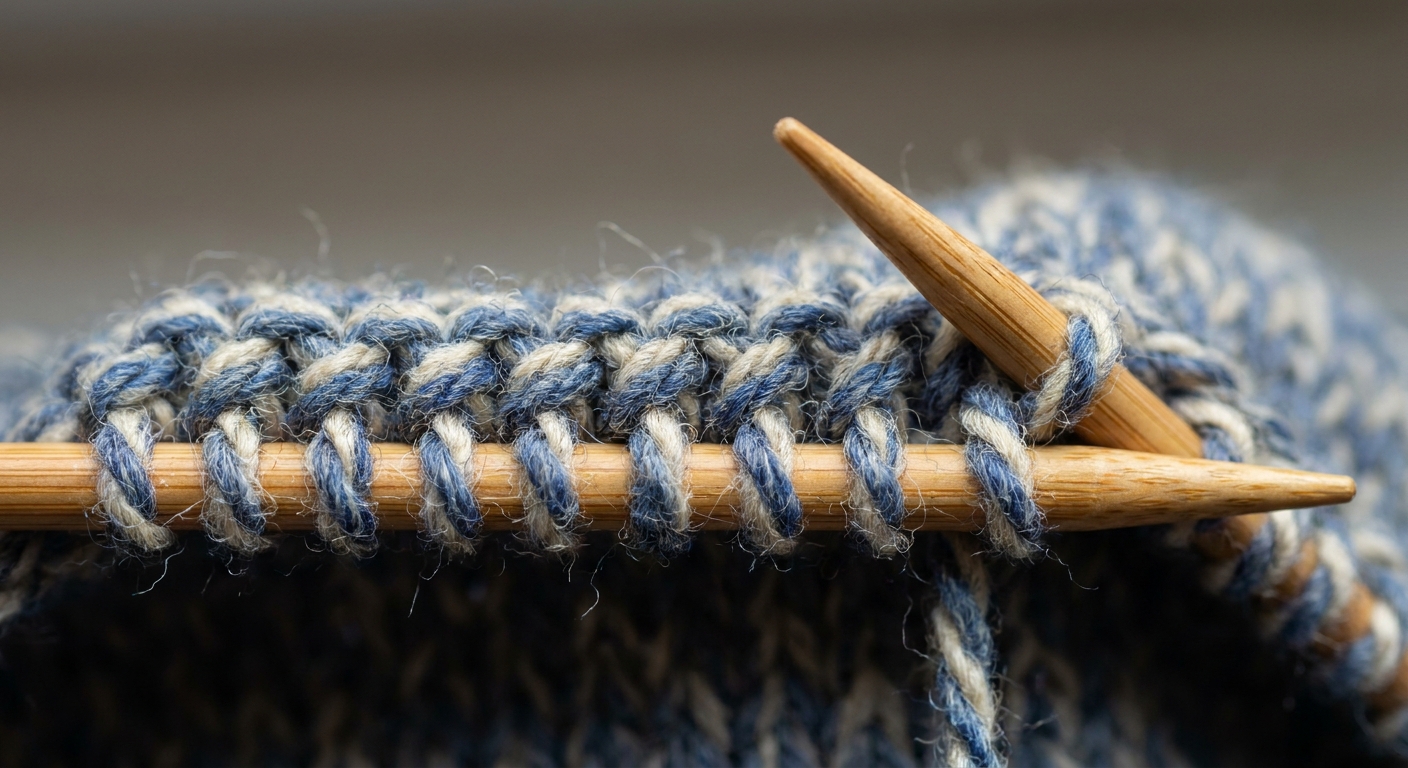
Stockinette normally stacks up in tidy columns of V’s. When stitches are twisted, each stitch is slightly tightened and “corkscrews” the path of the yarn. Over many stitches and rows, that tiny pull adds up, and the fabric can start to bias, meaning:
- Columns lean instead of standing straight.
- The fabric may skew diagonally when you lay it flat.
- Edges can look more wavy or stubbornly curl in an uneven way.
Some fibers and some yarn twists show it more than others, but the mechanics are the same: crossed legs add torque.
Common causes
1) Wrapping the yarn the opposite way when purling
This is the big one. If you wrap the yarn in the opposite direction than the standard method you are following, your purl stitches mount differently. Then, on the next row, knitting them “normally” twists them.
If you are a thrower, you might be scooping the yarn the wrong way around the needle. If you are a picker, your yarn hand might be bringing the yarn under instead of over (or vice versa) on purls.
2) Knitting through the wrong loop
If your stitches are mounted with the back leg leading but you knit through the front loop, twist happens. Likewise, if your stitches are mounted normally but you keep knitting through the back loop by accident, you will twist them too.
3) Switching styles mid-project
Some knitters knit one way and purl another, or learn from different sources over time. Mixing a combination like Eastern-mounted purls with Western-mounted knits can create twists unless you match your “which loop do I enter?” to the mount you are producing.
4) Twisting on purpose, then forgetting
A planned twisted-stitch pattern is lovely. The trouble comes when only one row is twisted, or only the knit side is twisted, because the habit stuck after a rib edge or a decorative column.
When back loop is correct
Knitting through the back loop is not “wrong.” It is a tool. Here are the common times it is exactly the right move:
- You want a twisted stitch. Many patterns call for it to add definition and firmness.
- You are untwisting a backwards-mounted stitch without changing how it was wrapped. If the stitch on your left needle has the back leg leading, knitting through the back loop will often work it open instead of crossing it.
- You are working certain decreases. Techniques like
sskand its variations can involve entering the back loop to control stitch orientation and slant.
The key is intention: back-loop knitting is great when it matches what your stitches are doing on the needle and what you want the fabric to do.
How to fix twists
If you only have a few twisted stitches, you do not have to frog your whole project. You can usually remount or ladder down just where you need.
Option A: Remount before you knit
This is the cleanest fix when you spot the problem on the needle, before working it.
- Stop before knitting the stitch.
- Use your right needle tip to slip the stitch purlwise off the left needle.
- Turn it so the front leg becomes the leading leg (for most Western-style knitting).
- Slip it back onto the left needle.
- Knit (or purl) it normally.
This changes the mount so you can work it without twisting.
Option B: Work the correct leg
If the stitch is mounted with the back leg leading and you do not want to rearrange it, you can work it through the back loop so it comes out untwisted in the fabric.
This is especially handy if you are mid-flow and can confidently read the stitch mount.
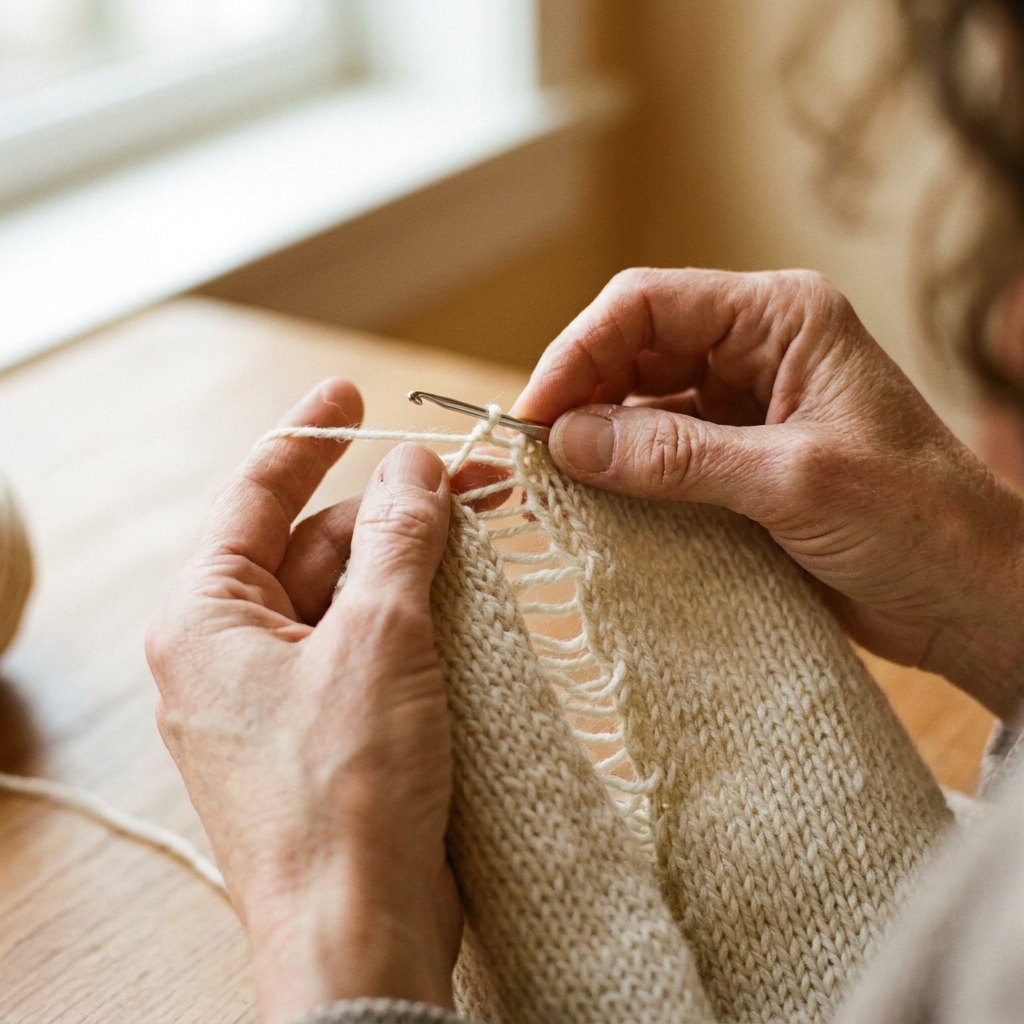
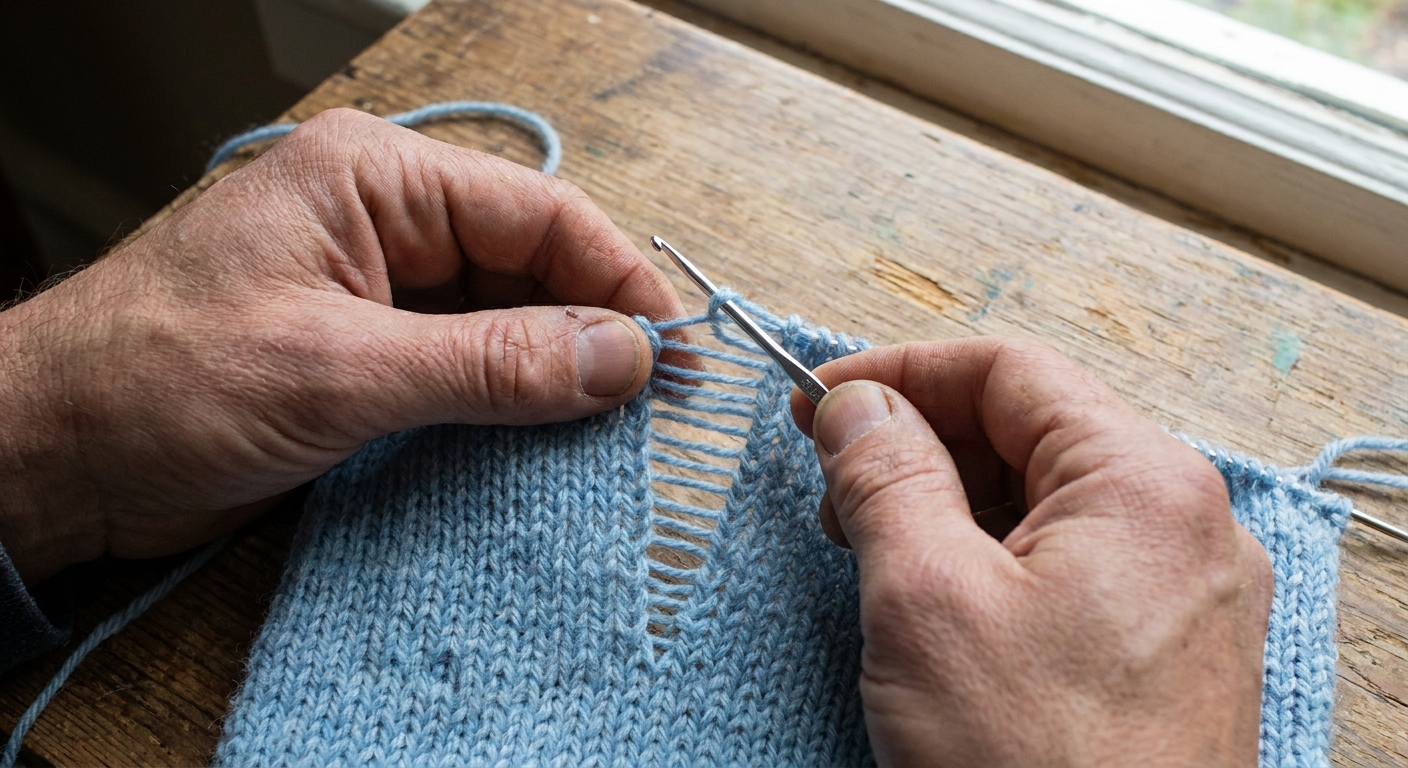
Option C: Ladder down to fix it
If the stitch is already knit a few rows below and you only notice later, you can correct just that column.
- With the right side facing, find the twisted stitch column.
- Carefully drop the stitch off the needle at the top of that column so it can run down (just that one column).
- Let it unravel down to the twisted stitch.
- When you reach the twist, use a crochet hook or your needle tip to re-form the stitch with the legs uncrossed.
- Continue hooking each ladder rung back up the column.
- Place the recovered stitch back on the needle with the correct mount.
Go slowly and keep your thumb behind the fabric so the dropped column does not race further than you intended. If you are nervous, place a locking stitch marker or a spare needle through the row below as a safety net.
A simple test
On smooth stockinette, untwisted knit stitches look like tidy V shapes. Twisted stitches often look like:
- A V with a little cross at the bottom
- A tighter, narrower stitch than its neighbors
- Columns that look braided or rope-like when you did not mean them to
If your fabric is very textured or fuzzy, check the stitches on the needle instead. The mount tells the truth even when the yarn is playing shy.
Quick troubleshooting
My knits look fine, but my purls look twisted
Look at how you wrap the yarn for purls. If your purl wrap direction is producing stitches with the back leg leading, either change the wrap direction or work the following row through the loop that untwists them.
Everything is twisted
You are likely consistently entering the wrong loop (front vs back) for how your stitches are mounted, or consistently wrapping in a way that sets up a twist on every row. Check stitch mount after a knit row and after a purl row and adjust one variable at a time.
My fabric is slanting, but I do not see twists
Some yarns bias slightly due to ply and twist. But if the slant is dramatic and the fabric feels tight with reduced stretch, twisted stitches are still a top suspect. Check the leading leg on the needle and look for crossed legs at the base of the stitch.
Keep going
Twisted stitches are not a moral failing. They are just a mismatch between how the stitch is mounted and which loop you work through.
Once you get in the habit of a quick glance at the leading leg, you will spot the issue early, fix it in seconds, and get back to the best part.
One more row. Then just one more.