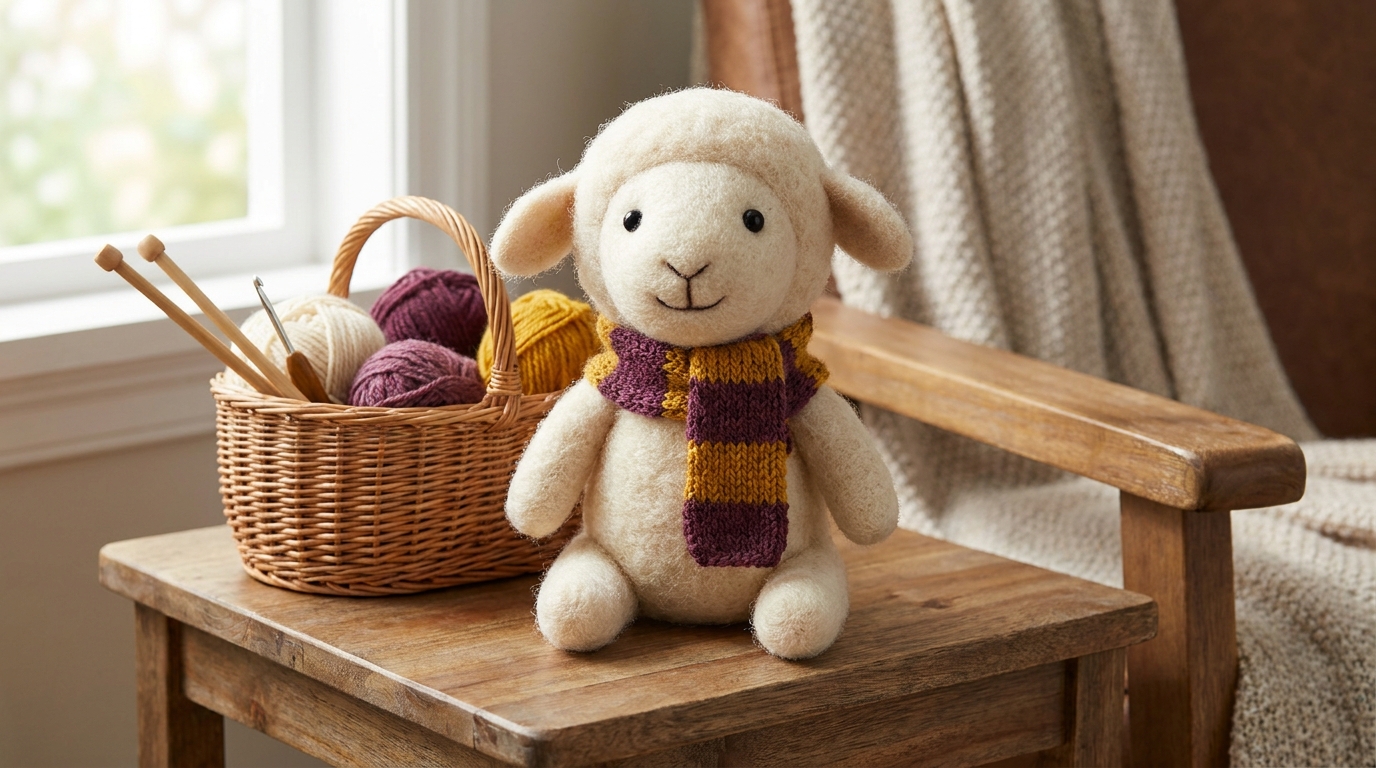
One more row. Then just one more.
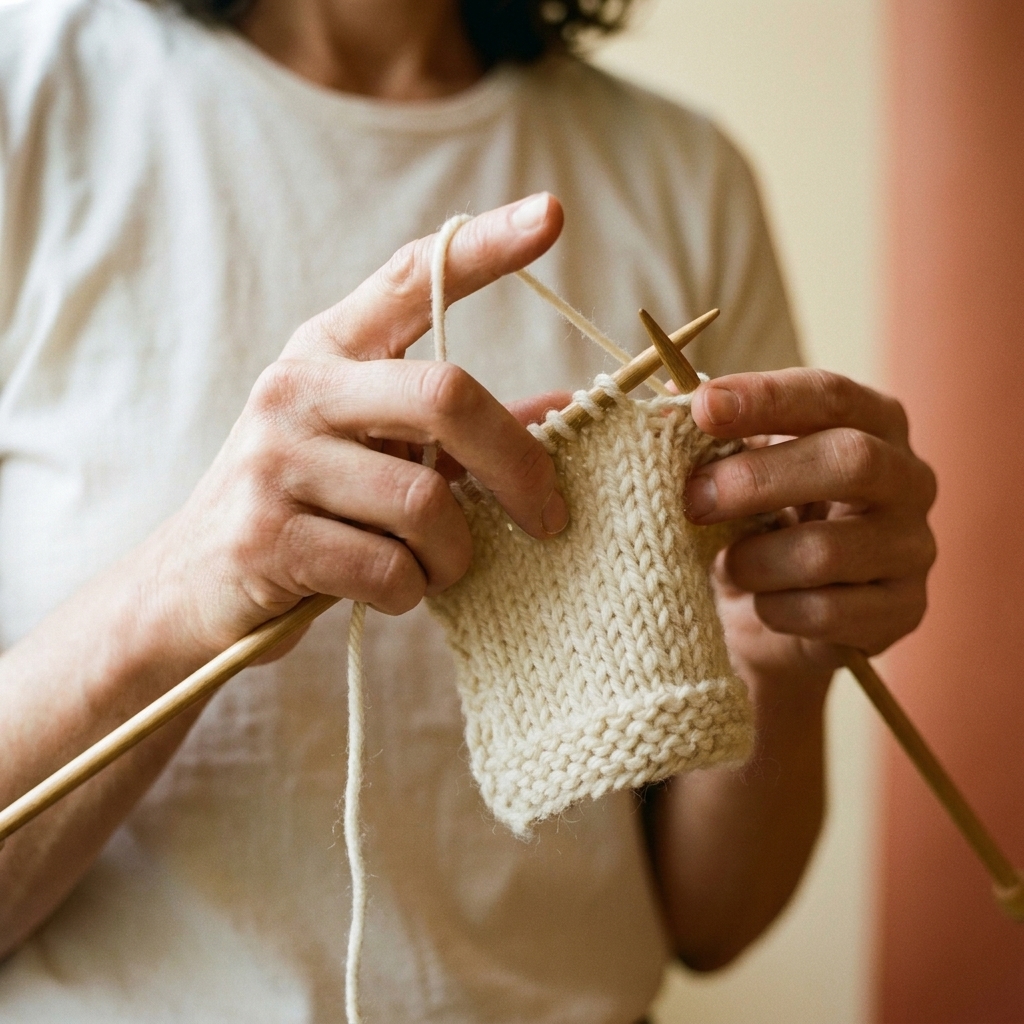
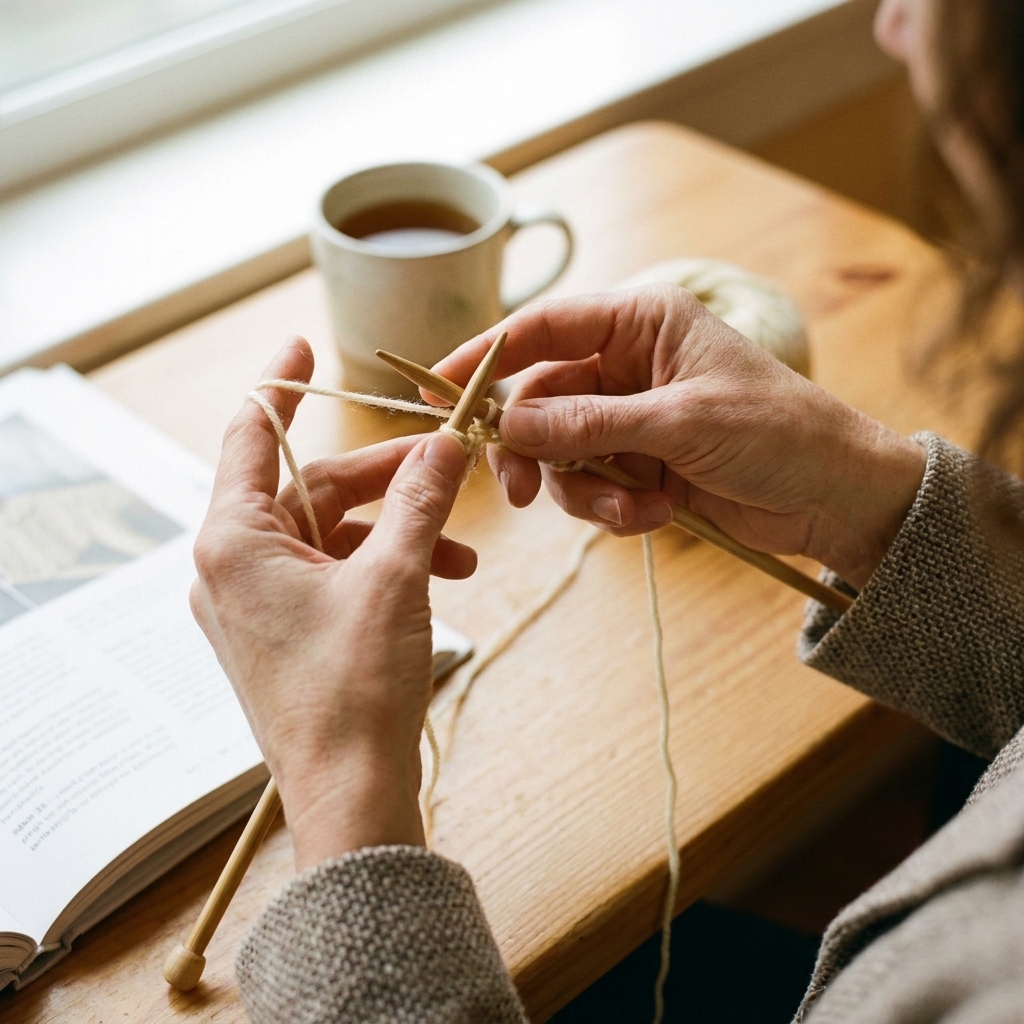
If you are brand new to knitting, the first big fork in the path is not needles or yarn. It is how you hold the working yarn. Continental knitting holds the yarn in the left hand. English knitting holds the yarn in the right hand and wraps it around the needle (often called throwing).
Here is the cozy truth: both methods create the same stitch structure. Same knit stitches, same purl stitches, same squishy stockinette and tidy ribbing. What changes is how your hands get the yarn to the needle, and in practice, your habits around tension can affect gauge and the look of your columns. And yes, you can switch later.
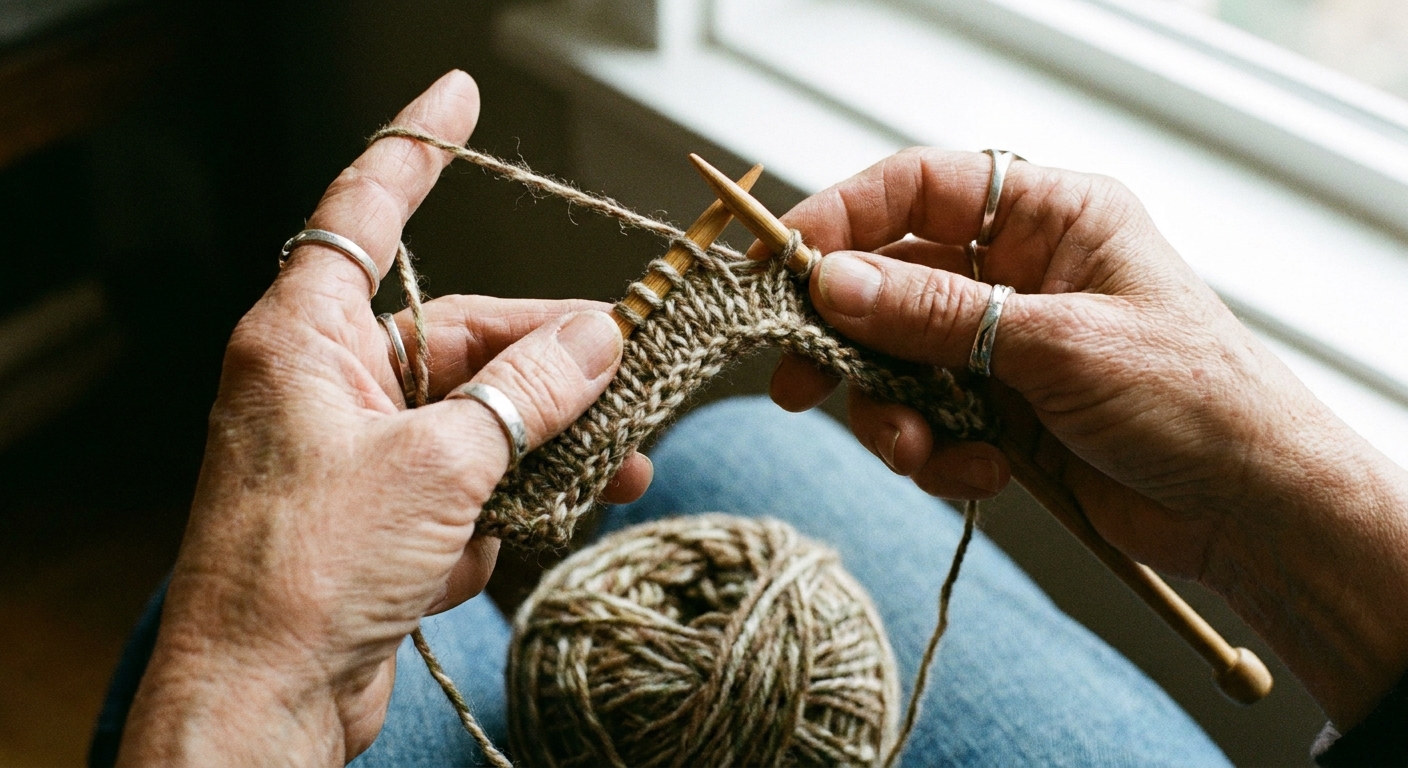
The quick difference
Continental knitting (yarn in left hand)
The yarn is tensioned in the left hand, usually over the index finger. The right needle typically picks or scoops the yarn through the stitch with smaller movements.
English knitting (yarn in right hand)
The yarn is held in the right hand. For many knitters, the right hand wraps the yarn around the right needle tip to form the new loop. This is why you often hear “throwing.” Some knitters use a variation called flicking, which keeps the right hand closer to the needle.
- Big idea: Continental tends to use shorter, more economical motions. English throwing can use larger motions, especially early on.
- Same structure: Both build the same fabric structure. Your gauge and tension habits are what make fabric look tighter, looser, taller, or more relaxed.
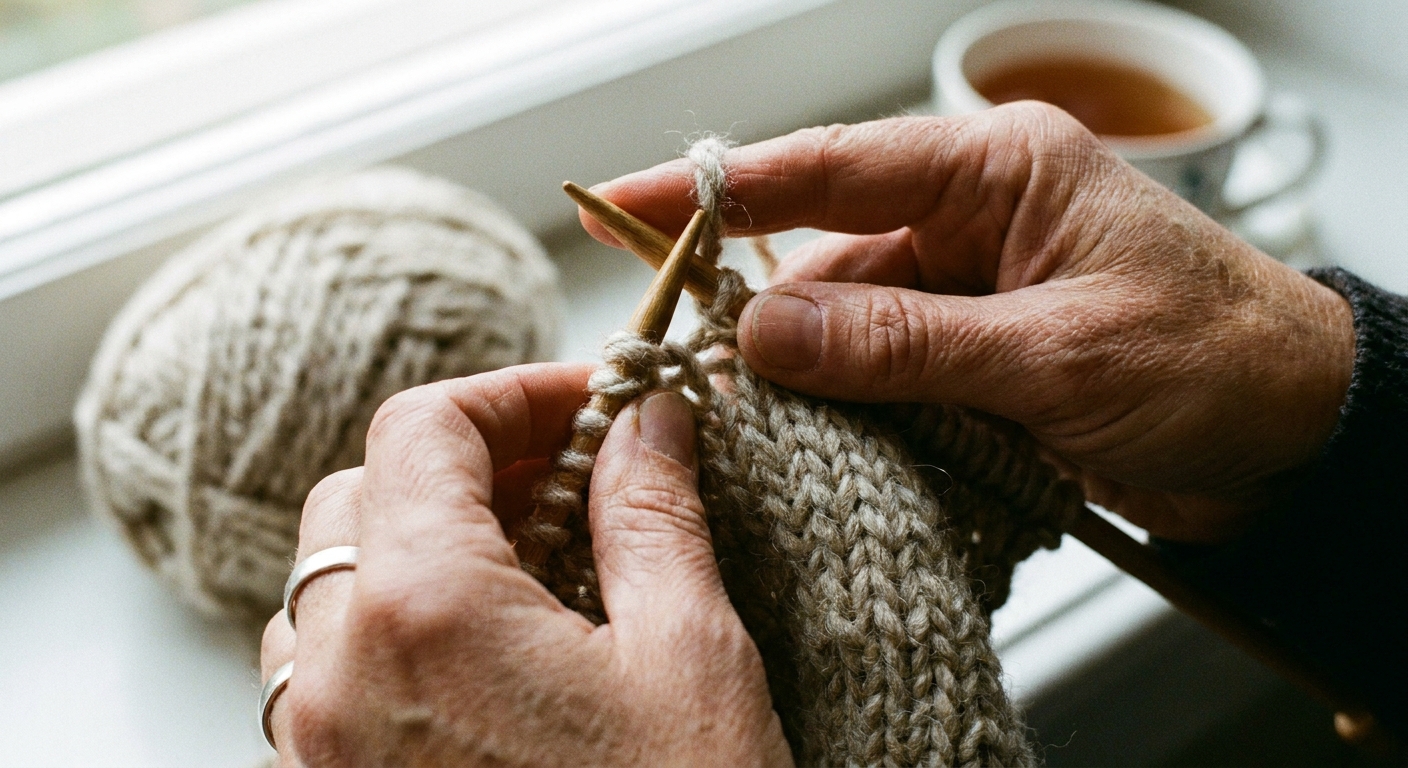
Speed
Speed in knitting is mostly a mix of muscle memory, efficient motion, and comfortable tension. Yarn hold can nudge things one way or another, but the gap often shrinks with practice.
Continental: often faster once it clicks
Because the working yarn is already near the needle tip, the right needle can pick it with small movements. Many knitters find that, after an awkward beginning, continental knitting becomes very quick for knit stitches.
English: often steadier at first, fast with practice
Throwing can feel slower if your right hand leaves the needle a lot. But English knitters who learn to keep movements small, often by flicking the yarn with the index finger, can knit very quickly.
Tip: If you are timing yourself, do it after you have knit a few inches. The first ten rows are often clumsy. That is normal. Keep going anyway.
Tension and consistency
Tension is your yarn’s “just right” snugness. Too tight and your stitches fight back. Too loose and the fabric can look lacy when it should look smooth.
Continental tension
Continental knitters often wrap the yarn through the left fingers in a way that adds gentle resistance. This can make it easier to keep a steady flow of yarn, but it can also lead to tight knitting at first, especially if you grip the yarn hard.
English tension
English knitters may find tension easier to understand because the yarn is deliberately wrapped for each stitch. The flip side is that tension can vary if your throwing motion changes row to row.
Both can be perfectly even
If your stitches look uneven right now, it is almost never because you chose the “wrong” hold. It is because your hands are learning. Even tension comes from repetition and relaxed grip, whichever style you use.
- If you knit too tight: Try going up a needle size, relaxing your grip, or letting the yarn glide with less finger wrap.
- If you knit too loose: Add a bit more yarn wrap around a finger, or focus on snugging the new stitch on the needle shaft, not the tip.
Comfort
Your hands should feel busy, not cramped. Comfort matters because knitting is supposed to be a long, happy hobby.
Continental: less motion, but watch the left hand
Many knitters like continental because it can reduce big arm and hand movements. However, if you tension the yarn tightly through the left fingers, your left hand can fatigue. Keep your grip soft and your shoulders low.
English: can be gentle, but watch the right wrist
Throwing can put more repetitive work into the right hand and wrist, especially if the hand lifts and swings for each stitch. If your wrist feels grumpy, experiment with keeping the right hand closer to the needles, or look into flicking.
If anything hurts: Pause. Stretch. Adjust posture and grip. Pain is a stop sign, not a challenge.
Knit and purl
No matter which yarn hold you choose, the knitted fabric is built from two basic moves: knit and purl.
In continental
- Knit stitch: The right needle tip typically picks the yarn from the left hand through the stitch.
- Purl stitch: Many knitters find continental purling fiddlier at first because the yarn and needle tips are working close together in front. It gets smoother with practice, and some knitters use purl variations that feel more natural in continental.
In English
- Knit stitch: The yarn is wrapped around the right needle to form the new stitch.
- Purl stitch: English purling often feels straightforward for beginners because you are still wrapping the yarn in a familiar way, just with the yarn in front.
Important: If one style makes purling feel like a tangle, that does not mean you are failing. It means your fingers have not memorized the path yet.
Which should beginners learn?
If you are choosing a first yarn hold, here are the most common beginner-friendly paths.
English: clear steps for many beginners
Many new knitters find English throwing easier to understand because it is very visible: insert needle, wrap yarn, pull through. The steps are clear and separate. That said, some beginners click faster with continental, especially if they like smaller motions.
Continental: often friendly for crocheters
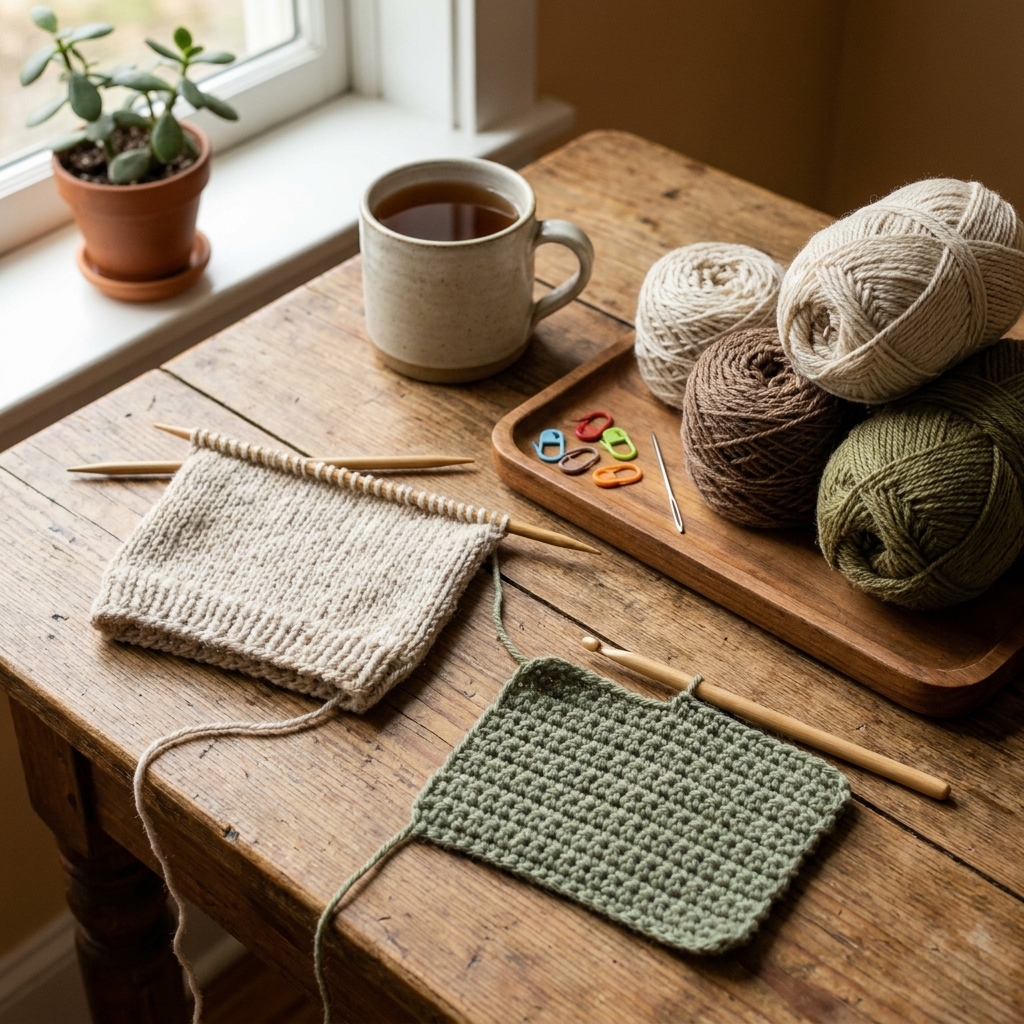
Crocheters are used to controlling yarn with the left hand. That familiarity can make continental feel like a shorter leap, even if the needles are new.
Left-handed?
You do not need a special knitting style just because you are left-handed. Yarn hold is about comfort and coordination, not which hand you write with. Try both and keep the one that feels calmer.
Choose what feels calm
- If you like clear, step-by-step motions, try English.
- If you like keeping the yarn in place and making smaller movements, try Continental.
- If your hands are tense in one method after a few minutes, try the other.
Either way, give yourself at least a small swatch worth of time. Your first attempt at any hold will feel like trying to pet a cat while tying a shoelace. That is part of learning.
Yes, you can switch
Knitting is wonderfully flexible. Many knitters switch holds over time, or mix them.
- Switch later: If you start in English and want more speed, you can learn continental. If you start in continental and want a different feel for purls, you can learn English.
- Use both: Some knitters knit continental and purl English, or vice versa, depending on what feels smooth. If you mix methods, keep an eye on tension so your gauge stays consistent.
- Patterns do not care: Most patterns simply assume you will form knit and purl stitches correctly. The yarn hold is your personal preference.
Also, if you fall down a knitting rabbit hole later, you will discover there are other styles too. You do not need them to get started.
Try both in 10 minutes
Grab smooth, light-colored yarn and needles that feel comfortable in your hands. Worsted weight and needles around size US 7 to 9 are a common starting point, but it is always smart to check your yarn label too.
- Cast on 15 stitches in whichever method you already know, or using any cast-on you are learning.
- Knit every row (garter stitch) for 6 rows using English throwing, slowly, focusing on relaxed hands.
- Knit every row (garter stitch) for 6 rows using continental, slowly, focusing on letting the yarn glide.
- Compare how your hands feel, how even the stitches look, and which motion feels easier to repeat.
If one section looks messier, that is fine. You are comparing brand new muscle memory, not final skill.
Common hiccups
My stitches are too tight in continental
- Loosen the yarn path through your left fingers. Use fewer wraps.
- Stop pulling the yarn after every stitch. Let the needle size set the stitch size.
- Try a slightly larger needle while you learn.
I drop the yarn in English throwing
- Keep the yarn draped over the right index finger for a bit of control.
- Focus on wrapping with smaller movements, closer to the needle tips.
- Slow down and aim for consistency, not speed.
My purls feel impossible
- Check yarn position: for purling, yarn in front; for knitting, yarn in back.
- Make sure you are not accidentally twisting stitches by wrapping yarn in an unusual direction for your style. A simple rule is to wrap the yarn the same direction you normally do for a knit stitch in that style, so the stitch sits on the needle the way your other stitches do.
- Try a few rows of garter stitch (all knit) first, then add purls later.
FAQ
Is continental always faster?
No. Continental can be very fast because the movements are small, but an English knitter who flicks or throws efficiently can be just as speedy. Comfort and consistency beat raw speed every time.
Does yarn hold change the look of my knitting?
Not by itself. Knit stitches are knit stitches. What changes the look is your tension, your gauge, and whether your stitches are twisted or uneven. Either hold can produce beautifully even fabric.
Which is better for ribbing or stockinette?
Either works. If switching between knit and purl feels clunky in one method, you might prefer the other for ribbing. But plenty of knitters rib happily in both styles.
Can I teach myself both?
Yes. Learn one well enough to feel steady, then experiment with the other on a swatch. Switching styles is a skill, not a betrayal.
Pick one, knit daily
If you are stuck choosing, here is my gentle nudge: pick the hold that feels most understandable today. Knit a small square. Let your hands learn the path. You can always try the other method next week.
One more row. Then just one more.