One more row. Then just one more.
If your stockinette fabric is curling up like it has places to be, you didn’t break anything. Stockinette curl is a classic, normal habit of the stitch pattern. It is not a dropped stitch, not a tension disaster, and not proof that your needles are haunted.
Let’s talk about why it rolls, what actually works to stop it, and when you might want to invite the curl to stay.
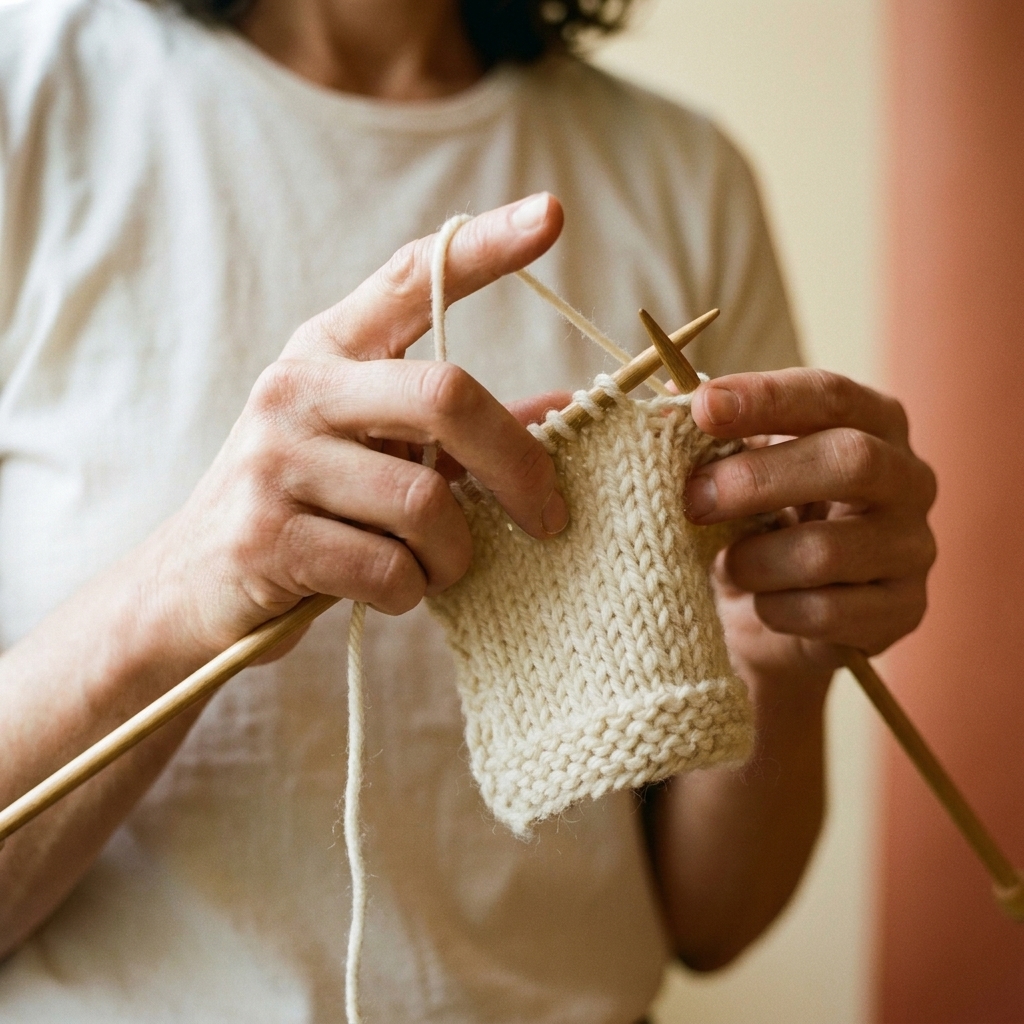
What stockinette curl looks like
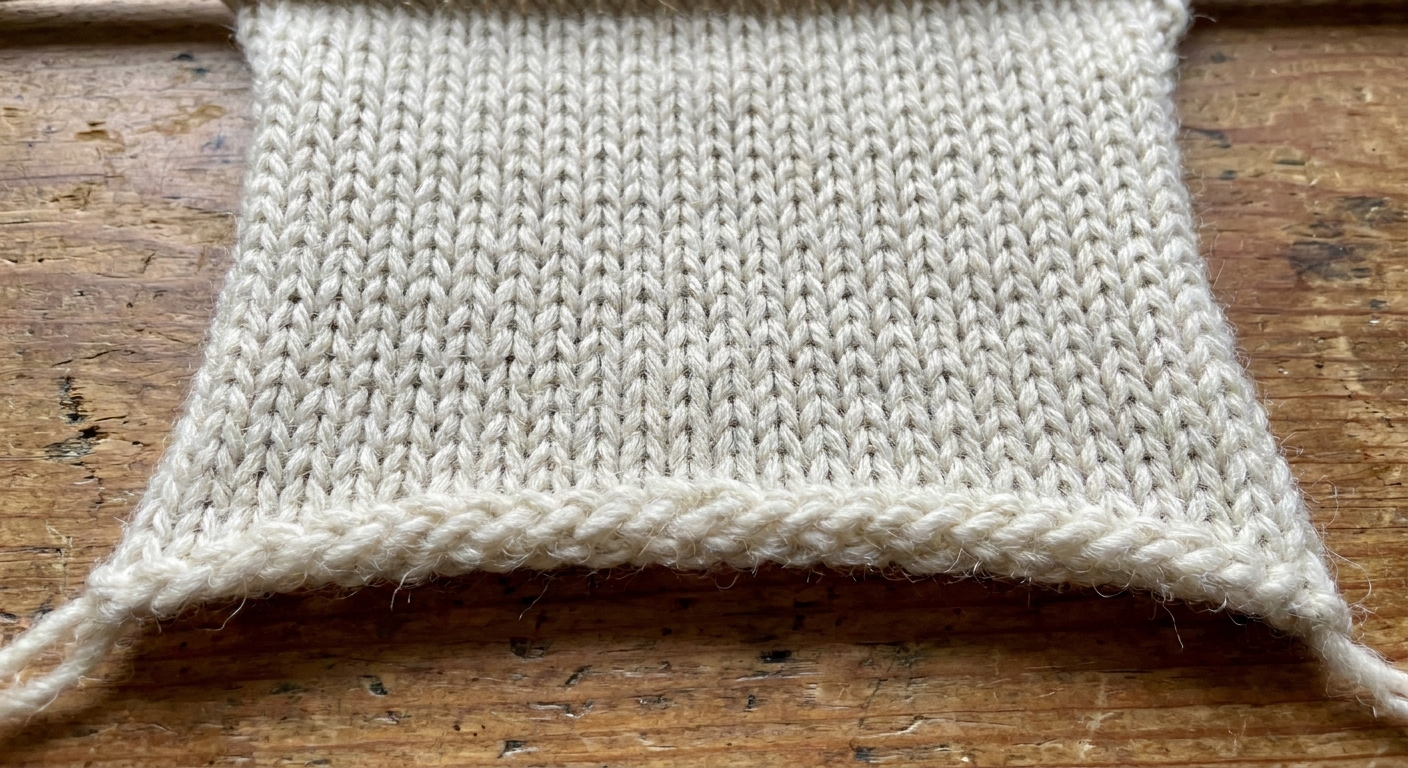
In stockinette stitch, the fabric usually:
- curls up at the bottom cast-on edge
- curls down at the top bind-off edge
- curls toward the purl side on the left and right edges
A quick qualifier: “up” and “down” can look reversed depending on which side is facing you and how you’re holding the fabric. The consistent part is this: the side edges roll so the purl side ends up on the inside of the curl.
This can happen in flat stockinette (knit a row, purl a row) and in stockinette in the round (knit every round). It can happen with wool, cotton, acrylic, and blends. Some fibers and gauges curl more dramatically, but the urge to roll is part of the structure.
Why stockinette curls
Stockinette is built from two different surfaces:
- Knit stitches on the right side, which look like neat V’s
- Purl stitches on the wrong side, which look like little bumps
Those two sides do not behave the same way under tension. Knit stitches and purl stitches have different geometry, and the fabric they create has slightly different “pull” along rows and columns.
Inside the fabric, those forces balance out. At the edges, there is nothing holding the stitch structure in place, so the fabric rolls until it finds a position where the tensions feel more even. In practical terms, the edge curls so one side becomes the inside of the curve and the other becomes the outside. Stockinette tends to roll so the knit side wraps around and the purl side hides inside along the side edges.
That’s why a stockinette scarf wants to become a tube. That’s why a stockinette swatch tries to impersonate a cinnamon roll.
Is curling a mistake?
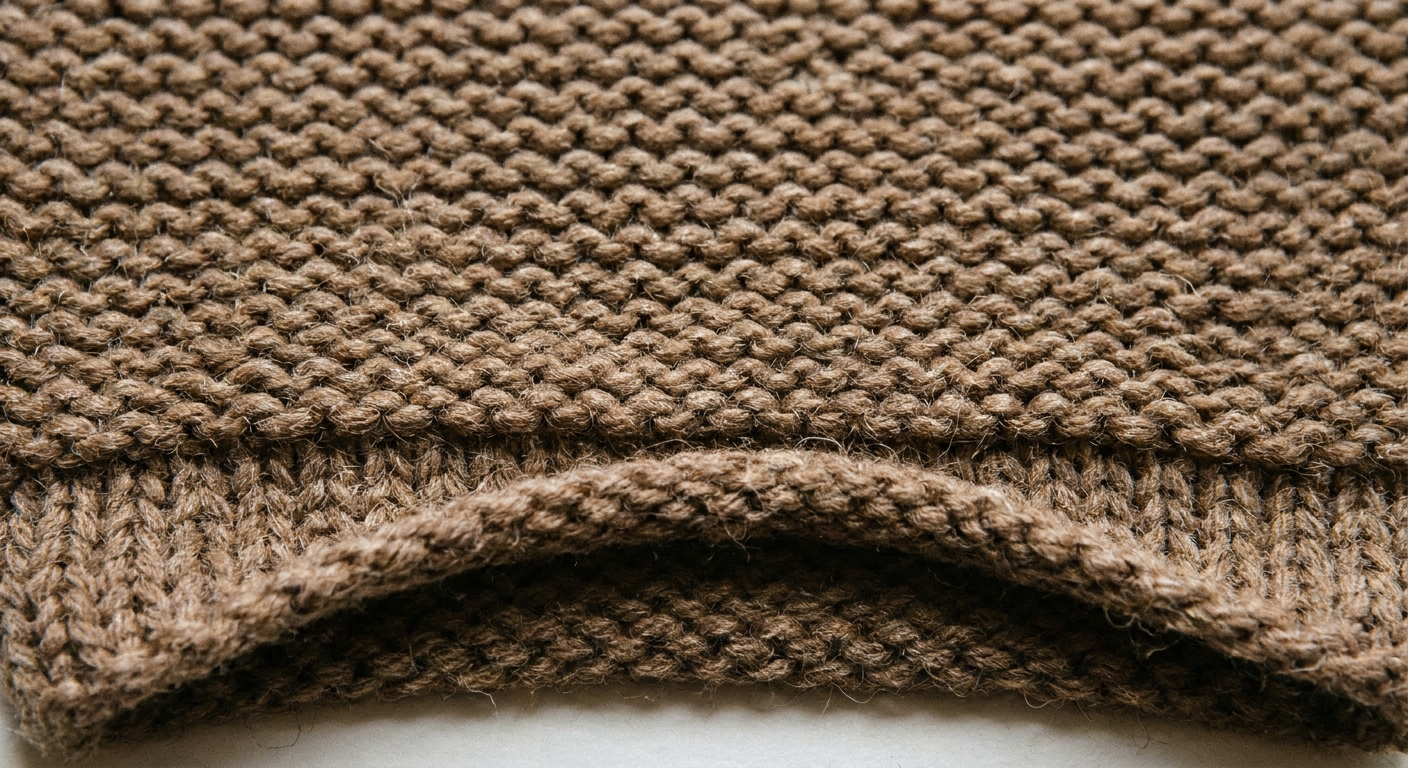
Most of the time, no. Curling edges are not a sign of:
- Dropped stitches (those create ladders, holes, or runs)
- Uneven tension (that creates wavy or inconsistent stitch size)
- Twisted stitches (those make stitches look crossed and tighter)
If your stitches look even and the fabric is smooth, the curl is just stockinette being stockinette.
One quick check: lay your work on a table without stretching it. If it rolls neatly and consistently along the whole edge, that’s normal curl. If it has random points pulling hard or odd ripples, you may also have a gauge or tension issue, but the curl itself is still expected.
Fixes that work
Add a border
The most reliable way to stop stockinette from rolling is to frame it with a stitch pattern that lies flat. Think of it like adding a little fence that keeps the fabric from wandering off.
Good border options:
- Garter stitch (knit every row flat): sturdy, beginner-friendly, and very flattening
- Seed stitch: textured and balanced, great for scarves and blankets
- Ribbing (1x1 or 2x2): ideal for hems, cuffs, and hat brims where you want stretch
- Moss stitch: similar to seed stitch but with a slightly different rhythm
How wide should the border be? Wider is more persuasive.
- Minimum: about 1 inch (2.5 cm) for many projects
- Better: 1.5 to 2 inches (4 to 5 cm) for scarves, blankets, and big flat panels
If you are making a scarf and you want it to behave politely, a generous garter or seed stitch frame is usually the calmest choice.
A simple scarf edge recipe
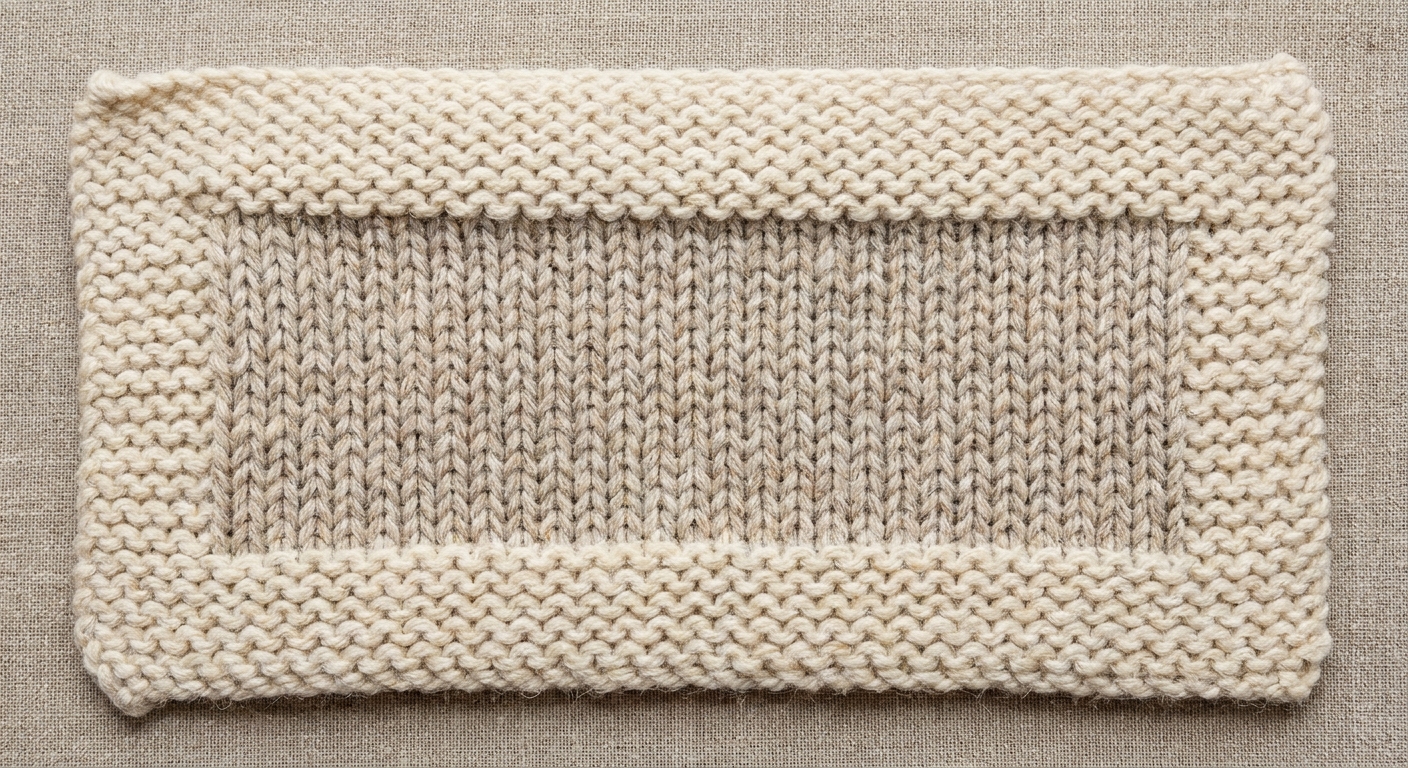
If you want a plug-and-play setup that behaves for most scarf yarns, try this:
- Cast on your desired stitch count
- Knit 8 rows in garter stitch
- Work the body like this: 8 stitches garter, then stockinette across the middle, then 8 stitches garter
- At the end, knit 8 rows in garter stitch, then bind off
It is simple, it is boring in the best way, and it does not surprise you later.
Make the edge wider
One or two edge stitches in garter often are not enough to overpower stockinette’s curl, especially on long edges. If you have ever added a single selvedge stitch and watched the fabric curl anyway, your knitting was not ignoring you. It was just outvoting you.
Try these practical upgrades:
- Side borders: 6 to 12 stitches of garter or seed stitch on each side
- Bottom and top borders: 8 to 16 rows of garter, seed, or ribbing
For blankets and large panels, go wider. Big pieces have more weight, and stockinette has more time to curl before you notice it.
Block after you finish
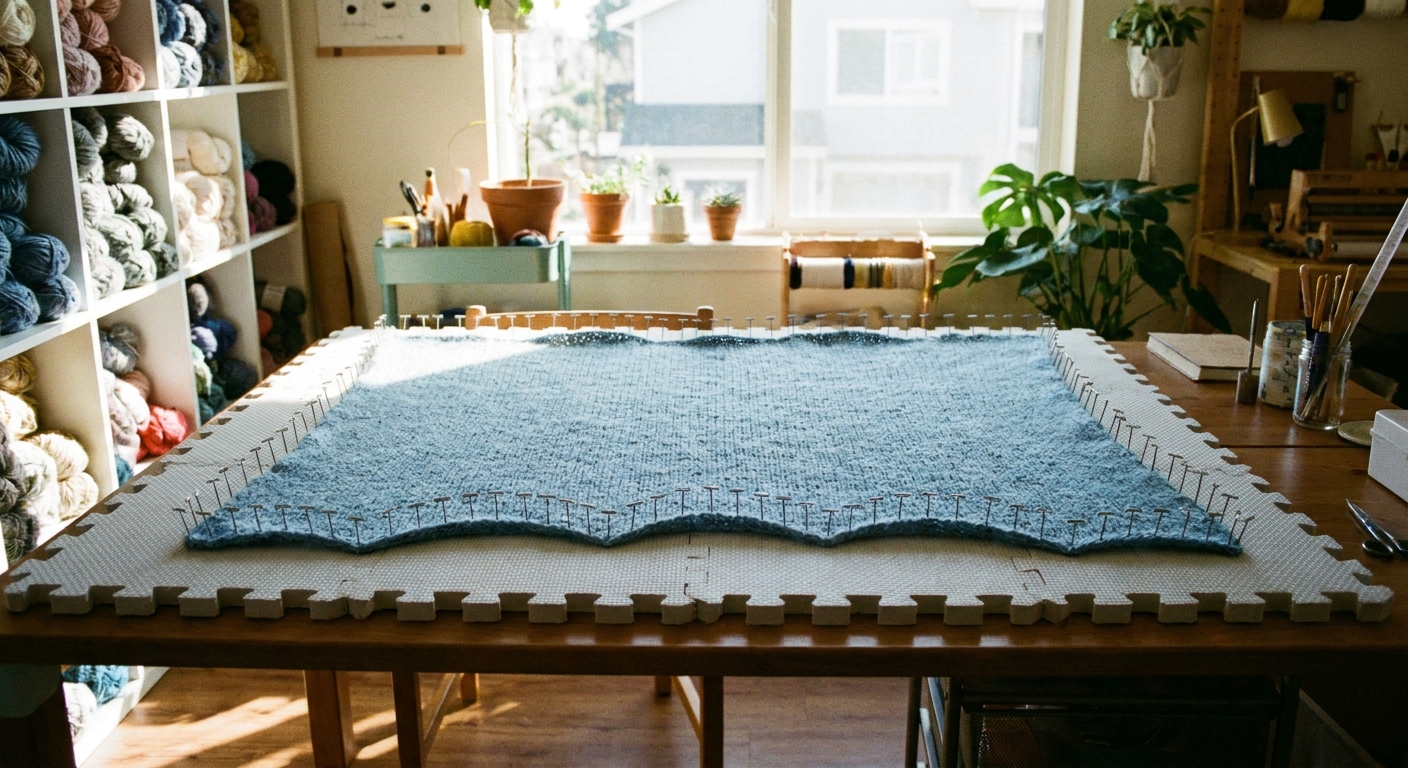
Blocking can relax fibers and help your fabric settle. It can also make borders look crisp and even. But blocking often does not fix a plain stockinette edge on its own for the long term, because the stitch structure still wants to roll. It may look flatter at first, then gradually remember its old habits with handling.
Blocking is most effective when:
- your project has a border that supports flatness
- you are using wool or animal fibers that respond well to wet blocking
- the curl is mild and you mainly want the fabric to look polished
Blocking is less effective when:
- the piece is all stockinette with no border
- you are using fibers that relax less (some acrylics can be stubborn unless steam-blocked carefully)
- the curl is strong and persistent, like a stockinette scarf that wants to become a scroll
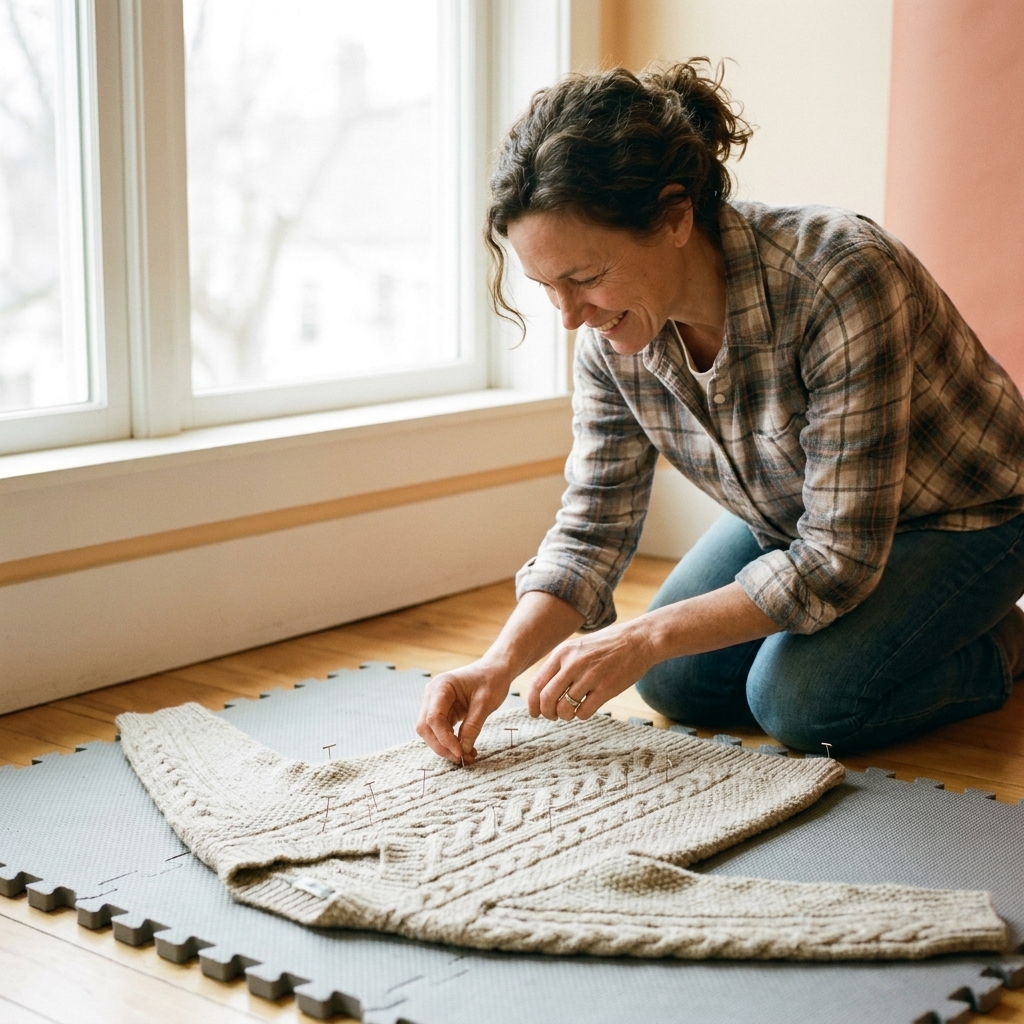
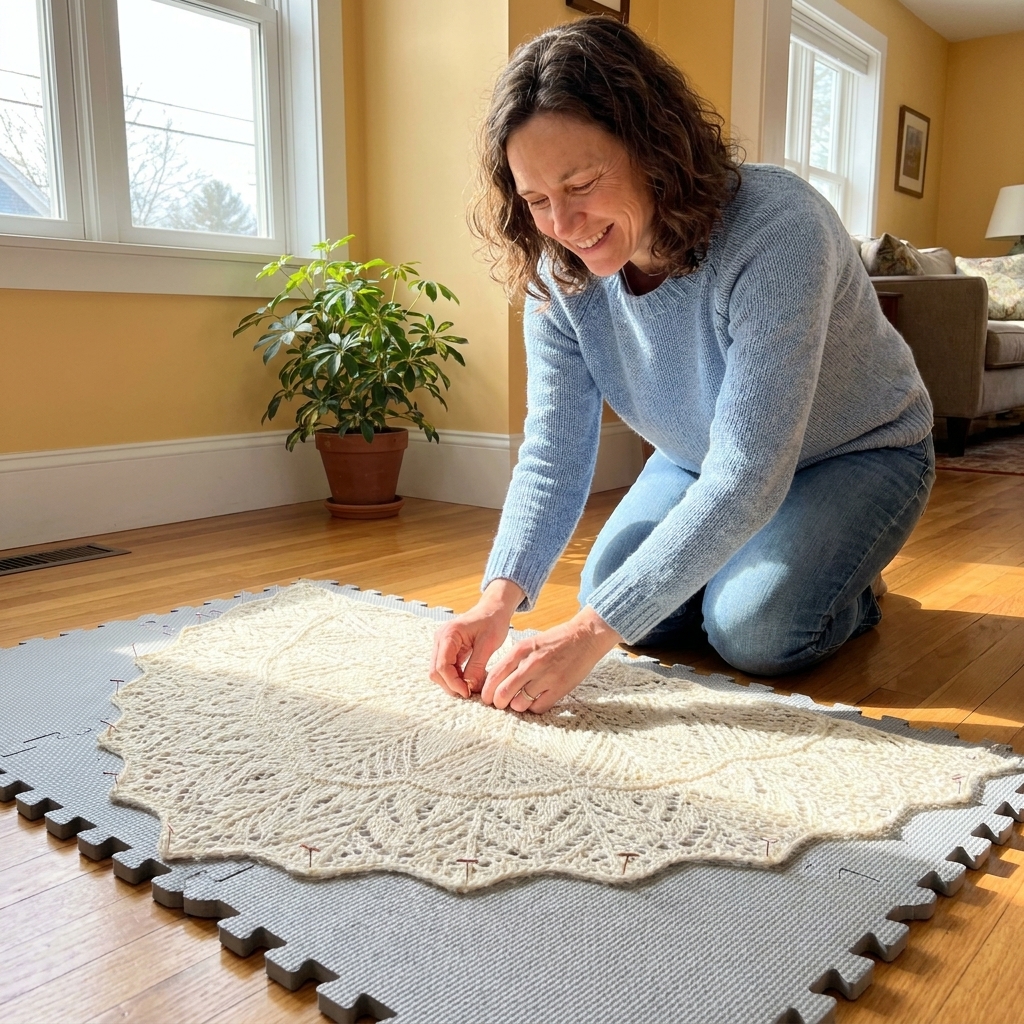
A gentle, safe approach: wash or soak according to your yarn label, squeeze out water without wringing, lay flat, and pat into shape. If you use pins, let them assist the edges, but do not rely on pinning to permanently defeat stockinette’s nature.
Other ways to avoid curl
If what you really want is “flat forever,” the easiest move is to choose a fabric that does not curl much in the first place.
- Swap the fabric: garter, seed stitch, moss stitch, and ribbing are naturally more balanced and lie flatter.
- Choose a reversible structure: double knitting and 1x1 rib create a more balanced fabric that resists curling.
- Add a backing or lining: for some projects, sewing on fabric (or knitting a second layer) gives the edge more structure than stitch pattern tweaks alone.
When to keep the curl
Sometimes curl is not a problem. Sometimes curl is a design feature waiting to happen.
Leaving the curl works well for:
- Rolled hat brims that intentionally curl to the right side
- Rolled hems on sweaters where you want a casual finish
- I-cord edges or decorative finishes where the roll adds dimension
- Modern, minimal scarves where the roll is intentional and controlled, for example with a planned i-cord edge or a generous knit-in border
If your pattern calls for a rolled edge, the secret is consistency. Keep your gauge steady, avoid accidental tension swings, and let the fabric do its charming little curl with confidence.
When a border is worth it
If you want your project to lie flat on a table, drape smoothly without twisting, or stack neatly, a border is usually worth the extra stitches.
Add a border if you are making:
- Scarves (unless the design is meant to roll)
- Blankets and throws
- Dishcloths (curling makes them bunch up)
- Sweater fronts or cardigan bands that need to behave
- Seamed garment pieces where curling makes assembly fiddly
If your piece is already in progress and curling is driving you nuts, you may still be able to add an edging later by picking up stitches and knitting a border outward. A garter or seed stitch applied border can tame a lot of drama, especially when paired with blocking.
Quick troubleshooting
Your border is curling too
Ribbing can pull in and make edges feel tight, and a narrow garter border can still fold. Go wider, and consider seed stitch if you want a flatter, less stretchy frame.
Your edge is unbalanced
If the very edge is still mostly stockinette, it may keep trying to roll, even if you sprinkled in a token stitch or two. Bring the balanced stitch pattern all the way to the edge, and give it enough width to matter.
Your edging tension is tighter
It is extremely common to knit border stitches tighter than the body without realizing it. If your border is stiff or drawing in, loosen up a touch, or go up a needle size just for the edging.
Your stockinette panel is huge
The bigger the center, the more it wants to curl. For blankets and wide panels, a bold border is not overkill. It is structural support.
Your fiber is extra springy
Some wools have a lot of bounce. They can curl with enthusiasm. A firm border and a good block usually handle this best.
You are working at a tight gauge
A tight gauge can increase curl because the fabric is denser and more resistant to being persuaded flat. If your fabric feels stiff, you might like it more on a slightly larger needle. Swatching helps here, even a small one.
Stockinette curl FAQ
Will ironing fix stockinette curl?
Please be gentle with heat. Some fibers can be damaged or flattened. For acrylic, careful steam can help set shape, but it can also permanently change texture if overheated. For wool, wet blocking is usually safer than pressing with a hot iron.
Will a single crochet edging stop the curl?
Often, yes. A crochet border adds structure and can help stockinette behave, especially on blankets and scarves. Use a relaxed tension so the edge does not pucker. If it starts to wave or pull in, adjust your stitch ratio. Work fewer single crochets if it ripples, or add a few extra if it feels tight and ruffled. Testing on a swatch is the low-stress way to dial it in.
Does stockinette curl less in the round?
The side edges disappear in the round, but top and bottom edges can still roll. Tubes can also bias or twist depending on yarn and gauge, but the classic “side curl” is mostly a flat-knitting edge issue.
Is it my fault if my edges curl more than someone else’s?
Nope. Fiber choice, needle size, fabric density, and border width all matter. Two knitters can make the same pattern and see different levels of curl. Stockinette is consistent about one thing: it loves to roll.
A cozy takeaway
Stockinette curl is not a mistake. It is the stitch pattern’s natural posture.
If you want it flatter, give it a supportive border and block when you are done. If you want a rolled brim or a casual hem, let it curl and call it style.
One more row. Then just one more. Your edges are doing just fine.