One more row. Then just one more.
And then you glance down at your needles and realize the numbers do not match your pattern. If you have ever held a needle marked “US 7” in one hand and a pattern that says “4.5 mm” in the other, pull up a chair. Let’s make the numbers behave.
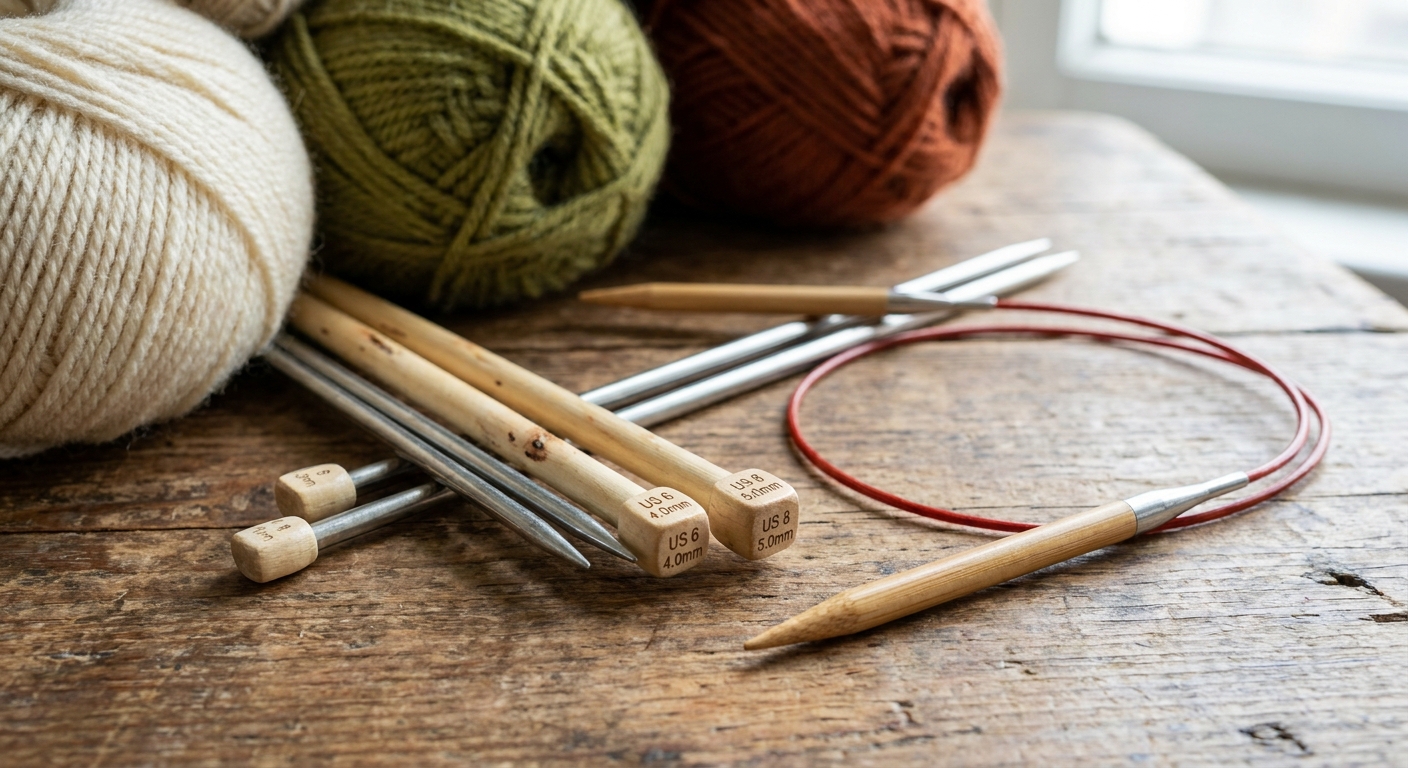
US knitting needle sizes to millimeters
This chart converts common US knitting needle numbers to millimeters, from lace sizes through US 15. I included the in-between sizes many knitters actually own, since brands sell them even when the US number system gets a little quirky.
| Metric (mm) | US size |
|---|---|
| 2.0 mm | US 0 |
| 2.25 mm | US 1 |
| 2.75 mm | US 2 |
| 3.0 mm | US 2.5 |
| 3.25 mm | US 3 |
| 3.5 mm | US 4 |
| 3.75 mm | US 5 |
| 4.0 mm | US 6 |
| 4.5 mm | US 7 |
| 5.0 mm | US 8 |
| 5.5 mm | US 9 |
| 6.0 mm | US 10 |
| 6.5 mm | US 10.5 |
| 7.0 mm | Label varies (often sold as 7.0 mm) |
| 8.0 mm | US 11 |
| 9.0 mm | US 13 |
| 10.0 mm | US 15 |
A small but important note: you may see slightly different US labels on packaging for the in-between needles. For example, 7.0 mm may be sold as “7.0 mm” without a US number, or it may be labeled something like “US 10¾” depending on the brand. That is exactly why the millimeters matter most.
If you need bigger sizes, US needles do go beyond 15. Many charts continue with US 17 (about 12 mm), US 19 (about 15 mm), and beyond, but this guide stops at US 15 because that covers the most common pattern callouts.
Where to find the needle size
Needle markings can be tiny, and they can wear down over time. Here are the usual hiding places.
Straight needles
On straight needles, the size is often stamped or printed near the top end (the end you hold), not on the point. Look along the flat area of the cap or just below it on the shaft.
Circular needles
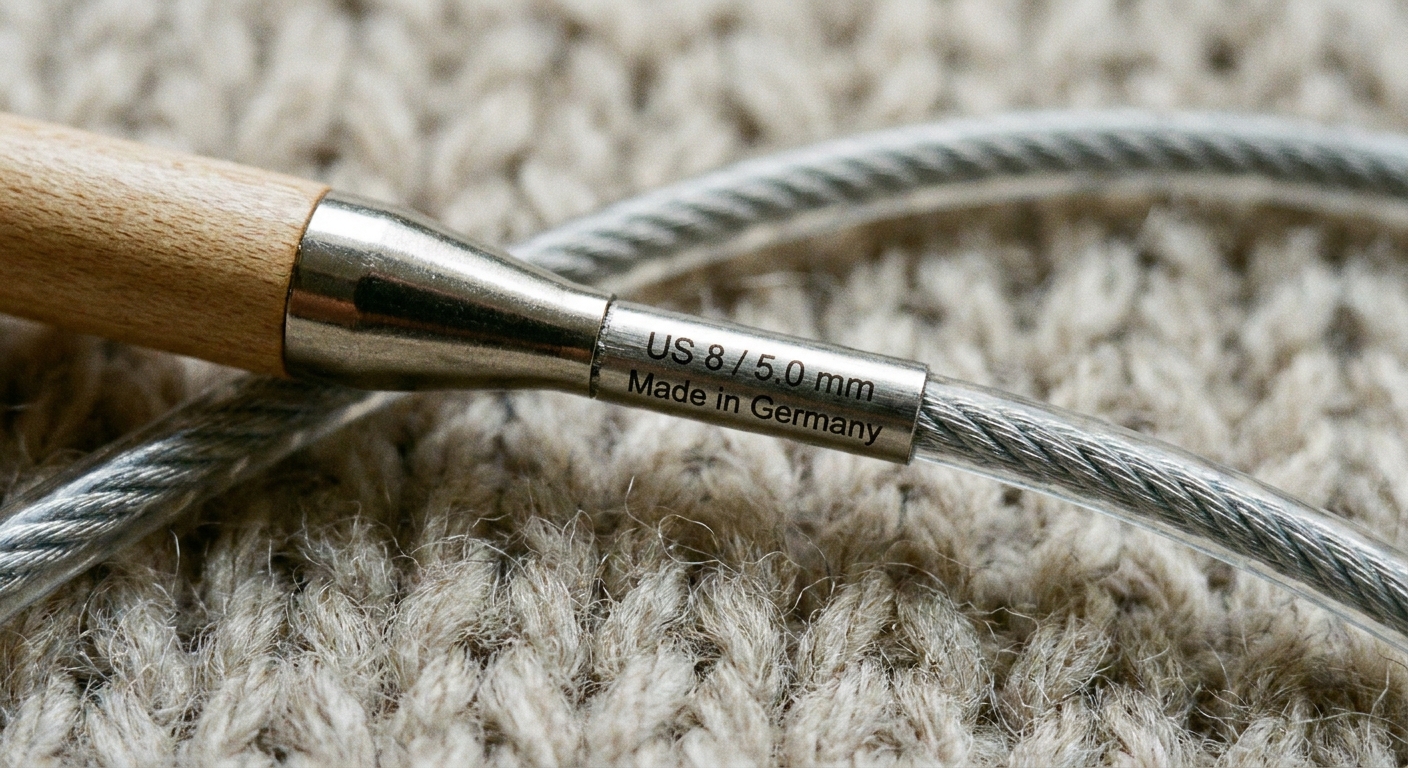
On circulars, check the metal join area or the cable near the join. Many brands print the millimeters and cable length on the cable itself. If your circular has been well-loved, the ink can fade, so a needle gauge is a handy backup.
DPN size markings
Double-pointed needle size markings are commonly printed or etched near the center of a needle, or close to one end. Because DPNs are handled a lot, printed markings can rub off faster than etched ones.
If you cannot find any marking, a needle sizer (needle gauge) will identify the millimeters quickly. When the size stamp is gone, the holes do not lie.
When US and mm disagree
If your pattern lists both systems and they do not line up with what your needle says, treat the millimeter size printed in the pattern as the source of truth.
Why? Because millimeters describe the actual diameter. US numbers are a naming system, and the naming gets odd once you hit in-between sizes. Two needles from different brands might both be labeled with an unusual US size, but the millimeters will tell you what you are really holding.
If your pattern lists only a US size and you are using metric-labeled needles, use the chart above to choose the closest match, then knit a gauge swatch. The swatch is your final answer, not the label.
Older UK and other systems
If you are working from an older pattern, you might see needle sizes written in a way that looks familiar but does not behave like US sizing.
- Older UK (British) sizing uses a different numbering system than US. A “UK 8” is not the same thing as a “US 8.”
- Canadian labels in modern usage typically match US sizing, but older patterns, vintage needles, and secondhand packaging can be inconsistent. If anything looks off, confirm by millimeters.
The safest path is to find the millimeter measurement for the system named by the pattern, then knit a quick swatch to confirm gauge. If your pattern provides mm, use that.
Quick tips for choosing needles
- Start with the pattern’s mm size whenever possible, even if you normally think in US numbers.
- Swatch, then adjust. If your stitches are too big, go down a needle size. If they are too small, go up.
- Use the pattern gauge over the yarn label. Yarn bands give general recommendations, but your pattern’s gauge and fabric are the goal.
- Remember that needle material matters. Metal, wood, bamboo, and coated needles can all change how yarn slides, which can nudge your gauge even when the mm is identical.
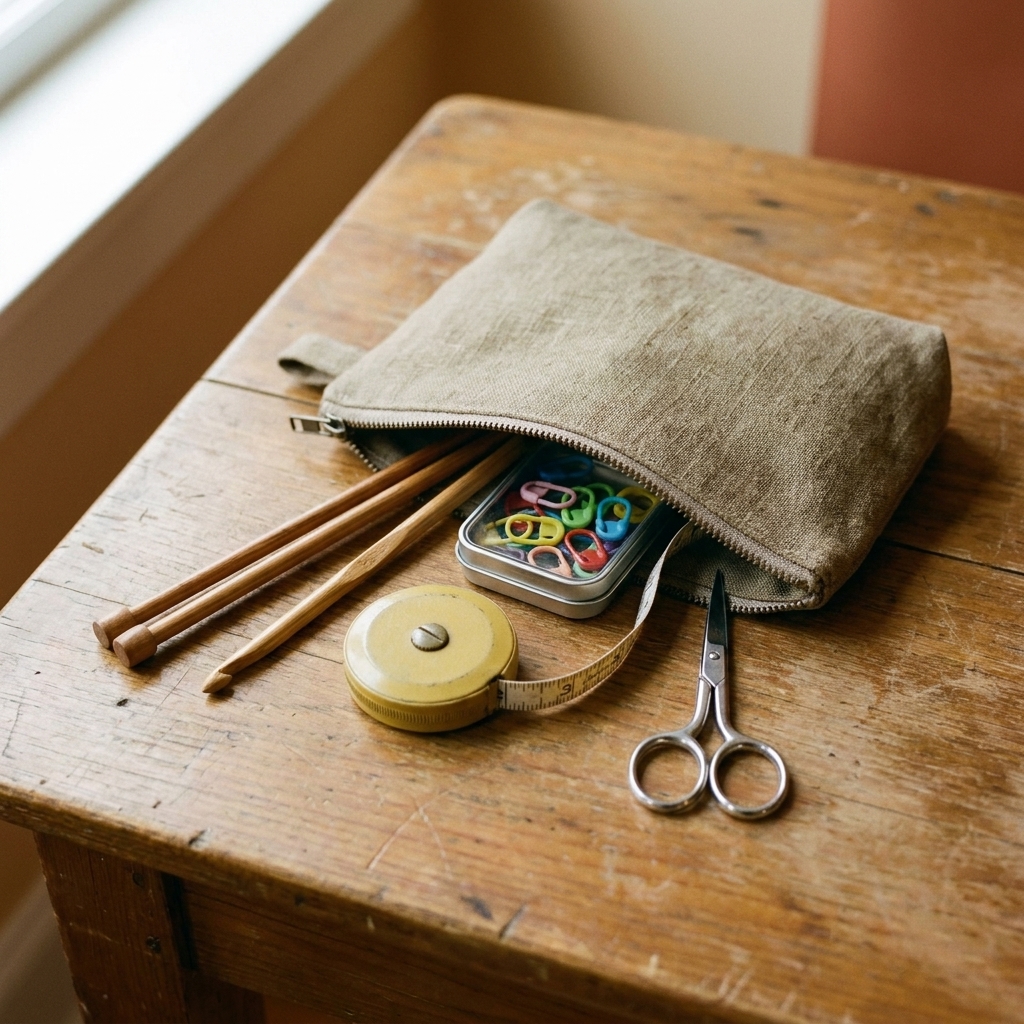
- Keep a needle gauge in your project bag. It is the easiest way to identify mystery needles and worn-off markings.
FAQ
What is US 7 in mm?
US 7 is 4.5 mm.
What is US 8 in mm?
US 8 is 5.0 mm.
What is US 10 in mm?
US 10 is 6.0 mm.
Is US 10.5 the same as 6.5 mm?
Most commonly, yes. US 10.5 is typically 6.5 mm. For 7.0 mm needles, US labeling varies by brand, and some packages list only “7.0 mm.”
My needle says one thing, but my needle gauge says another. Which one is right?
In most cases, trust the needle gauge because it measures the diameter directly. That said, gauges can vary a little due to manufacturing tolerances or wear. If the result looks odd, double-check with a second gauge or compare against a needle you trust in a known millimeter size.