One more row. Then just one more.
And then you notice it: a few wispy strands, a patch that looks oddly grazed, maybe a little silky webbing where yarn should be tidy. Clothes moths are tiny, stubborn, and very fond of animal fibers. The good news is you can stop them. The key is working in a calm order so you do not spread eggs or larvae from one cozy skein to the next.
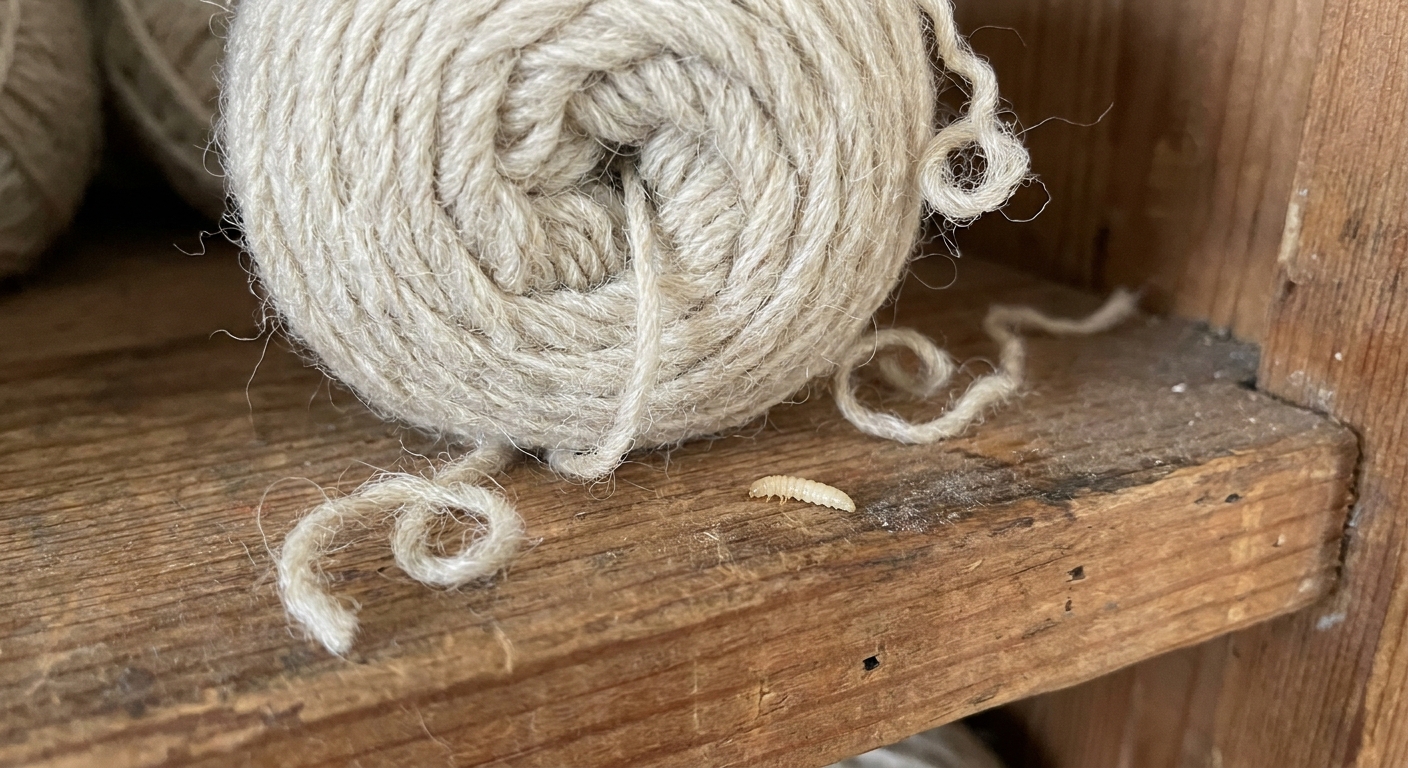
First, confirm what you are seeing
Moths that eat yarn are usually clothes moths (not the big pantry moths that flutter around kitchens). The adult moth is not the main problem. Adults lay eggs, and the larvae do the chewing.
Common signs in wool yarn
- Grazed fibers: fuzzy patches that look thinned or scraped, as if the yarn halo was shaved off.
- Weak spots: you tug gently and the strand snaps where it should be strong.
- Silky webbing: fine, cobweb-like strands or a thin sheet binding fibers together.
- Grit or peppery bits: tiny crumbs that can be frass (larval droppings) mixed with fiber dust.
- Casings: little tube-like cocoons or shed larval skins tucked in folds, corners, or the center-pull cavity.
Signs on finished knits
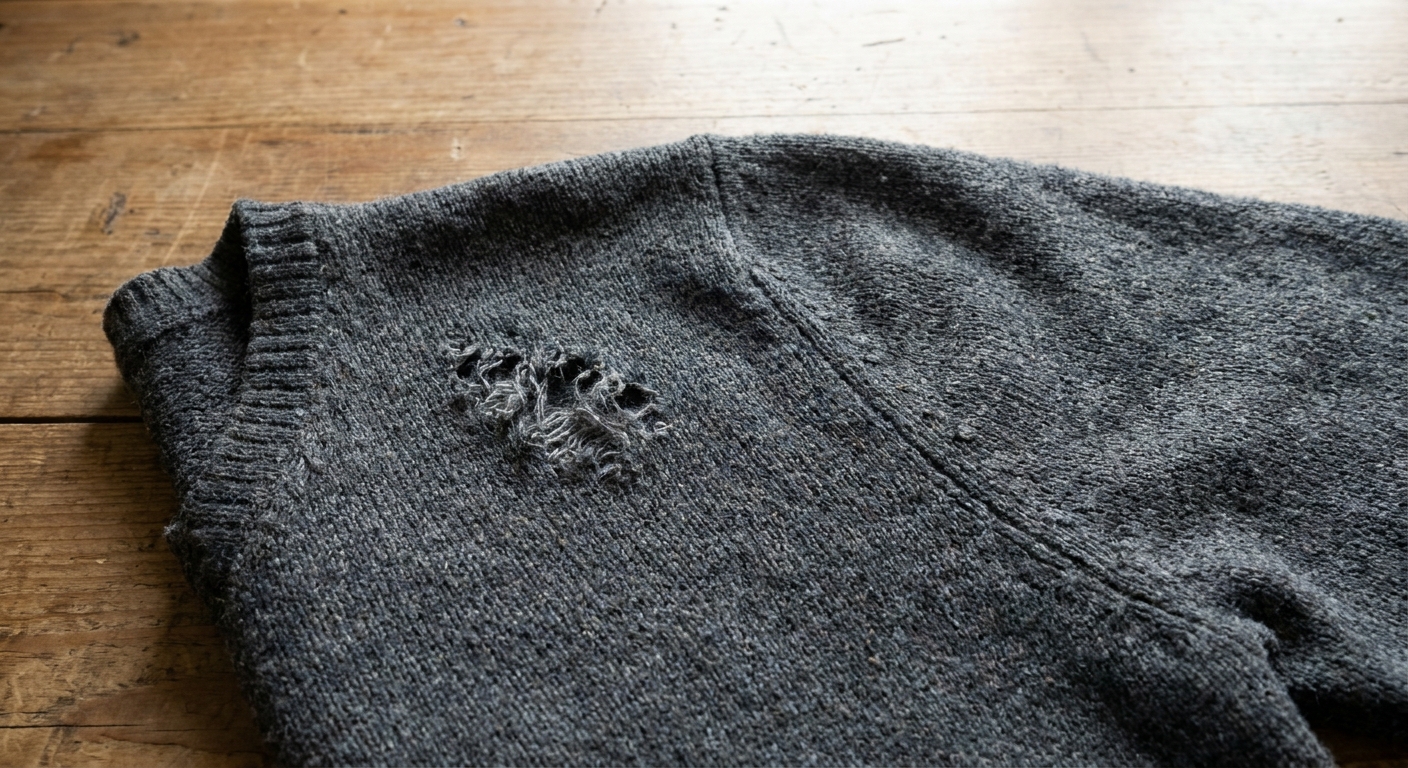
- Small holes that appear after storage, often clustered in hidden areas like underarms, collars, cuffs, or where fabric folds.
- Thin patches that ladder or open up when you stretch the fabric lightly.
- Webbing in seams, pockets, or along a folded edge inside a bag or bin.
If you are unsure whether it is moths or carpet beetles, the cleanup steps below still help. Carpet beetle larvae tend to look bristly or striped and often leave shed skins. They also eat natural fibers and love linty edges, so the same priorities apply: isolate, treat, clean, and seal.
Cleanup order: do this first, then that
When moths show up, it is tempting to start sniffing every skein in the room. Resist. Start with containment, then treatment, then cleaning, then storage.
1) Isolate anything suspicious immediately
Bring large zip bags or clean plastic tubs to the stash area. As you sort, do not carry loose yarn around the house.
- Anything with webbing, grit, casings, larvae, or obvious grazing goes into a sealed bag or lidded bin marked “treat”.
- Finished items stored with the stash go into a separate sealed bag marked “launder”.
- Anything that looks clean can stay put for the moment, away from the sorting pile, but plan to inspect it closely before it goes back into long-term storage.
Work over a hard floor if you can, not carpet. Eggs can drop, and you want them easy to clean up.
2) Treat affected yarn: freezing is the simplest option
For most stash yarn, freezing is a practical, low-mess way to kill larvae and eggs without adding moisture. It works best in a freezer that can reliably hold 0°F / -18°C. If your freezer runs warmer, or you are freezing dense items, longer is safer.
- Bag first: Put each skein or cake in an airtight bag. Squeeze out excess air. This reduces condensation when you bring it back to room temperature.
- Label it: Add a quick note with the date and “freeze 1” so you can track cycles without guessing.
- Freeze: Place in the freezer for at least 72 hours. If you have space and patience, a longer first freeze (up to a week) adds a cushion.
- Warm up sealed: Let the bag come back to room temperature before opening so moisture stays on the outside of the bag, not on your wool.
- Repeat: Freeze a second time for another 72 hours. Two rounds improve the odds of catching anything that survived the first round.
If you have limited freezer space, treat the worst offenders first, and keep the rest sealed until their turn.
What about heat?
Heat can work, but it is easier to accidentally felt wool or damage elasticity. If you choose heat, look for guidance that specifies a target temperature and time (for example, many pest and extension resources cite holding items around 120 to 130°F / 49 to 54°C for a sustained period). A vague “hot dryer” can be ineffective in some machines and too risky for others. For many knitters and crocheters, the freezer is the calmer path.
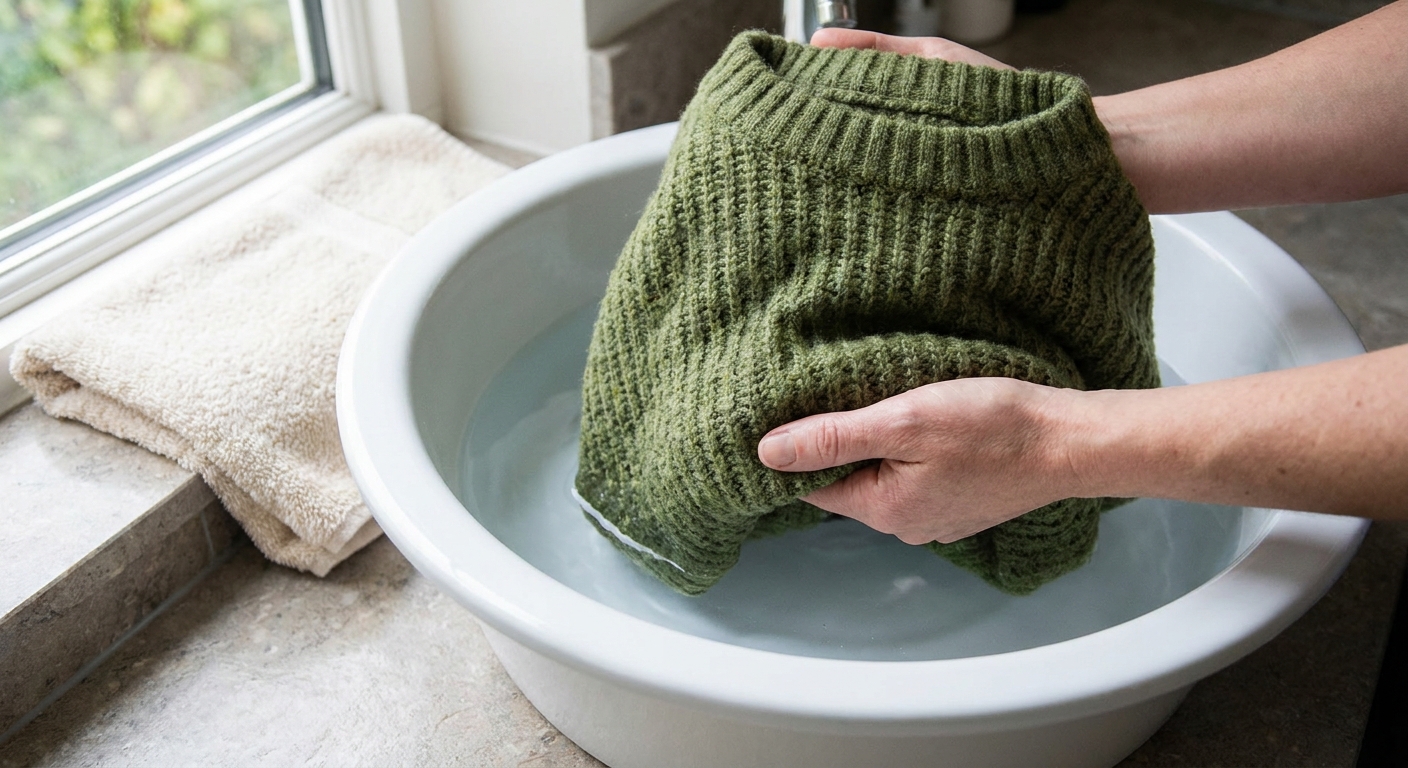
3) Launder finished pieces the safe way
For sweaters, scarves, hats, and blankets, you want two things: kill pests and remove eggs, webbing, and grit.
- Follow the care label or fiber needs. Wool and alpaca often prefer cool water and gentle handling.
- Wash thoroughly. For handknits, think long soak, gentle swish, and a complete rinse. For sturdier items that can handle a machine cycle, washing helps dislodge debris and eggs.
- Dry completely. Flat dry knits until fully dry, not just “mostly.” Damp storage is a different problem you do not need.
If an item truly can handle heat, heat can be part of a kill step. If you are not sure, freeze the finished piece in a sealed bag using the same two-round method above, then wash or air it out after.
4) Deep clean the stash zone
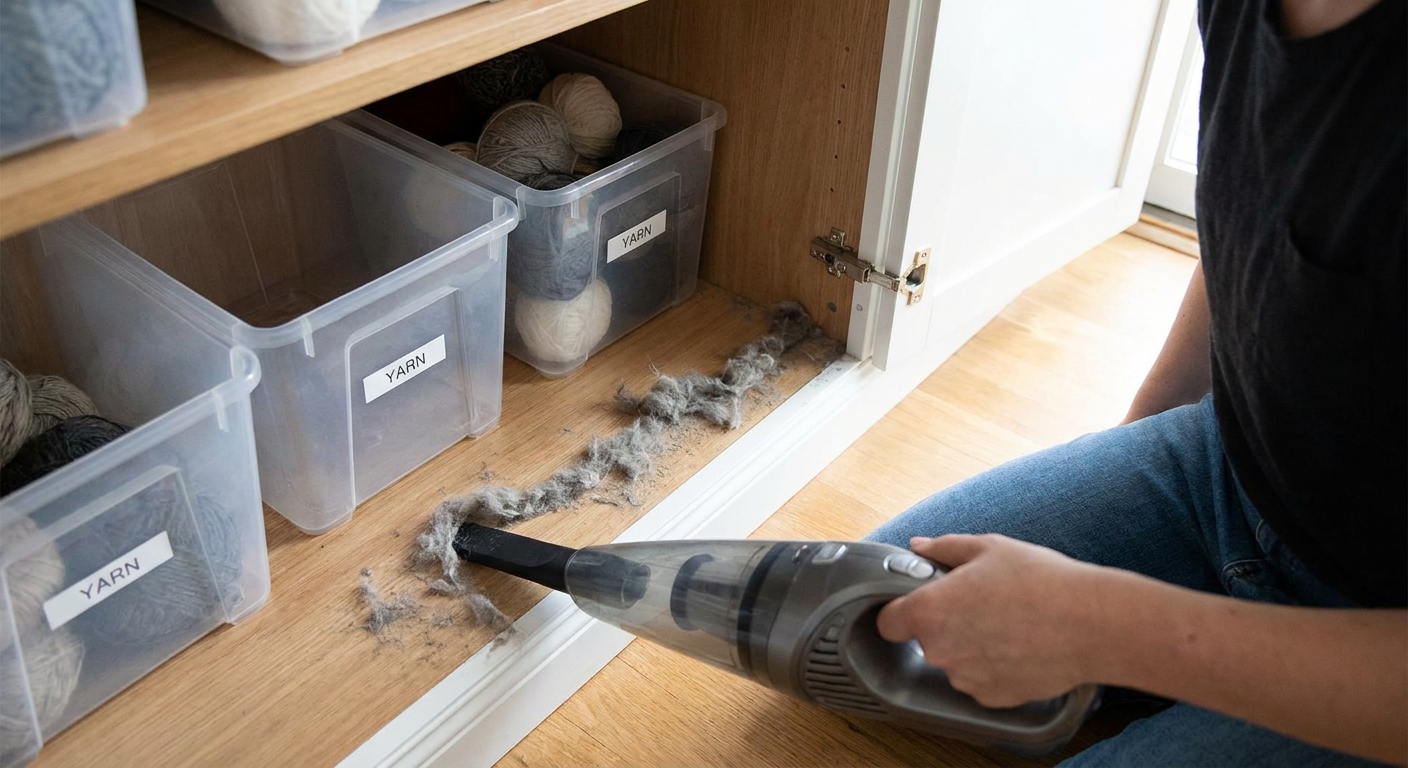
Moths love quiet corners: baseboards, cracks, shelf pin holes, the back of closets, and the dusty space under bins. Cleaning removes eggs and the lint larvae feed on.
- Vacuum shelves, floor edges, closet corners, and baseboards slowly and thoroughly.
- Use crevice tools for shelf brackets, cracks, and trim.
- Empty the vacuum immediately afterward into an outdoor trash bin. If your vacuum uses a bag, seal and discard it. If it is bagless, empty and wash the canister.
- Wipe hard surfaces with soapy water or a gentle all-purpose cleaner and let them dry.
How to store the rest so moths cannot return
Once yarn is treated and the shelf is clean, storage becomes your friendly fence.
Choose containers moths cannot chew through
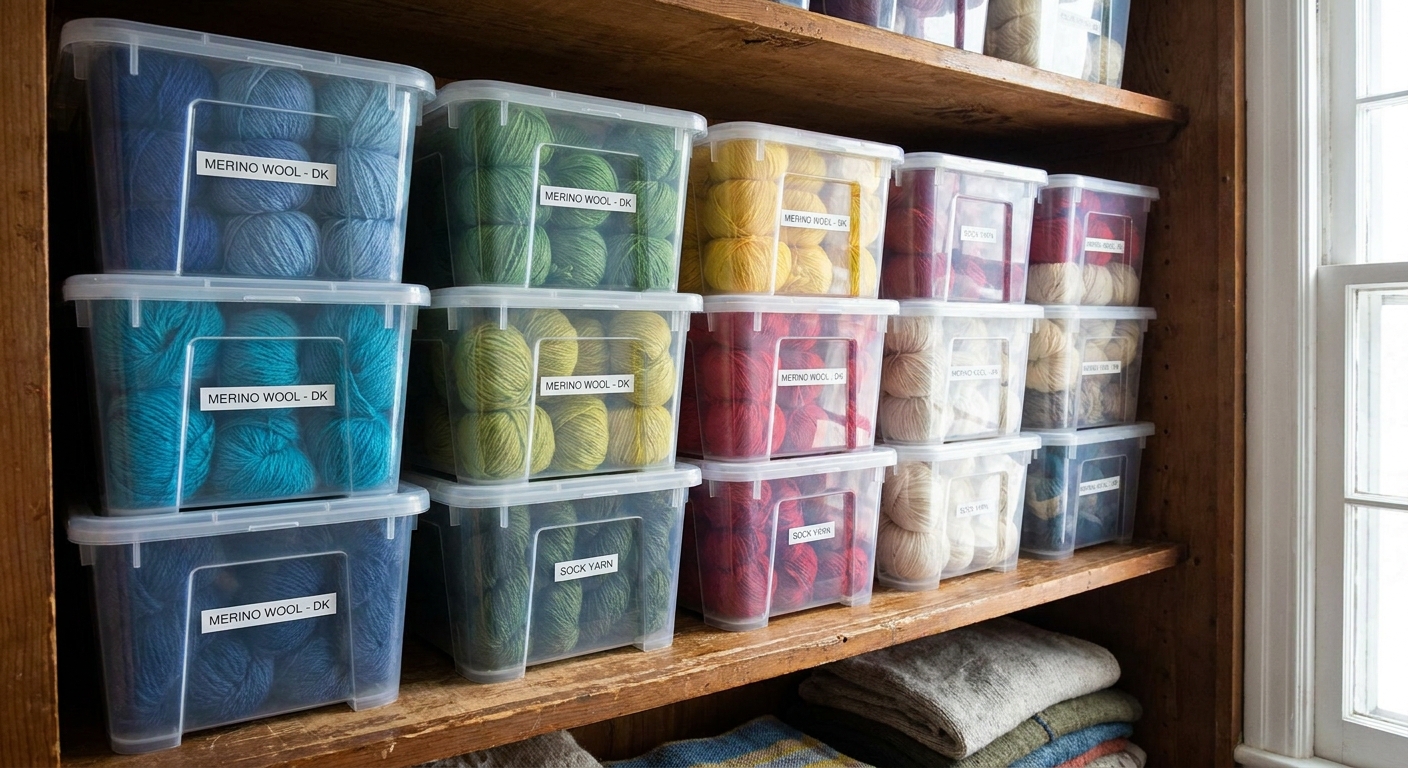
- Best: hard plastic bins with gasket seals, or glass jars with tight lids for smaller quantities.
- Good: sturdy plastic totes with snug latching lids.
- Not ideal: cardboard boxes, paper bags, fabric totes, and open baskets. Clothes moth larvae can thrive where fibers and dust collect.
If you love seeing your stash, clear bins are fine. Just make sure the lids truly seal.
Keep yarn clean and calm
- Store only clean fibers. Soiled fibers and accumulated lint or pet hair increase risk.
- Avoid long-term project bags on the floor. That cozy corner is also a cozy moth corner.
- Do not rely on cedar alone. Cedar can help as part of a plan, but it is not a stand-alone solution, especially once it fades.
- Disturb the stash now and then. Moths prefer dark, undisturbed areas. Regular peeks, a little movement, and occasional light exposure make your storage less inviting.
What to do with badly damaged skeins
Sometimes a skein is only lightly grazed and can be saved. Sometimes it is a heartbreak.
- Light damage: After treatment, unwind and inspect. You may be able to salvage usable lengths for mending, stripes, or small projects.
- Heavy webbing or widespread weakness: It is often best to discard, especially if fibers snap easily throughout.
- Unknown fiber blends: Treat first, then decide. Even if you discard, you do not want live larvae leaving the bag on the way out.
When you toss yarn, seal it in a bag before it goes to the outside trash.
A simple check routine
Clothes moths are sneaky because a stash can look fine on the surface. A quick routine keeps you ahead.
Once a week for a month
- Open each storage bin and look, do not just sniff.
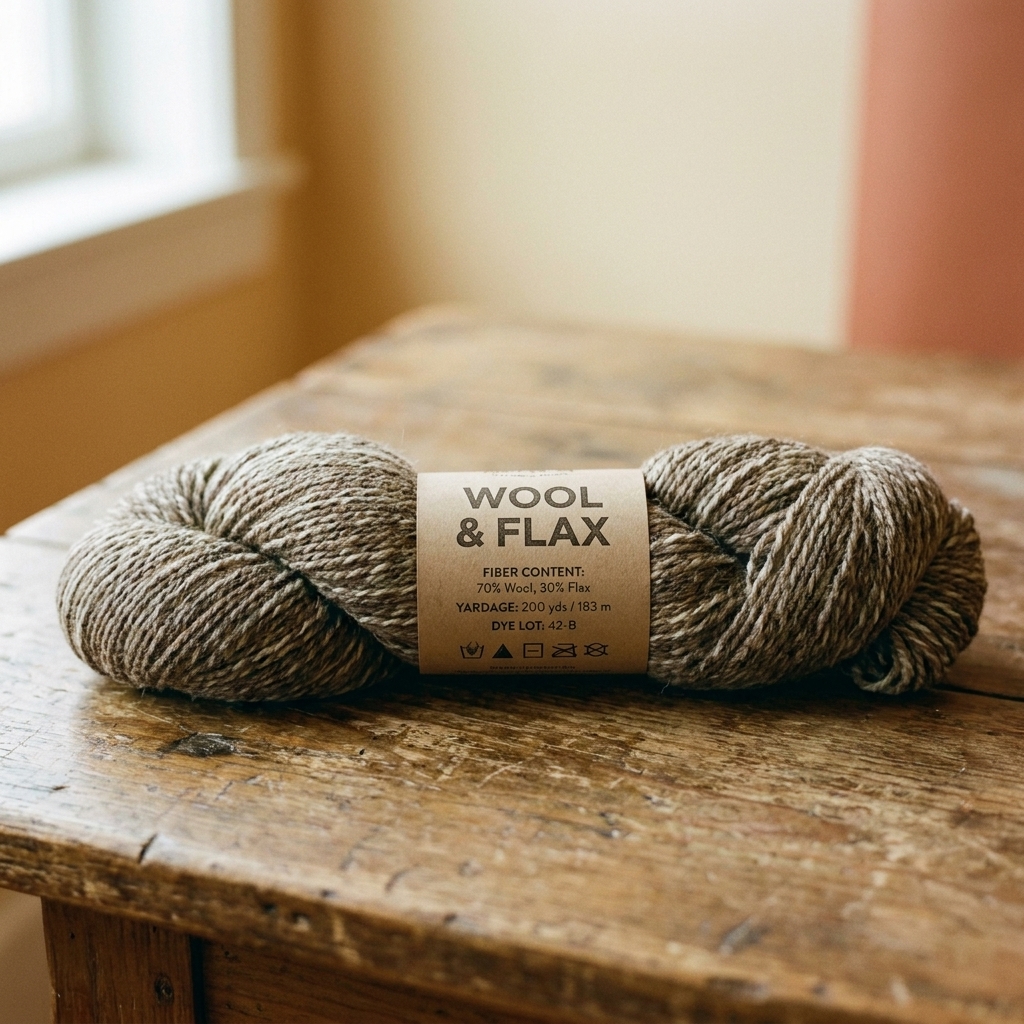
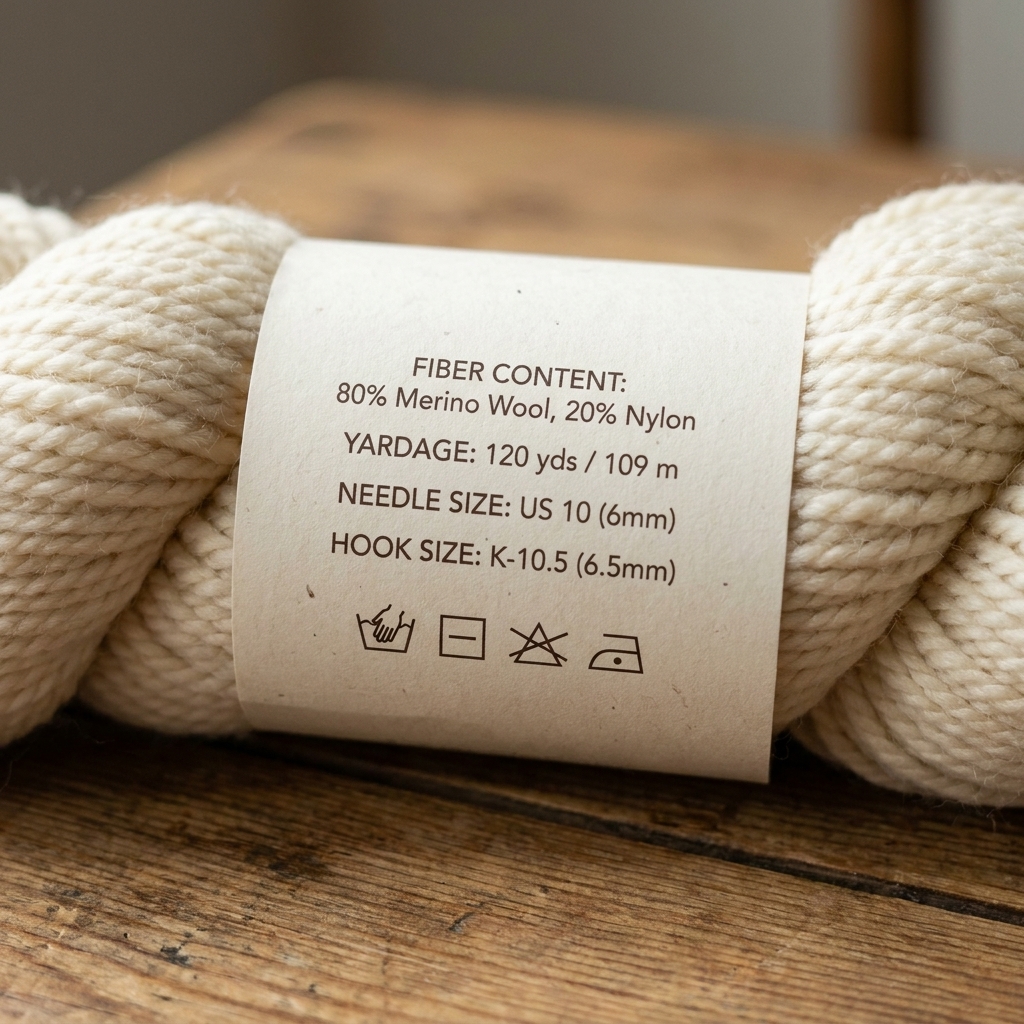
- Check the bottom corners, under label bands, and inside center-pull cavities.
- Shake out a few skeins over a light surface and watch for grit or webbing.
After that: once a month
- Do a fast visual scan of bins and the shelf.
- Touch a couple of skeins and check for weak spots.
- Vacuum the stash area edges and corners.
Whenever you bring new yarn home
New-to-you yarn, thrifted sweaters for unraveling, and gifted leftovers are common surprise entry points. Consider a quick quarantine: keep it bagged and separate for a couple weeks, or give it the freezer treatment before it joins the rest.
If you remember only one thing: seal it, treat it, clean the shelf, then store it sealed again. That order keeps moths from hopping from one hopeful skein to the next.
Extra tools and when to get help
Pheromone traps
Pheromone traps can be useful as a monitor. They mainly attract adult male clothes moths, so they can tell you if moths are present and whether your cleanup is working. They are not a stand-alone fix, since they do not remove eggs or larvae from your wool.
When to call a pro
If you keep finding fresh damage after treating and sealing your stash, or you are seeing moth activity in closets, carpets, or multiple rooms, it may be time to call a licensed pest professional. A stash problem sometimes points to a bigger food source nearby, like wall-to-wall wool rugs, stored woolens, or linty edges in an adjacent closet.
Quick FAQ
Will mothballs fix this?
Traditional mothballs use strong pesticides and fumes, and they are not a cozy match for yarn you will hold in your hands and wear against your skin. They also do not replace cleaning and sealing. If you are considering any chemical treatment, follow product safety directions carefully and keep them away from kids and pets.
Do I have to freeze every single skein?
If you saw active larvae, webbing, or multiple damaged items, treating everything that shared that space is the safest route. If the issue was limited to one bag or one bin, you may be able to treat that group, deep clean the area, and then watch the rest closely with the routine above.
My yarn is mostly acrylic. Can moths still be in there?
Clothes moth larvae prefer animal fibers like wool, alpaca, cashmere, and mohair. They can still hide in mixed storage because lint, pet hair, and nearby wool give them what they need. Clean and seal storage even if only part of your stash is wool.