One more row. Then just one more.
That is the energy I want for sweater laundry too: slow, steady, and no surprises. Wool is wonderfully resilient, but it has three very particular dislikes: heat, agitation, and sudden temperature changes. Mix those together and you can accidentally felt a sweater into a much smaller, denser version of itself.
Let’s wash your knitted or crocheted wool sweater the safe way, keep the stitches crisp, and get it dry without stretching.
First, check the label
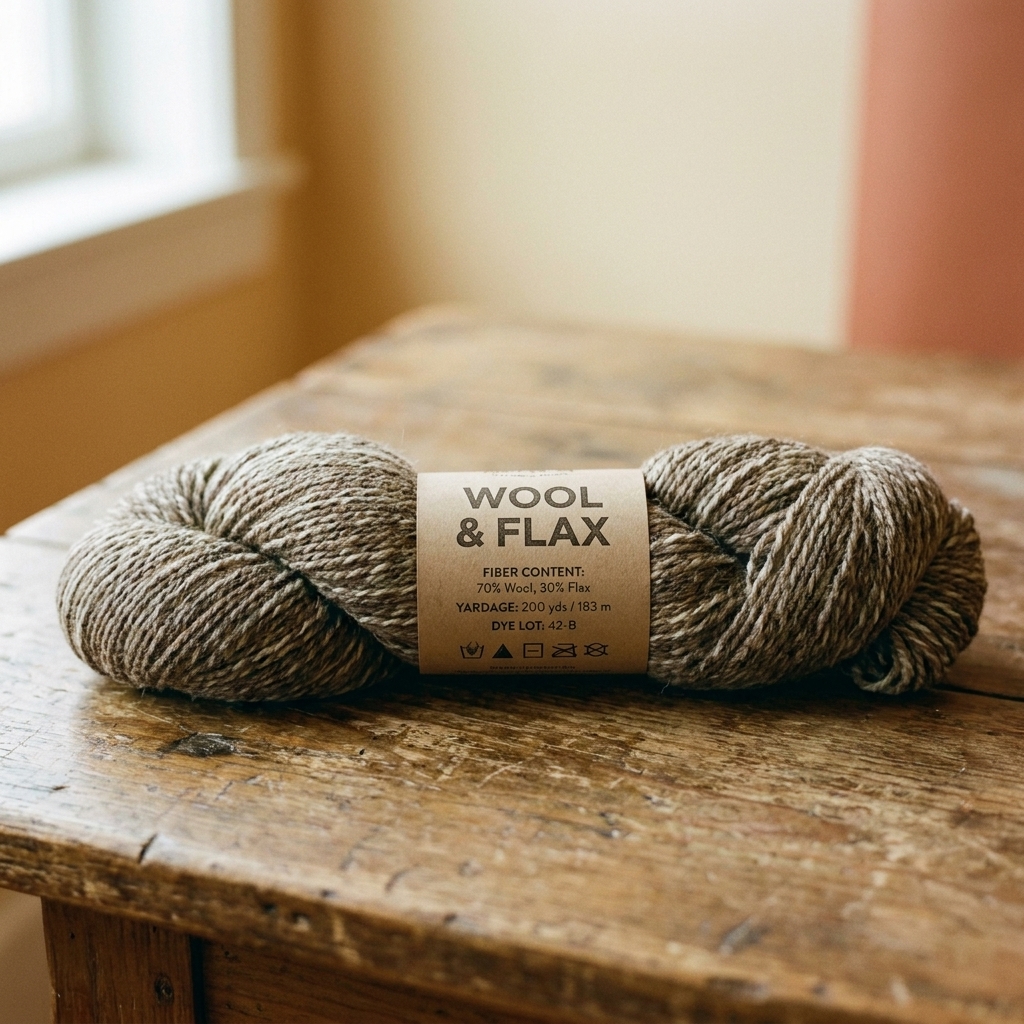
Before you fill a basin, take 15 seconds to check the care label on the sweater, or the yarn label if you still have it. Not all “wool” behaves the same.
- Non-superwash wool (many rustic and natural wools): most likely to felt and shrink if handled roughly.
- Superwash wool: treated to resist felting. It is usually more forgiving, but it can stretch when wet if it is hung or handled without support.
- Wool blends (with alpaca, silk, nylon, acrylic, cotton): wash behavior depends on the blend. When in doubt, treat it like delicate wool.
- Acrylic: will not felt like wool, but high heat (especially in a dryer) can soften fibers and leave it misshapen or shrunken. Cool to lukewarm water is still your friend.
If the label says dry clean only, follow that guidance. Some commercial garments use construction details, trims, linings, or dyes that do not love water even if the fiber is wool.
Why wool felts
Wool fibers have tiny overlapping scales. When wool is exposed to heat, moisture, and agitation, those scales can interlock. Once they lock together, the fabric gets denser, stiffer, and smaller. That process is felting, and it is very difficult to reverse.
To keep the risk low, we will:
- Use cool water (or barely lukewarm).
- Keep the soak short and calm.
- Move the sweater as little as possible, and never scrub or wring.
- Support the sweater’s full weight when it is wet.
- Dry it flat, not hanging.
What you need
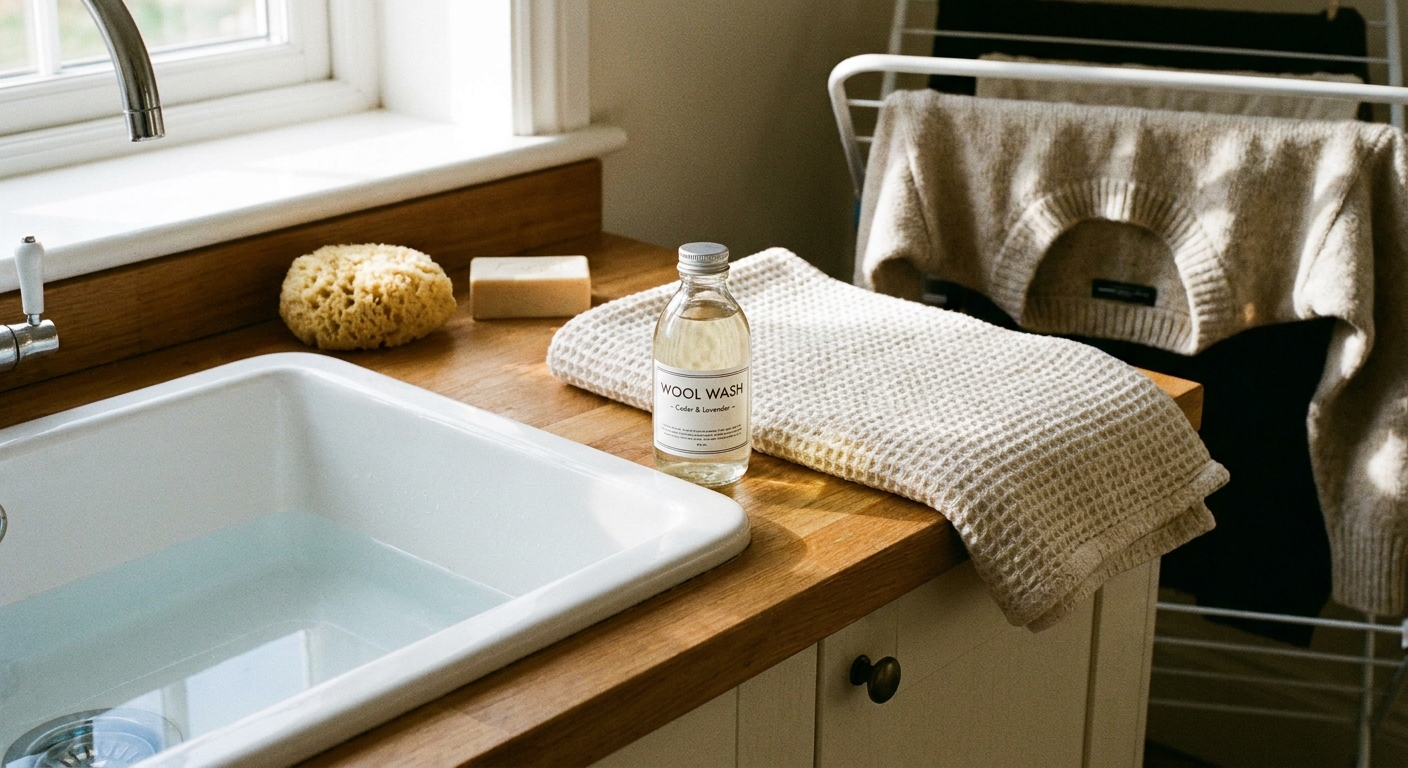
- A clean basin, sink, or tub
- Cool water (think cool tap water or room temperature, not hot)
- A wool wash or gentle cleanser (a mild detergent works in a pinch, but skip anything “heavy duty,” and avoid chlorine bleach)
- Two large towels
- A flat drying surface (drying rack with a towel on top, blocking mats, or a clean dry towel on a table)
- Optional: a second basin or clean sink for rinsing
Hand-wash step by step
1) Prep the sweater
Close buttons or zippers, untie drawstrings, and turn the sweater inside out if you want to protect the surface from rubbing. If there is visible lint or hair, gently remove it first so it does not turn into little felted bits during the soak.
2) Fill with cool water and add cleanser
Fill your basin with cool water. If your tap runs very cold, aim for “cool but not icy.” Add a small amount of wool wash and swish the water before the sweater goes in, so you are not agitating the fabric to dissolve soap.
Less cleanser is usually better than more. You are lifting soil, not stripping the fiber.
3) Submerge and soak briefly
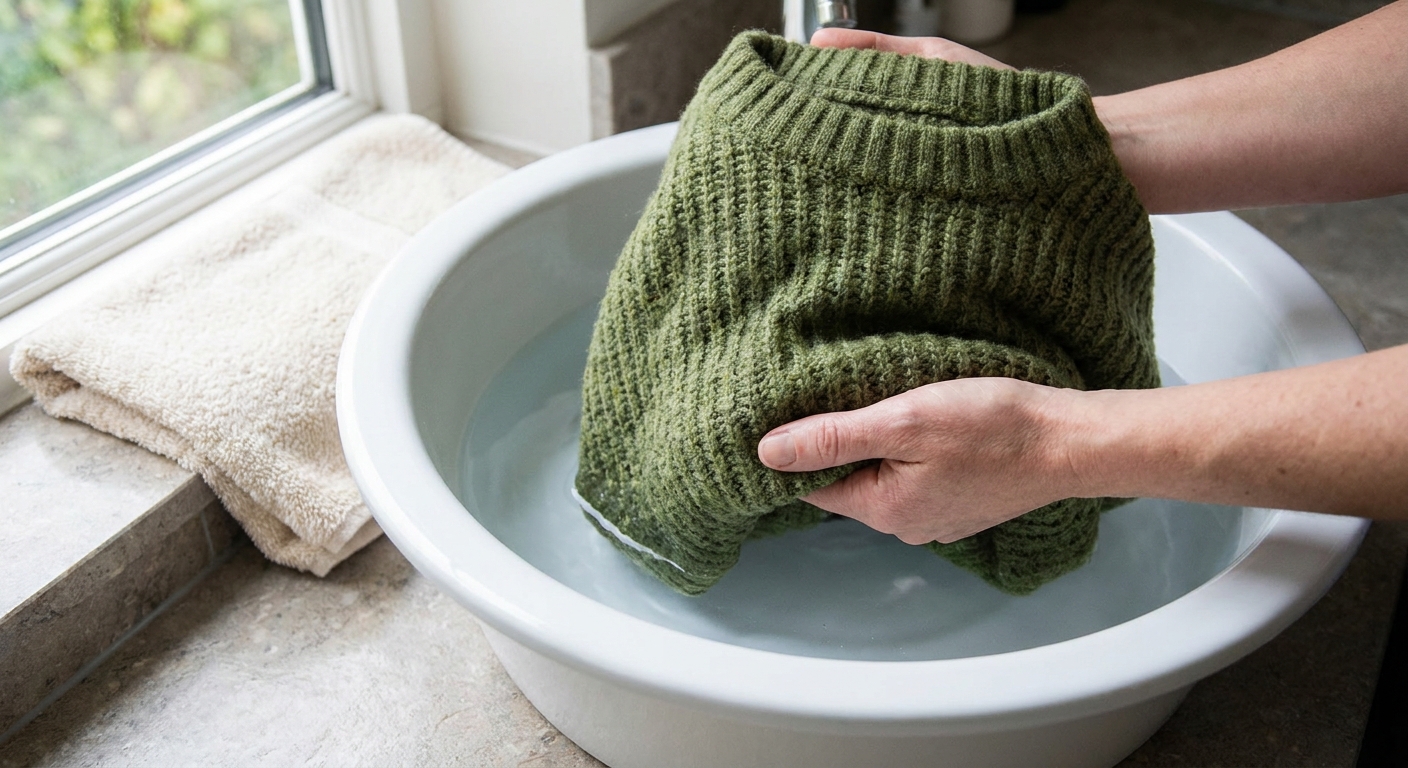
Lower the sweater into the water and press it down gently so it saturates. No scrubbing, no twisting, no kneading like bread dough.
Let it soak for about 10 to 15 minutes. For very delicate non-superwash wool, keep it closer to 10. A longer soak is usually fine if the sweater is left undisturbed. The main goal is minimal movement.
4) Rinse carefully (or skip, if using no-rinse)
If your wash is no-rinse, you can skip rinsing. If you are rinsing:
- Drain the basin while the sweater stays put, supported.
- Refill with cool water at a similar temperature. Big temperature shifts can increase felting risk, especially if there is also agitation.
- Press the water through gently. Avoid swishing and stirring.
- Repeat until the sweater no longer feels slippery or soapy.
5) Remove water without wringing
This is the moment that saves sweaters.
Lift the sweater with two hands, supporting as much of the fabric as you can. Wet wool is heavy, and that weight can stretch shoulders, necklines, cuffs, and hems.
Press out water by gently squeezing sections against the side of the basin. Do not wring or twist.
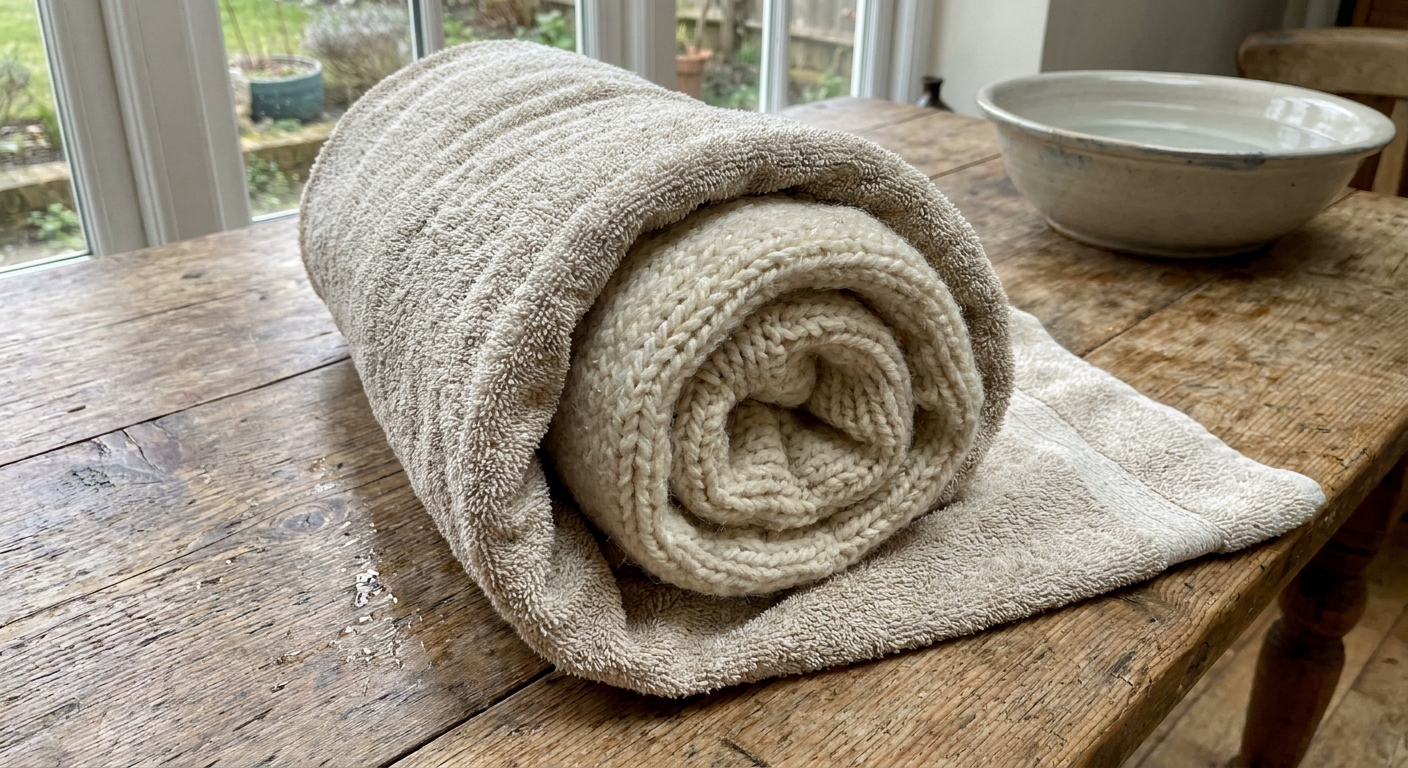
6) Towel roll to blot
Lay the sweater flat on a towel. Smooth it into its general shape, then roll the towel and sweater together into a snug tube. Press along the roll to transfer water into the towel.
If the sweater is still very wet, unroll and repeat with a second dry towel.
Dry flat
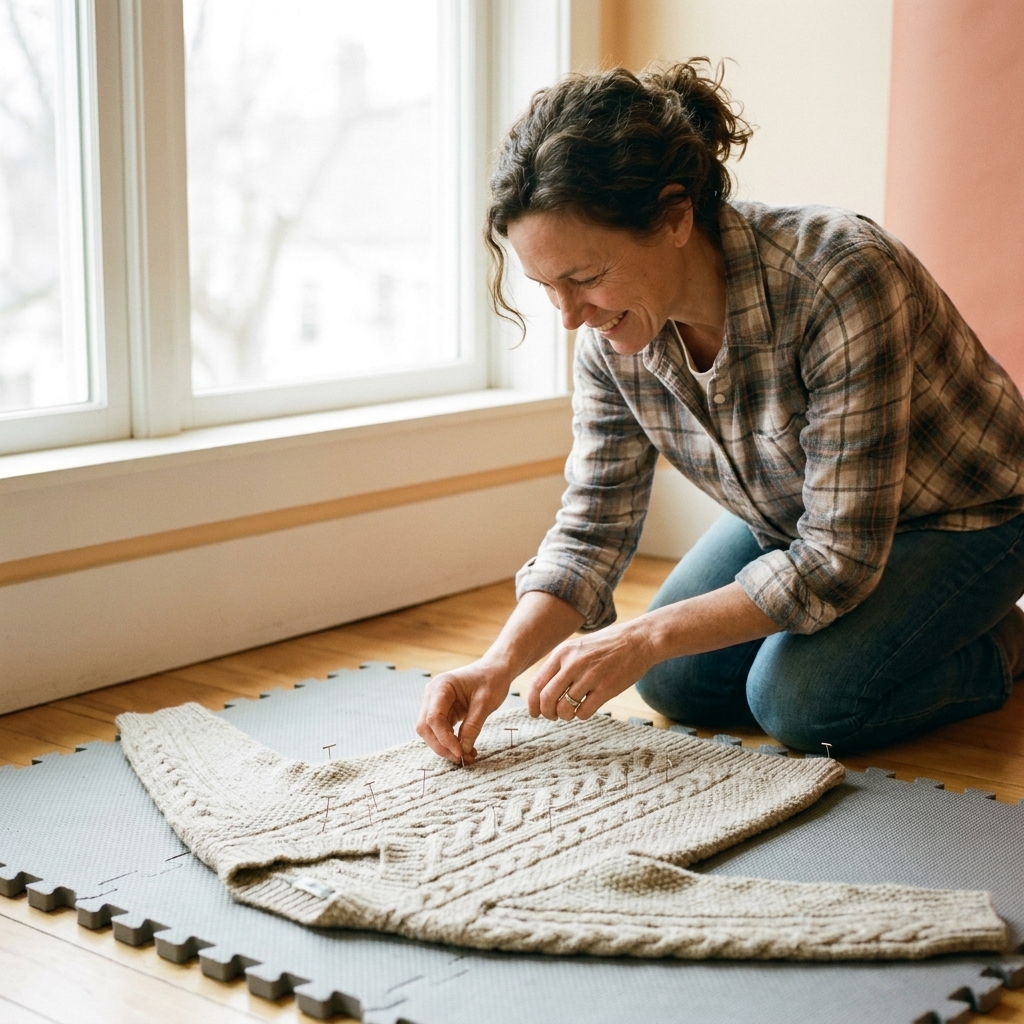
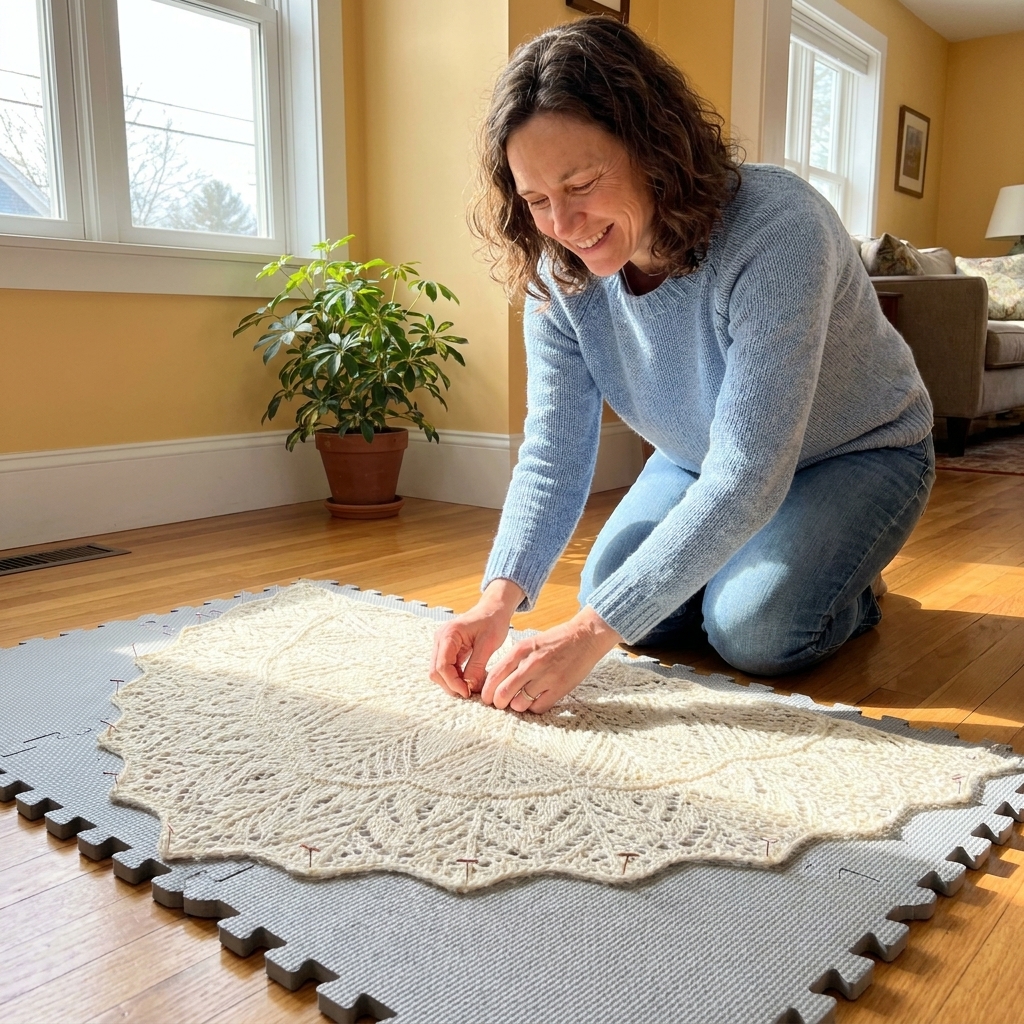
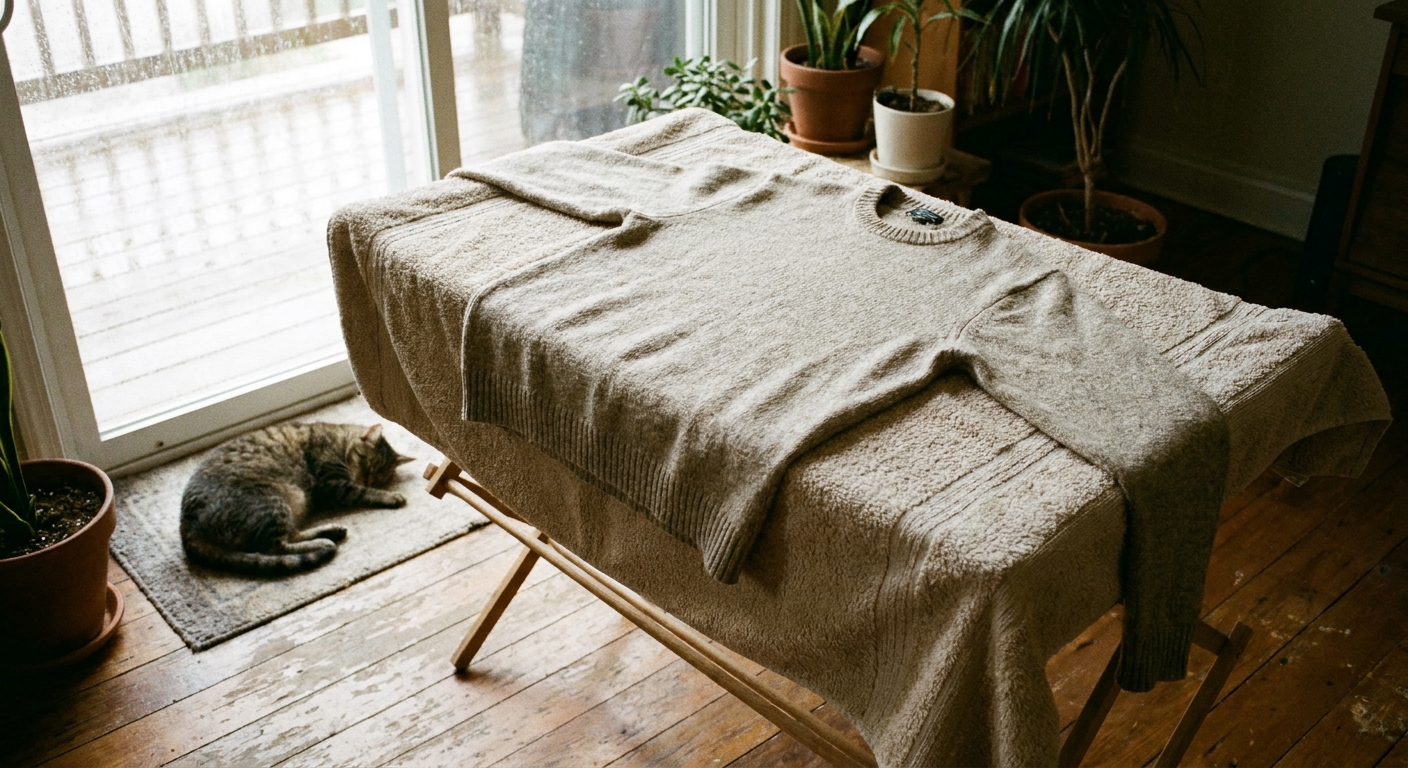
Lay the sweater flat on a dry towel or on top of a drying rack with a towel over it. Shape it gently to its intended measurements:
- Straighten the side seams.
- Pat the sleeves to even width.
- Square up ribbing at hem and cuffs.
- Make sure the neckline is not stretched wider than usual.
Then let it dry fully. Flip once halfway through if needed, especially for thicker yarns.
Do not hang a wet sweater. Hanging concentrates all that wet weight at the shoulders and can leave you with a permanently elongated shape.
Spot early felting
Felting can start subtly, especially in high-friction areas like underarms, cuffs, and the sides where a bag rubs.
Early signs
- The fabric feels fuzzier and less defined than before.
- Stitches look blurred or less distinct.
- The surface starts to look slightly matted in patches.
- The sweater feels a bit stiffer, not just damp.
What to do
Stop any rubbing immediately. Rinse in cool water if cleanser is still in the fabric, then press water out gently and dry flat. Sometimes early matting is just surface fuzz plus compression, and careful drying can keep it from getting worse. The key is to avoid adding more agitation while it is wet.
Common mistakes
- Hot water: even “warm” can be too warm for untreated wool.
- Agitation: scrubbing a stain, swishing vigorously, or letting it churn under running water.
- Temperature shock: a big jump from warm to cold, or cold to warm, especially with movement.
- Wringing: twisting forces fibers to lock and also distorts your fabric.
- Hanging to dry: stretches the sweater, especially at shoulders and neckline.
- Too much soap: encourages extra handling while you try to rinse it out.
Stain help
If you have a spot you want to treat, try this calm approach:
- Wet the area with cool water.
- Add a tiny bit of wool wash to your fingertips.
- Press the cleanser into the stain and lift by pressing with a clean towel. Avoid rubbing.
- Let the sweater soak, then rinse as needed.
If it is an oily stain, you may need two short soaks rather than one long, vigorous session. Two calm washes are kinder than one aggressive scrub.
How often to wash
Wool does not need constant washing. Often, a sweater just needs:
- a good airing out,
- a gentle de-pilling session, or
- a spot clean at cuffs and neckline.
As a general rhythm, many sweaters do well with a wash after several wears, or at the end of a season before storing.
Machine washing, if the label allows
If your sweater is labeled machine washable (often superwash wool), you can use a machine on its gentlest, cold-water cycle. Put the sweater in a mesh bag, use a small amount of gentle wash, and skip any cycle that adds extra agitation.
Even then, I still dry flat. The dryer is where “machine washable” sweaters often lose the plot.
Detergent notes
Many everyday detergents include enzymes, brighteners, or additives meant for tough stains. On wool, those can be harsher than you want, especially over time. If you have a wool-specific wash, use it. If you do not, use the mildest detergent you have and keep the amount small. Avoid chlorine bleach.
Quick FAQ
Can I use regular laundry detergent?
You can, but choose the mildest option you have and use a small amount. Many detergents are designed for heavy soil and can be harsh on wool’s natural feel. Many wool washes are formulated to rinse clean, and some are no-rinse, which means less handling for your sweater.
Can I wash superwash wool the same way?
Yes, and it is a safe default. Superwash is less likely to felt, but it can grow when wet. The same rules still help: minimal agitation, support the wet weight, and dry flat.
My sweater feels scratchier after washing. What happened?
Often it is leftover cleanser or hard water minerals. Rinse once more in cool water, press out excess moisture, and dry flat. Avoid fabric softener, which can coat fibers and change drape.
Can I speed up drying with heat?
Airflow helps more than heat. A fan in the room can speed things up. Direct heat can dry unevenly and can overheat fibers, which raises the risk of shrinkage or damage.
A calm finish
Once the sweater is fully dry, give it a gentle shake and smooth the fabric with your hands. If you store it, fold it rather than hanging.
Store sweaters only when they are completely dry, and keep them in a clean, closed bin or bag for the off-season if moths are a concern.
Wool likes patience. You made every stitch on purpose. Washing it the same way keeps your sweater looking like itself, wash after wash.