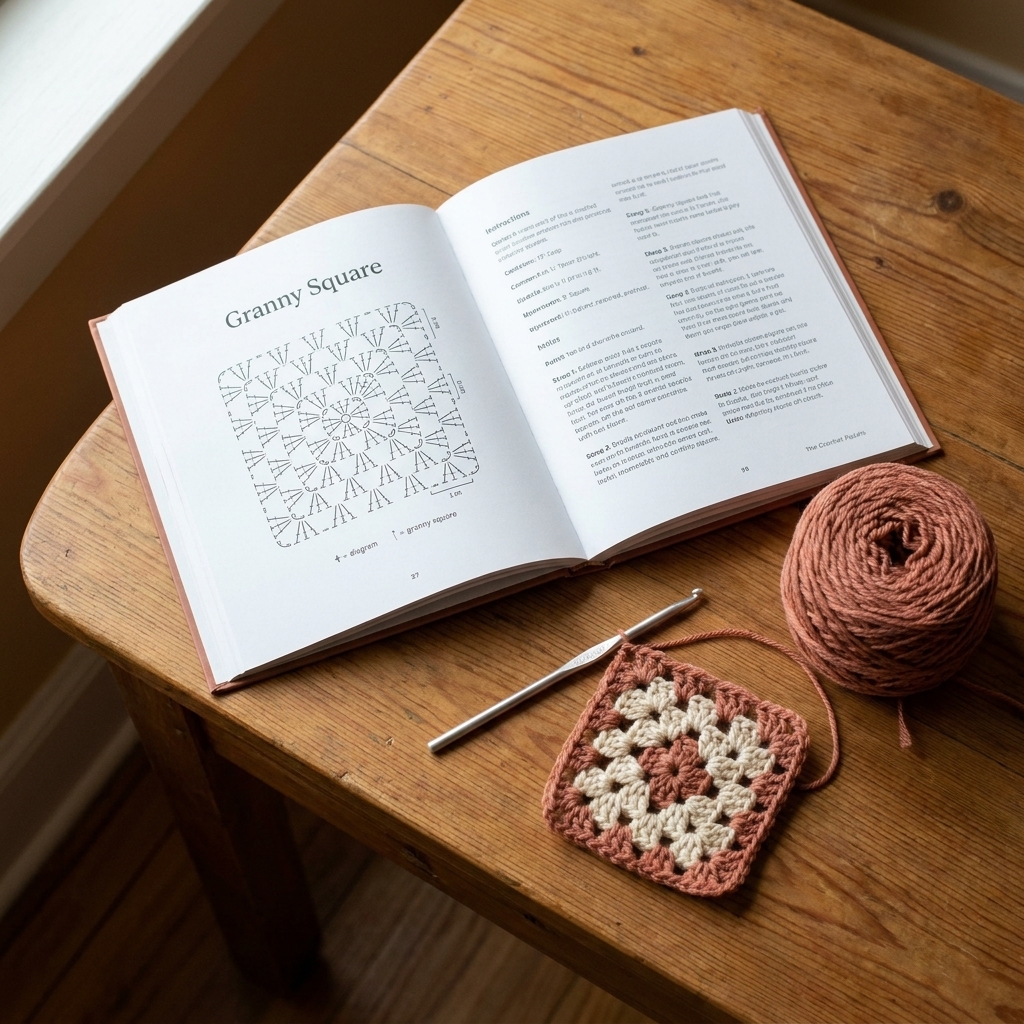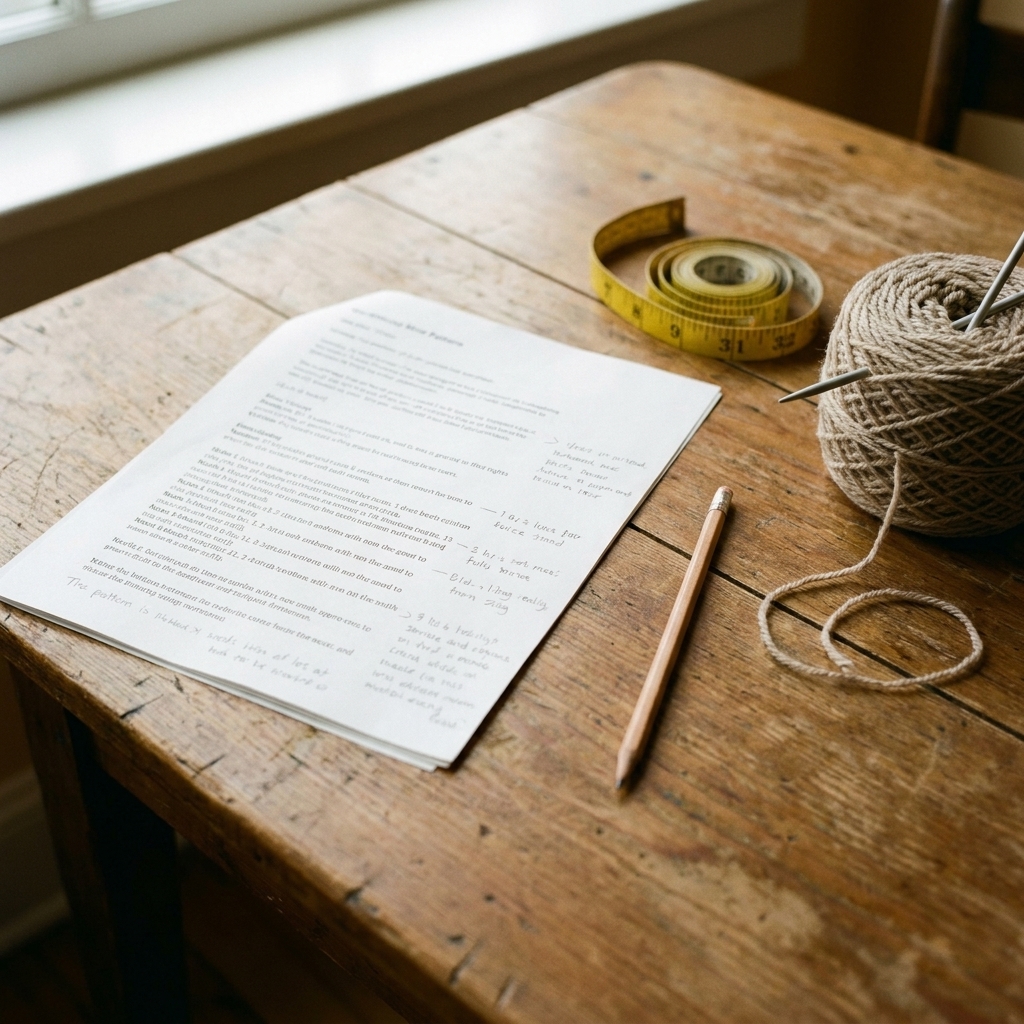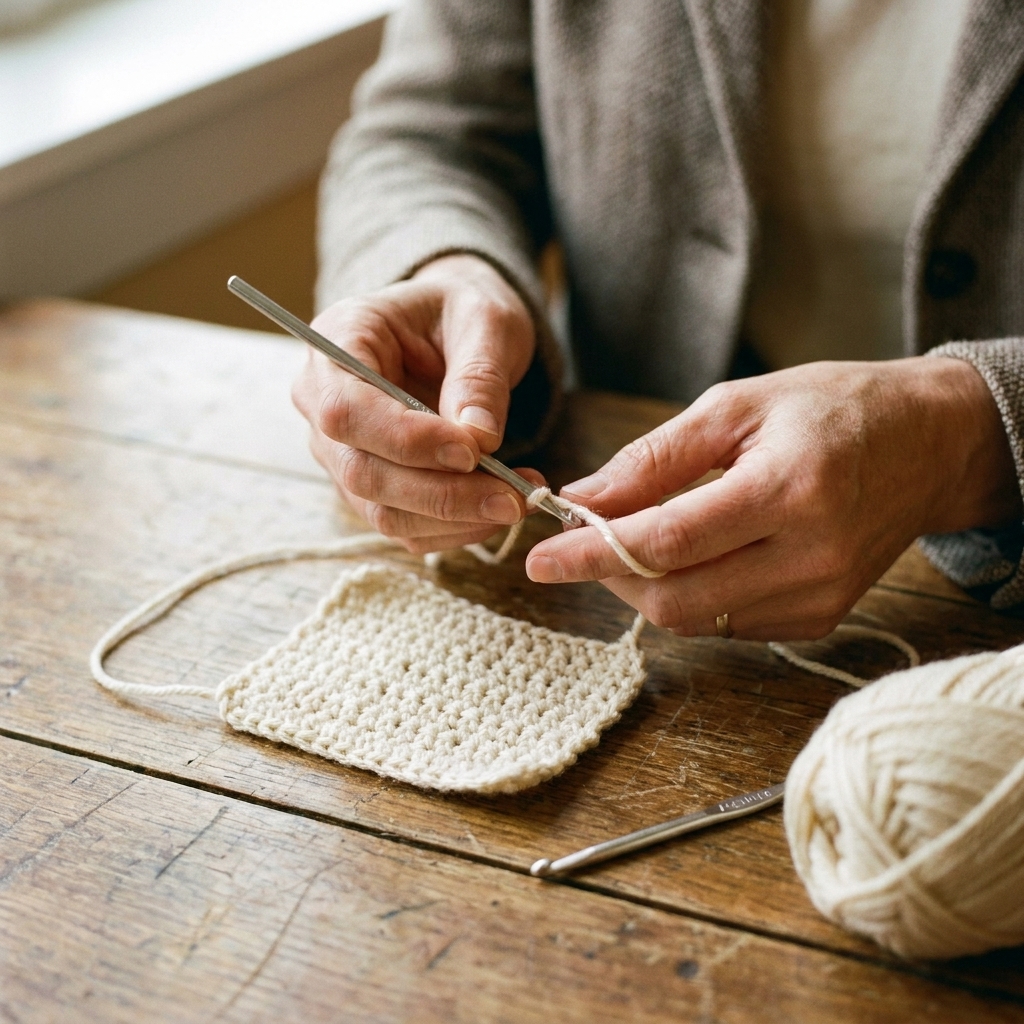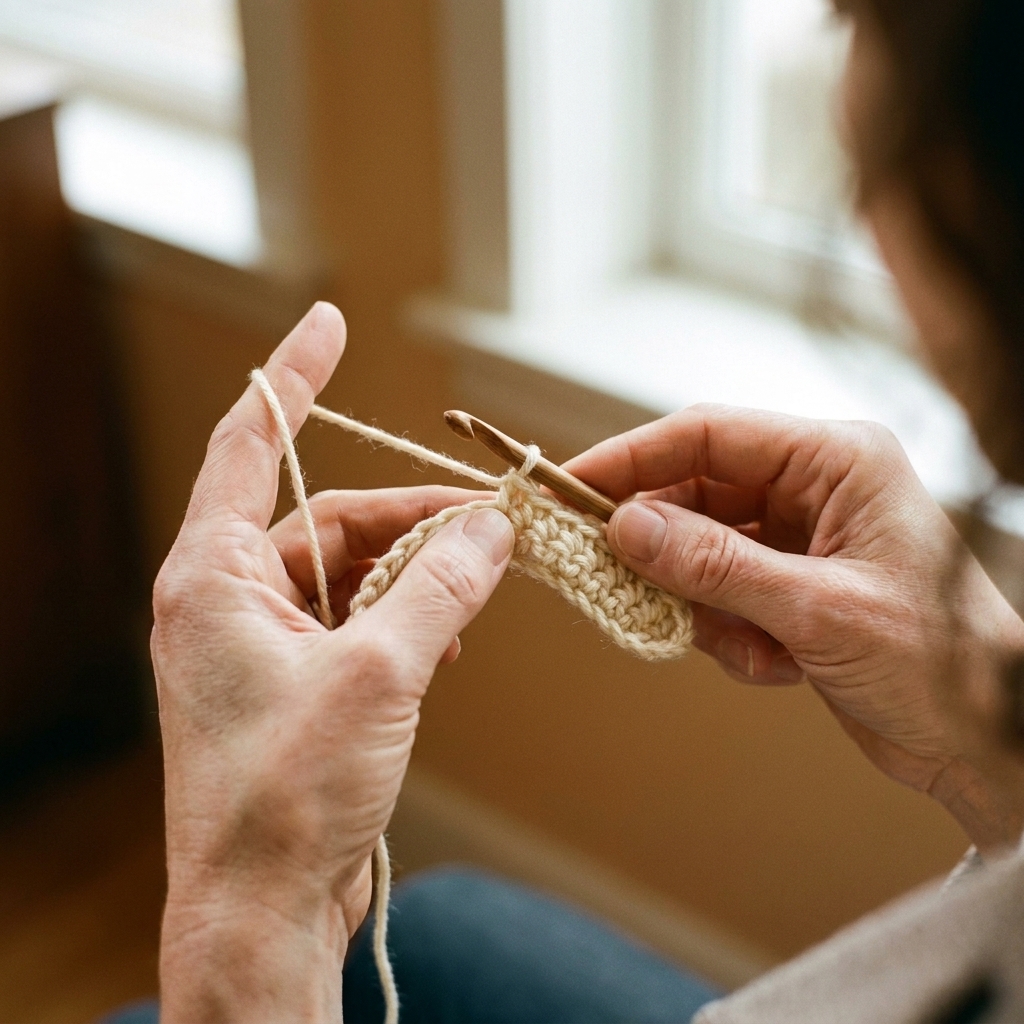
You know that moment when you open a crochet pattern, feel so proud of yourself for being brave, and then it calmly tells you to “work a treble”? If your brain immediately replies, “A what now?” you are not alone. This is one of the most common beginner hiccups I see, and the good news is delightfully simple: in most cases, the stitch you make with your hands is the same. It is the name that changes between US and UK terminology.
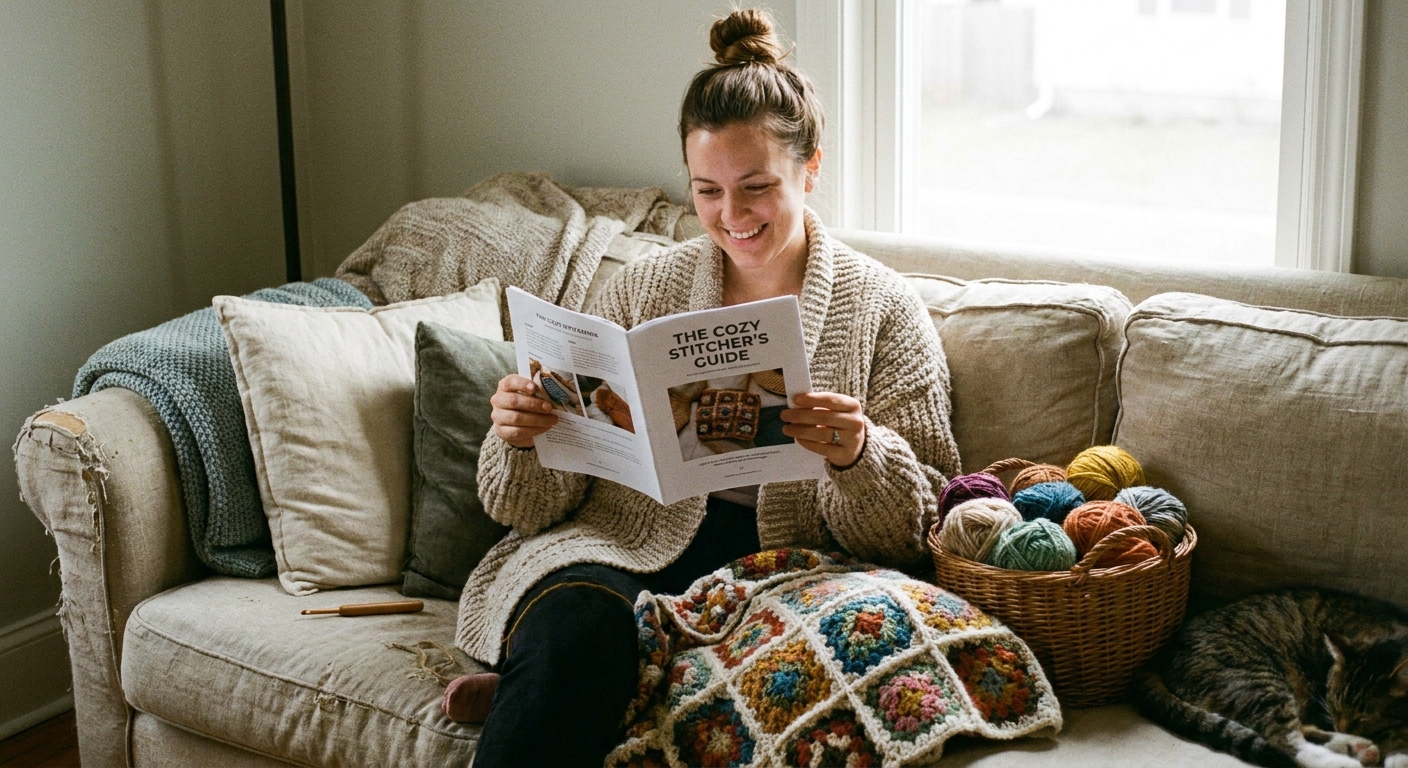
Let’s translate your first pattern the cozy, no-panic way.
First: check US or UK
Before you translate a single stitch, do a quick “terminology check.” Most designers include this somewhere, but it can hide in sneaky places.
Where to look
- The first page or header: Look for wording like “Terminology: US” or “Written in UK terms.”
- Abbreviations section: Many patterns list abbreviations and will label them US/UK.
- Pattern notes: Sometimes it is in a sentence like, “This pattern uses UK crochet terms.”
- Designer location (not foolproof): UK-based designers often write in UK terms, US-based designers often write in US terms. But designers travel, publish internationally, and sometimes intentionally choose the other system, so use this as a hint, not proof.
Fast tells
If the pattern does not clearly say, scan for these words:
- If you see “single crochet” (sc): that is almost always US terminology.
- If you see “double crochet” (dc) but it looks like a basic short stitch: that is often UK terminology, where “double crochet” is the short stitch US crocheters call “single crochet.”
- If you see “treble crochet” (tr): it can be either, but what it means depends on the system. This is exactly why we check.
My favorite sanity check: Look at the finished-photo texture. If the instructions say “dc” and the fabric in the photo looks tall and airy, you are probably reading US double crochet. If it looks tight and short, you might be looking at UK double crochet.
US to UK stitch conversion
Here is the translation table I wish someone had handed me the first time I wandered into UK patterns with full confidence and zero context.
| US term | UK term | What this means in real life |
|---|---|---|
| Slip stitch (sl st) | Slip stitch (sl st) | Same name, same stitch |
| Chain (ch) | Chain (ch) | Same name, same stitch |
| Single crochet (sc) | Double crochet (dc) | Short stitch |
| Half double crochet (hdc) | Half treble (htr) | Medium-height stitch |
| Double crochet (dc) | Treble (tr) | Tall stitch (one yarn over before inserting) |
| Treble crochet (tr) | Double treble (dtr) | Taller stitch (two yarn overs before inserting) |
The key pattern logic: UK terms are basically “shifted” one taller than US terms for the core stitches. That is why this mix-up happens so often.
Translate a sample row
Let’s do a quick, practical translation. Pretend you found this instruction in a pattern that is clearly written in UK terms:
Row 1 (UK): Ch 15. 1 dc in 2nd ch from hook, 1 dc in each ch across. Turn.
If you crochet in US terms, you translate the stitch names like this:
chstaysch- UK
dcbecomes USsc
Row 1 (US translation): Ch 15. 1 sc in 2nd ch from hook, 1 sc in each ch across. Turn.
Notice what did not change: where you insert your hook, which chain you start in, or the basic structure of the row. We swapped names, not actions.
The key warning
This is the part that saves a lot of frogging. When you move between US and UK patterns, you are usually not learning a brand-new stitch. You are simply calling the same stitch by a different name.
- If a UK pattern says dc, do US sc hand movements.
- If a UK pattern says tr, do US dc hand movements.
- If a UK pattern says dtr, do US tr hand movements.
If you only remember one thing, make it this: UK “double crochet” is the little stitch.
Common pitfalls
1) Same abbreviations, different stitches
dc is the classic troublemaker. In US patterns, dc is double crochet. In UK patterns, dc is double crochet too, but that UK “double crochet” is what US crocheters call single crochet. Same letters, different stitch height.
2) Gauge and sizing can go sideways
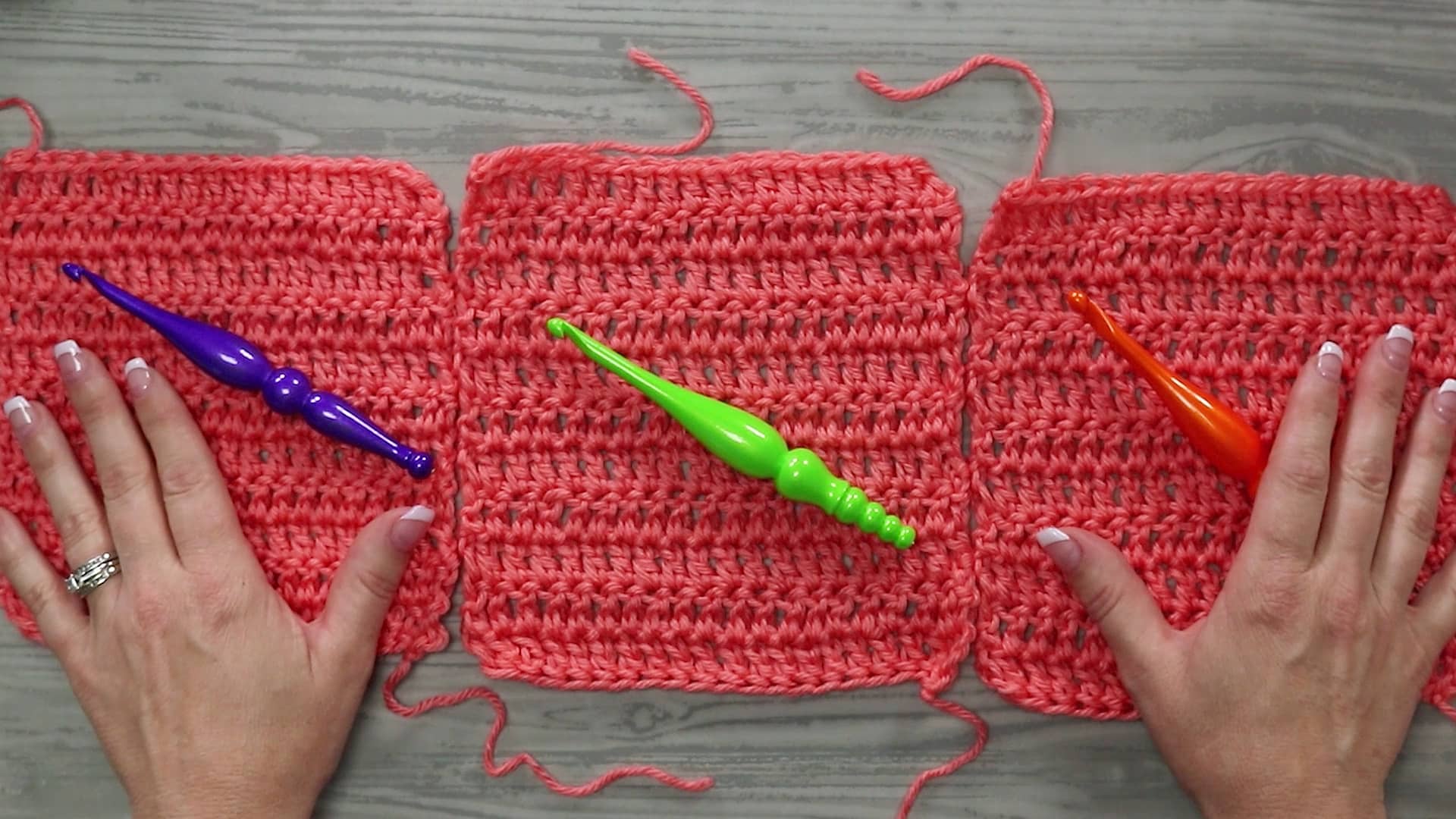
If you follow UK tr as if it were US tr, your fabric will come out taller, looser, and larger. That is not a moral failing. It is just a terminology mismatch. When in doubt, translate first, then swatch.
3) “Tension” means “gauge”
UK patterns often say tension where US patterns say gauge. The idea is the same: the stitch and row count over a measured area that helps your project size come out correctly.
4) Not every difference is a stitch
You might also see UK patterns use yarn over and yarn round hook wording differently. Most of the time, the motion is still “wrap yarn over the hook.” If the pattern includes a photo tutorial, trust the photo.
Quick checklist
- Confirm the system: Look for “US terms” or “UK terms.”
- Scan for the giveaway words: “single crochet” (US) versus “double crochet” used as a short stitch (UK).
- Translate the stitch names: Use the table above and pencil it onto your printed pattern if that helps.
- Swatch for confidence: Even a tiny test square can confirm you are making the right stitch height.
If you are feeling a little intimidated: you are not behind. You are leveling up. Crochet is already basically a secret language, and you are learning a second dialect. My yarn stash and I are very impressed.
Mini FAQ
Do I need a special hook or yarn?
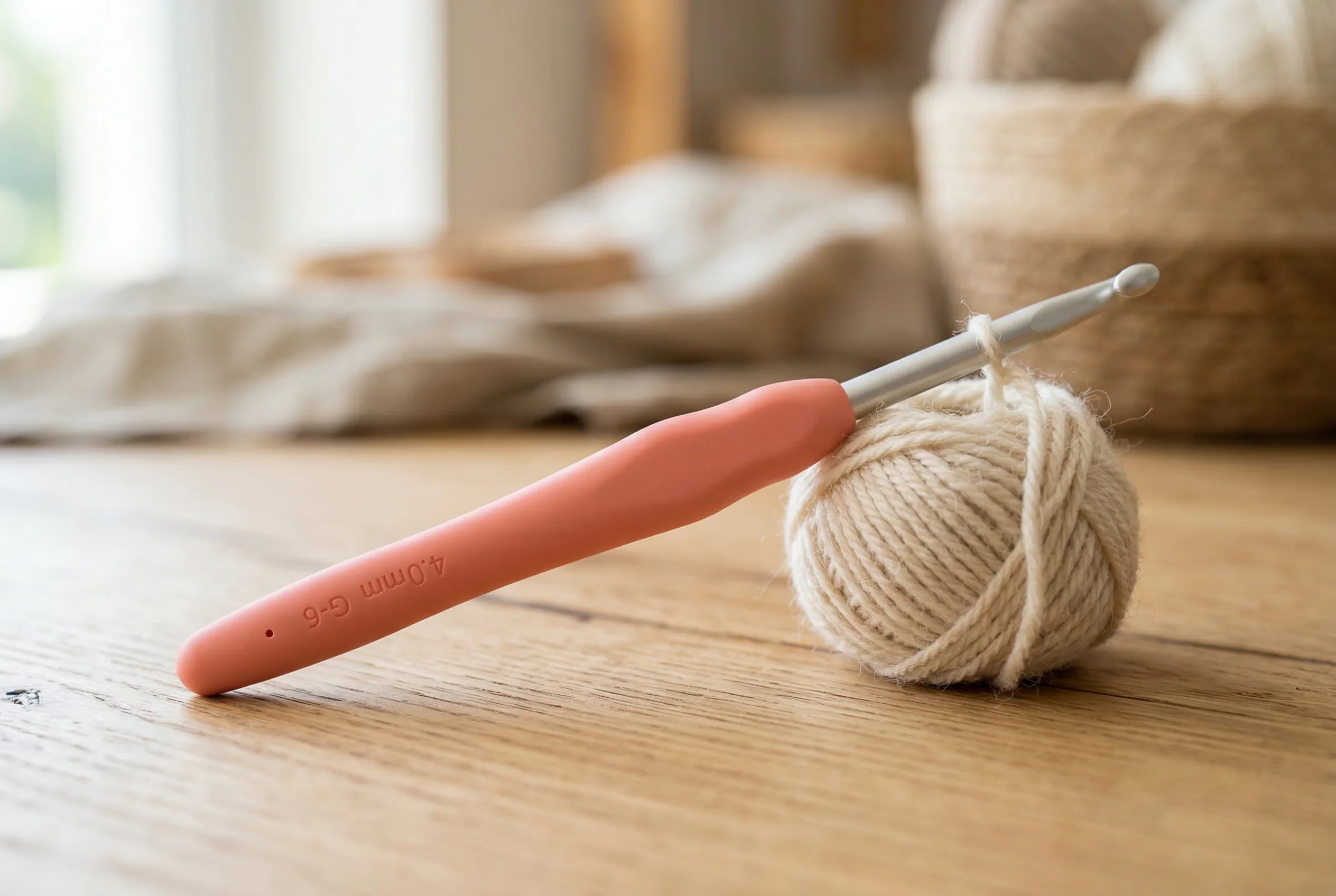
Nope. Terminology is just wording. Use the yarn and hook the pattern calls for, and translate stitch names as needed.
Are UK patterns harder?
Not inherently. The confusion is mostly the naming shift. Once you know the conversions, your hands will feel right at home.
What about puff, bobble, or popcorn?
Many of those have the same name in both systems, but the exact steps can still vary by designer. For textured stitches, I always read the written definition in the pattern notes and check any included photos, regardless of US or UK terms.