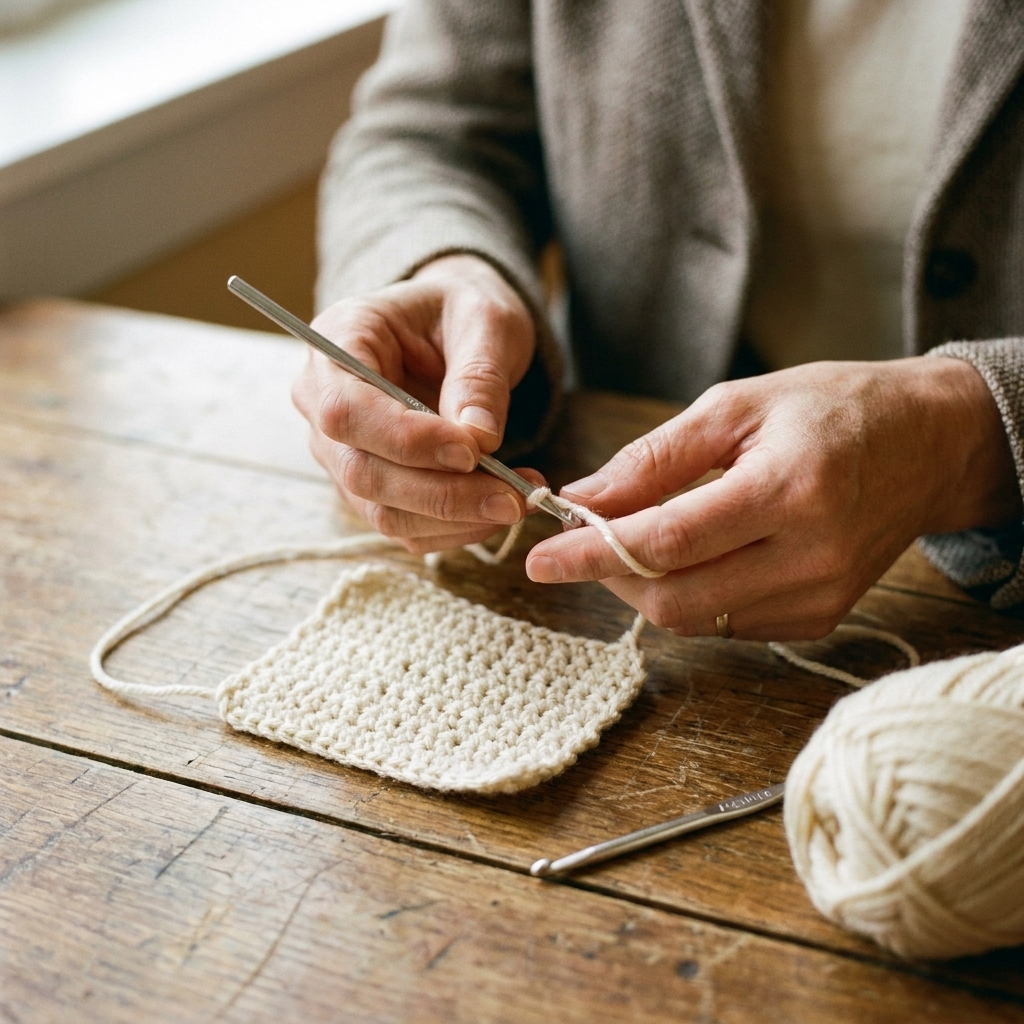
If regular crochet and knitting had a crafty little baby, it would look a lot like Tunisian crochet. You get a fabric that feels delightfully knit-like, but you only ever use one hook. And the best place to start is the Tunisian Simple Stitch, lovingly known as TSS.
In this guide, I’ll walk you through the three big building blocks you’ll use again and again in Tunisian crochet: the setup row, the forward pass, and the return pass. Take it slow, give your hands a breath when they need it, and remember: even the most confident makers were once staring at a row of loops thinking, “Okay… now what?”
What is Tunisian Simple Stitch?
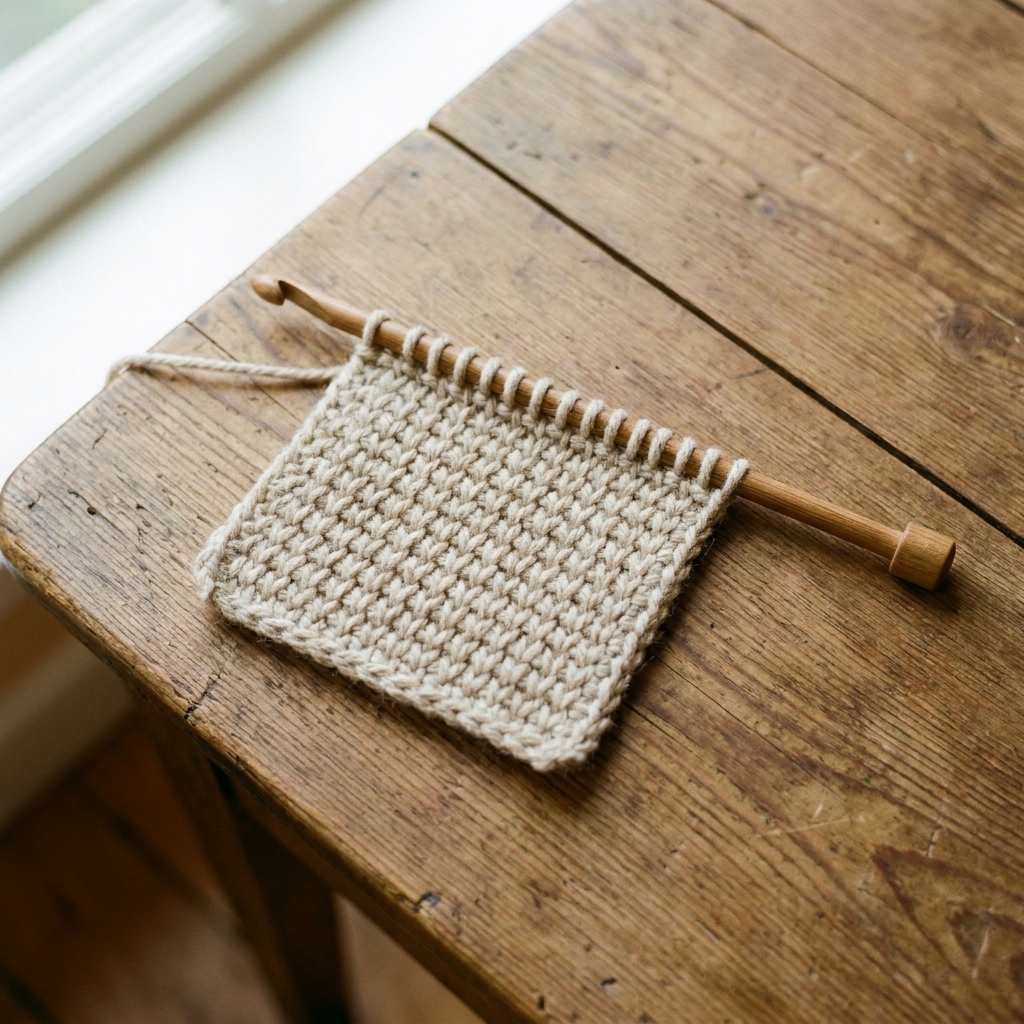
Tunisian Simple Stitch is the classic, foundational Tunisian crochet stitch. It creates a dense, tidy fabric with vertical bars on the front that resemble a woven knit texture. It is sturdy, warm, and perfect for things like dishcloths, scarves, blankets, and structured bags.
Unlike standard crochet, Tunisian crochet is worked in two steps per row:
- Forward pass: you pick up loops and leave them on the hook.
- Return pass: you work those loops off the hook to complete the row.
If that sounds a little like knitting because of the “lots of loops on the hook” situation, yes. Welcome. Your yarn stash is about to become even more powerful.
What you’ll need
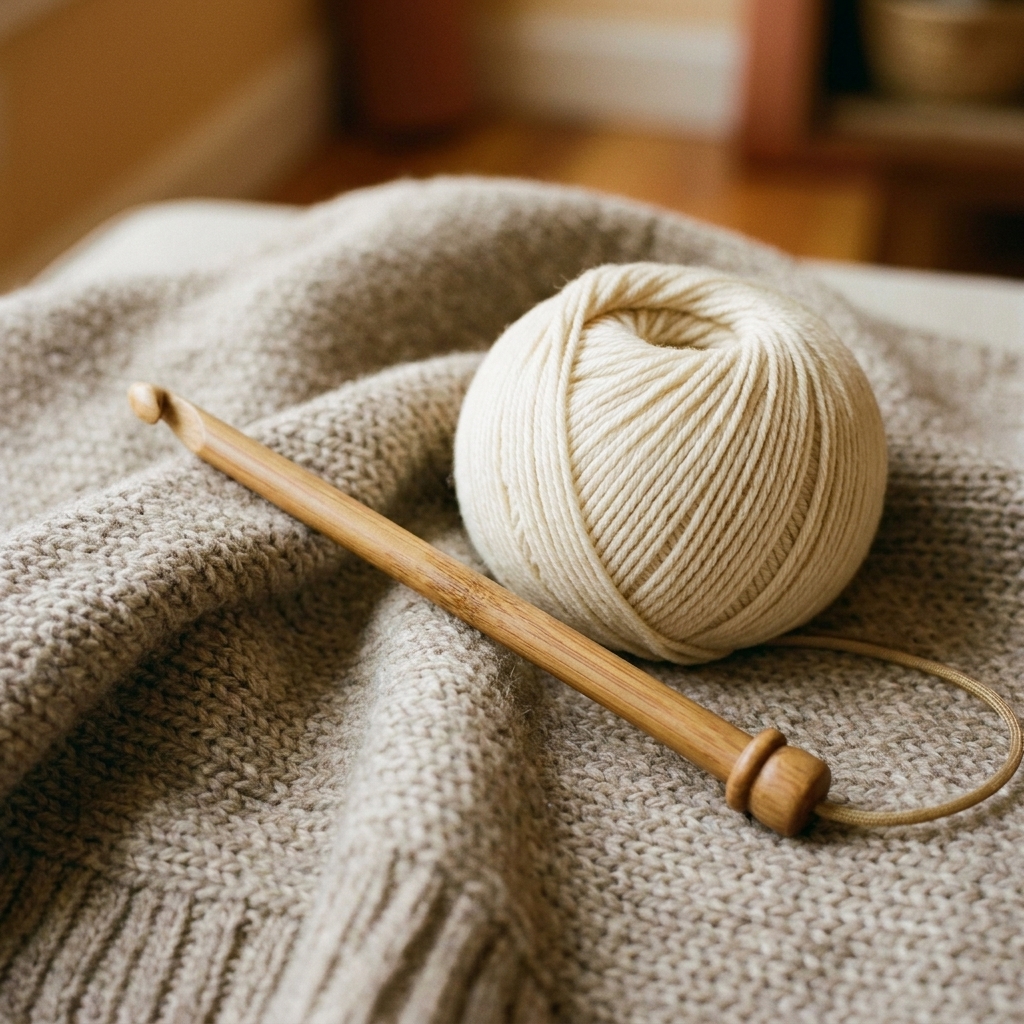
Hook
You can learn TSS with a regular crochet hook if you’re making a small swatch. For wider projects, many people find a Tunisian crochet hook (longer shaft) or a hook with a cable much more comfortable.
Hook size tip: Tunisian fabric tends to come out tighter than regular crochet, so sizing up one hook size from your yarn label recommendation is a common starting point.
Yarn
Choose a smooth, light-colored yarn for your first practice piece. Fuzzy, dark, or highly textured yarns are adorable but they hide the anatomy of your stitches when you are learning.
Extras
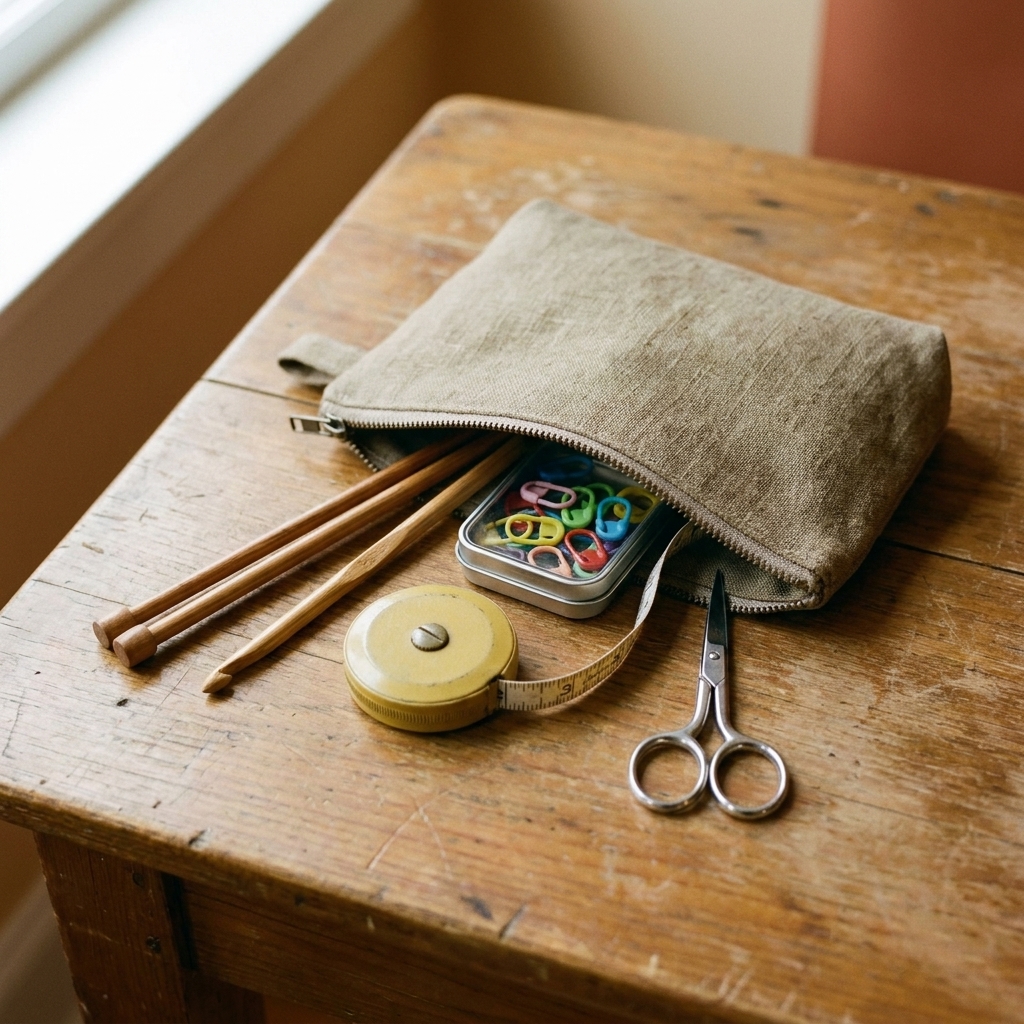
- Scissors
- Tapestry needle (for weaving in ends)
- Two stitch markers (optional but very helpful for edges)
TSS anatomy
Before we stitch, let’s get oriented. In Tunisian crochet, each stitch creates a vertical strand on the front of your work called a vertical bar. For TSS, you insert your hook under that vertical bar, pick up a loop, and keep it on the hook.
Also important: your row has two edges.
- Right edge: where you begin the forward pass.
- Left edge: where you end the forward pass and begin the return pass.
Quick note for lefties: If you work left-handed, your direction may be mirrored. The stitch anatomy is the same, so follow the “what to insert into” descriptions and let your hands lead the direction.
Those edges are where beginners most often accidentally add or lose stitches. Totally normal. We’ll fix it with a couple of habits that make your edges behave.
Step 1: Foundation chain
Chain any number to practice. For a first swatch, I like ch 15. That is wide enough to see what’s happening without being so wide your hook feels like it’s carrying groceries.
Important: Do not count the loop on your hook as a chain.
Step 2: Setup row
The setup row is simply picking up loops into the foundation chain so your hook is “loaded” and ready for the first return pass.
Setup row instructions
Ch 15.
Insert hook into the second chain from the hook.
Yarn over and pull up a loop. Leave it on the hook.
Continue across: insert hook into the next chain, yarn over, pull up a loop, and leave it on the hook.
When you reach the end, you will have a whole row of loops sitting on your hook. That is correct. Slightly intimidating the first time, but correct.
Loop count check: If you chained 15, you should have 15 loops on your hook at the end of the setup row forward pass. This one habit prevents about 90 percent of “where did my stitches go?” moments.
Step 3: Return pass
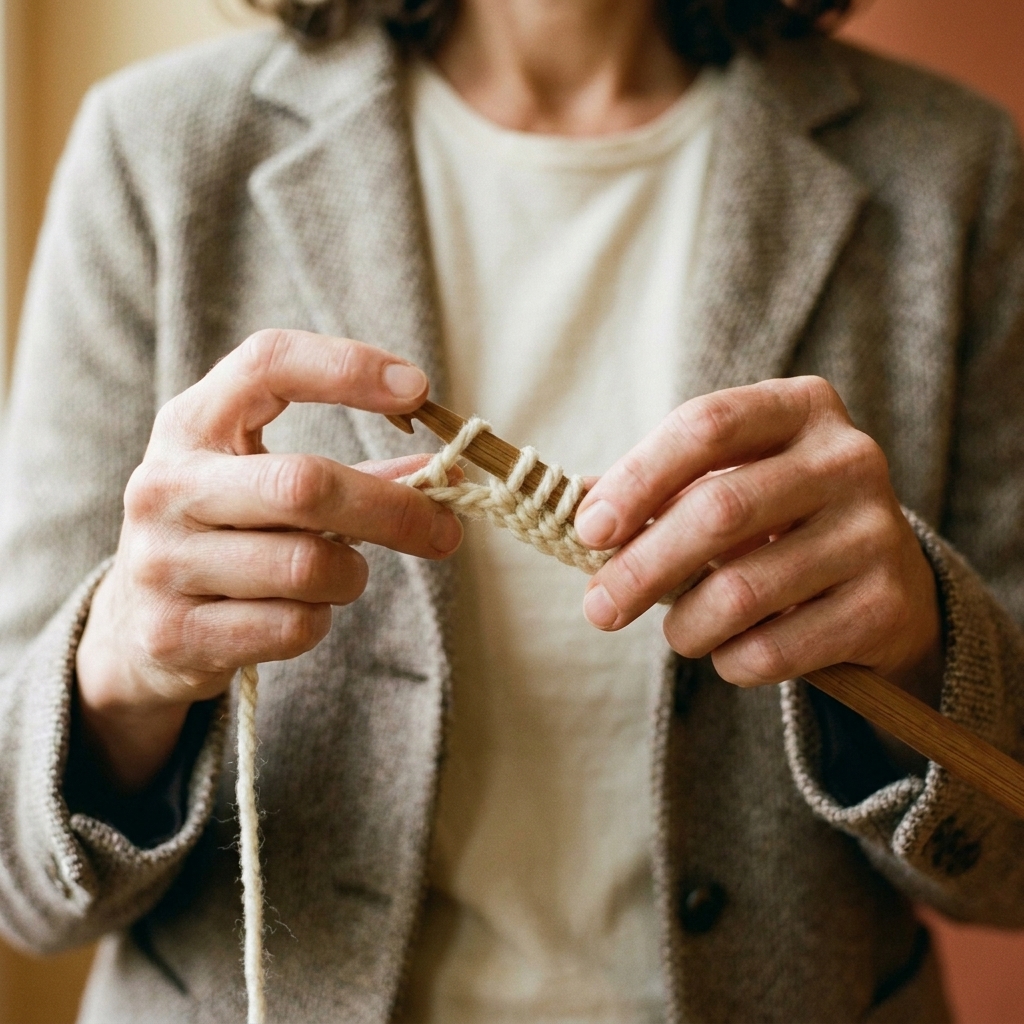
In Tunisian crochet, you typically do not turn your work between passes. The return pass is worked back across the loops on your hook to finish the row and leave exactly one loop on the hook, ready for the next forward pass.
Basic return pass instructions
Yarn over, pull through 1 loop. This makes the edge chain and sets you up for the rhythm.
Yarn over, pull through 2 loops.
Repeat: yarn over, pull through 2 loops all the way across until only 1 loop remains on your hook.
If you crochet, this feels like a long row of “pull through 2” similar to finishing off stitches, and it becomes wonderfully meditative once your hands find the groove.
Step 4: TSS forward pass
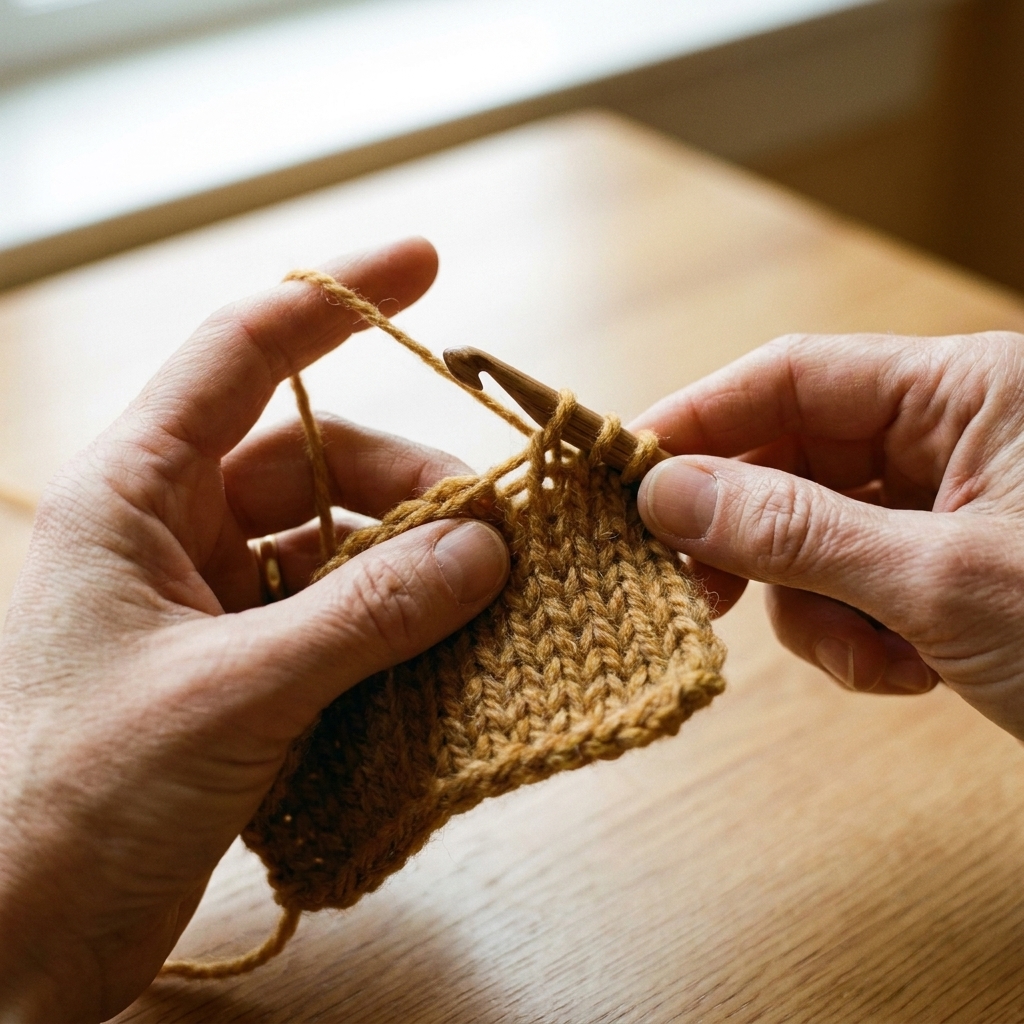
Now you are ready for the Tunisian Simple Stitch forward pass. You’ll be working into those vertical bars we talked about earlier.
TSS forward pass instructions
Do not chain. At the very beginning of the row, you will see a vertical bar snug right next to the loop on your hook. That spot is part of the edge structure.
Edge setup: For this beginner-friendly method, skip that first vertical bar to keep the right edge from getting bulky.
Stitch across: Insert your hook from right to left under the next vertical bar, yarn over, pull up a loop, and leave it on the hook.
Repeat across: insert under next vertical bar, yarn over, pull up a loop, leave it on the hook.
Last stitch (edge stitch): At the very end of the row, instead of a vertical bar, you will see a little “V” looking edge. Insert your hook under both strands of that edge, yarn over, pull up a loop.
Stitch-count sanity check: Even though you skipped that first vertical bar, you still pick up the same number of loops as your row width because the final edge stitch counts too. For a 15-stitch swatch, you should have 15 loops on your hook at the end of the forward pass.
That last edge stitch is the secret sauce to tidy sides. It feels a bit fiddly at first, but your edges will look so much more polished.
Step 5: TSS return pass
The return pass for TSS is the same basic return pass you already learned.
Yarn over, pull through 1 loop.
Yarn over, pull through 2 loops across to the end.
Congrats, you have completed one full row of Tunisian Simple Stitch.
Common hiccups
“My work is curling like a potato chip.”
Classic Tunisian crochet behavior. TSS loves to curl because of the stitch structure, especially early on.
- Fix 1: Use a larger hook to loosen the fabric.
- Fix 2: Keep your return pass relaxed. Many of us tighten up there without realizing.
- Fix 3: Add a border later (single crochet around the edges works wonders).
- Fix 4: Block your finished piece. Steam or wet blocking can calm the curl dramatically depending on fiber content.
“My edges look messy and I’m losing stitches.”
Usually this is an edge stitch issue.
- On the forward pass, make sure you work that last edge stitch under both strands.
- Count your loops at the end of the forward pass for the first few rows. Same number every time is the goal.
- Consider placing a stitch marker in the first and last stitch area of each forward pass for a few rows until your eyes learn the shape.
“It feels too tight to insert my hook.”
- Size up your hook.
- Try a yarn with more glide (smooth acrylic or wool is friendly; splitty cotton can be harder at first).
- Consciously loosen your grip during the forward pass. I say this as someone who occasionally crochet-grips like I’m wrestling a squirrel.
“My fabric has gaps or looks uneven.”
Uneven tension is normal when you are learning the two-pass rhythm. After 10 to 20 rows, it often improves on its own. Also check that you’re inserting under a single vertical bar each time (not accidentally splitting it).
Practice plan
If you want a calm, confidence-building way to practice, here’s what I recommend:
- Make a swatch about 15 chains wide.
- Work setup row + return pass.
- Work 10 rows of TSS (forward pass + return pass), counting loops at the end of each forward pass for the first few rows.
- Bind off with a simple Tunisian bind off (instructions below) or just fasten off if it’s a pure practice piece.
Set a timer for 15 minutes, put on something cozy in the background, and let it be imperfect. The goal is comfort, not crochet gymnastics.
How to bind off
A basic Tunisian bind off looks a lot like slip stitching across, and it helps keep your edge neat.
Tunisian bind off
Work a normal TSS forward pass, but as you go, you will bind off instead of leaving all loops on the hook.
Insert under the next vertical bar, yarn over, pull up a loop (2 loops on hook).
Yarn over and pull through both loops (like a slip stitch).
Repeat across.
At the last edge stitch, insert under both strands, yarn over, pull up a loop, pull through both loops.
Cut yarn and pull through the final loop.
If your bind off feels tight, go up a hook size just for the bind off. Yes, really. It is a simple trick that saves a lot of grumbling.
Project ideas
- Dishcloths and washcloths: sturdy, satisfying, and quick.
- Scarves and cowls: warm and squishy, especially in wool blends.
- Baby blankets: soft texture with great drape once blocked.
- Bags and pouches: structured fabric that holds its shape.
If you are craving a first “real” project, a simple TSS scarf with a single crochet border is a very charming entry point.
FAQ
Do you turn your work in Tunisian crochet?
Usually, no. You work the forward pass across the row, then the return pass back across without turning.
Why do I have so many loops on my hook?
That’s the Tunisian method. The forward pass collects loops, and the return pass works them off. This is why longer hooks or hooks with cables are helpful for wider projects.
Is TSS the same as knitting?
Not quite. The fabric can look knit-like, but the structure is different, and you’re using a crochet hook. Think of it as its own delightful in-between craft.
Can I use a normal crochet hook for Tunisian crochet?
Yes for small swatches and narrow projects. For wider pieces, a Tunisian hook or a hook with a cable makes it much easier to hold all those loops comfortably.
One last pep talk
If your first TSS rows look a little wonky, welcome to the club. Tunisian crochet has a tiny learning curve because the motions are different, but once your hands learn the two-pass rhythm, it becomes wonderfully soothing.
Make a mug of tea, do a few more rows, and let your stitches be messy for a minute. Slow fashion is built one slightly awkward beginner swatch at a time.