There is something wildly satisfying about changing the vibe of a whole room without buying a whole new room. Enter: throw pillows. A fresh pillow cover is my favorite kind of makeover because it is small, practical, and it lets you play with color like a designer without committing to repainting a wall. Also, if you are anything like me, you already own enough yarn to upholster a small canoe, so we might as well put it to work.

Below is a collection of clean, current knit and crochet pillow pattern styles you can make at home. Think simple lines, intentional texture, and updated color palettes. I am keeping the techniques beginner-friendly and calling out the finishing details that make the difference between “homemade” and “handmade in the best way.”
What makes a pillow feel current?
Modern handmade decor usually has one or more of these ingredients:
- Simple stitches used boldly, like garter ridges, half double crochet rows, or a single cable running like a design feature.
- Intentional texture, such as ribbing, waffle stitch, seed stitch, or crochet post stitches that create a clean, architectural surface.
- Updated color palettes, like warm neutrals, earthy tones, high-contrast black and cream, or soft “coastal” shades.
- Crisp shaping, meaning covers that fit the insert well and seams that are tidy.
- Details that look finished, like an invisible seam, envelope back, hidden zipper, or a polished border.
Good news: you do not need complicated techniques to get that look. You need good yarn choice, consistent tension, and a pillow insert that is the right size.
Quick planning: size, insert, yarn
Pick the insert first (yes, really)
If you want that plump, boutique look, choose an insert that is about 1 to 2 inches larger than your finished cover, depending on your fabric.
- Dense crochet or less-stretchy fibers (like cotton): usually +1 inch is plenty.
- Stretchier knits or lofty wool: can often handle +2 inches for extra oomph.
For example, for an 18-inch cover, try a 19 to 20-inch insert. If your seams are working overtime or the texture looks pulled open, size down to the 19.
- Square standards: 16 x 16, 18 x 18, 20 x 20 inches
- Lumbar: 12 x 20 or 14 x 24 inches
A quick word on ease
Most pillow covers look best with a little negative ease, meaning the cover is slightly smaller than the insert so it hugs it. Knit stretches more, so you can go a touch snugger. Crochet is often sturdier and less stretchy, so keep your fit snug, not strained.
Yarn choice for clean texture
Texture reads best in solid or very subtle heathered yarns. If the stitch pattern is the star, let it be the star.
- For crisp stitch definition: smooth wool, wool blends, cotton, cotton blends
- For a cozy chunky look: bulky wool or a high-quality acrylic blend
- For durability: cotton or a tightly spun blend (great if you have kids, pets, or snack-happy friends)
Clara tip: Soft, fuzzy, or delicate yarns can look dreamy, but they can also show wear faster. Single-ply merino, very lofty roving-style yarns, and chenille tend to pill or go bald sooner on a pillow that gets daily squishing.
Gauge and fabric matter more than you think
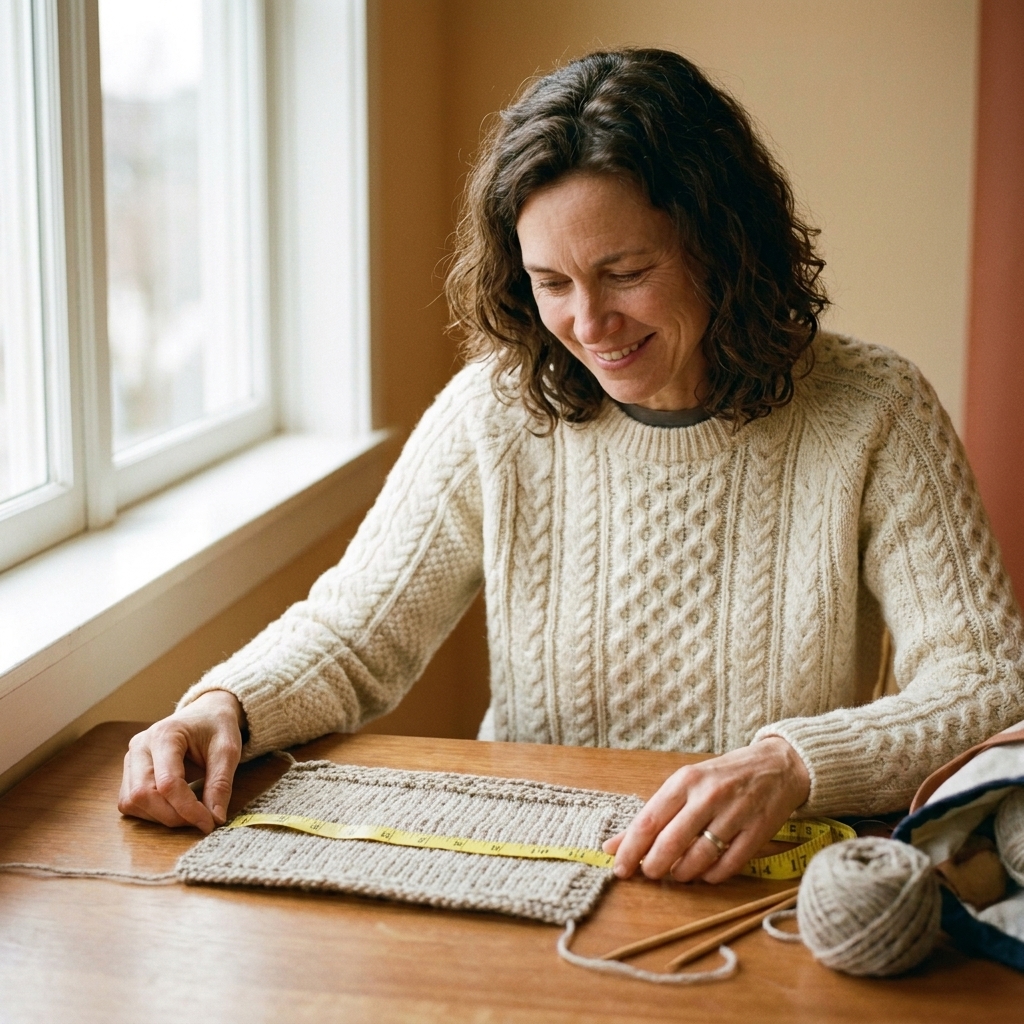
Pillow covers need a fabric that can handle squishing. If your stitches are too loose, the insert will peek through. Aim for a pleasantly firm fabric, especially with lighter colored inserts.
If you are between hook or needle sizes, sizing down a bit often gives a cleaner, more tailored finish.
Knit pillow ideas
These are pattern styles you can match with your favorite yarn and sizing. If you are comfortable casting on and knitting rectangles, you can make any of these.
1) Garter ridge pillow
Look: clean, calm, and quietly textured. Garter stitch resists edge curling and looks fantastic in chunky yarns.
- Skill level: beginner
- Great yarns: bulky wool, wool blends, smooth acrylic blends
- Construction: knit two rectangles, seam three sides, insert pillow, seam closed or add buttons
Design tweak: Knit wide garter ridges by alternating 6 rows of garter with 2 rows of stockinette for subtle striping texture.
2) Big rib pillow
Look: tailored and structured, like a cozy sweater for your couch.
- Skill level: beginner to advanced beginner
- Great yarns: worsted to bulky, with bounce
- Stitches: 2x2 or 3x3 rib, or half fisherman’s rib for extra squish
Beginner-friendly note: Ribbing pulls in. If your cover seems narrow on the needles, do not panic. Block the panel lightly and measure after relaxing the fabric. Also, consider planning a touch less negative ease than you would for garter or stockinette.
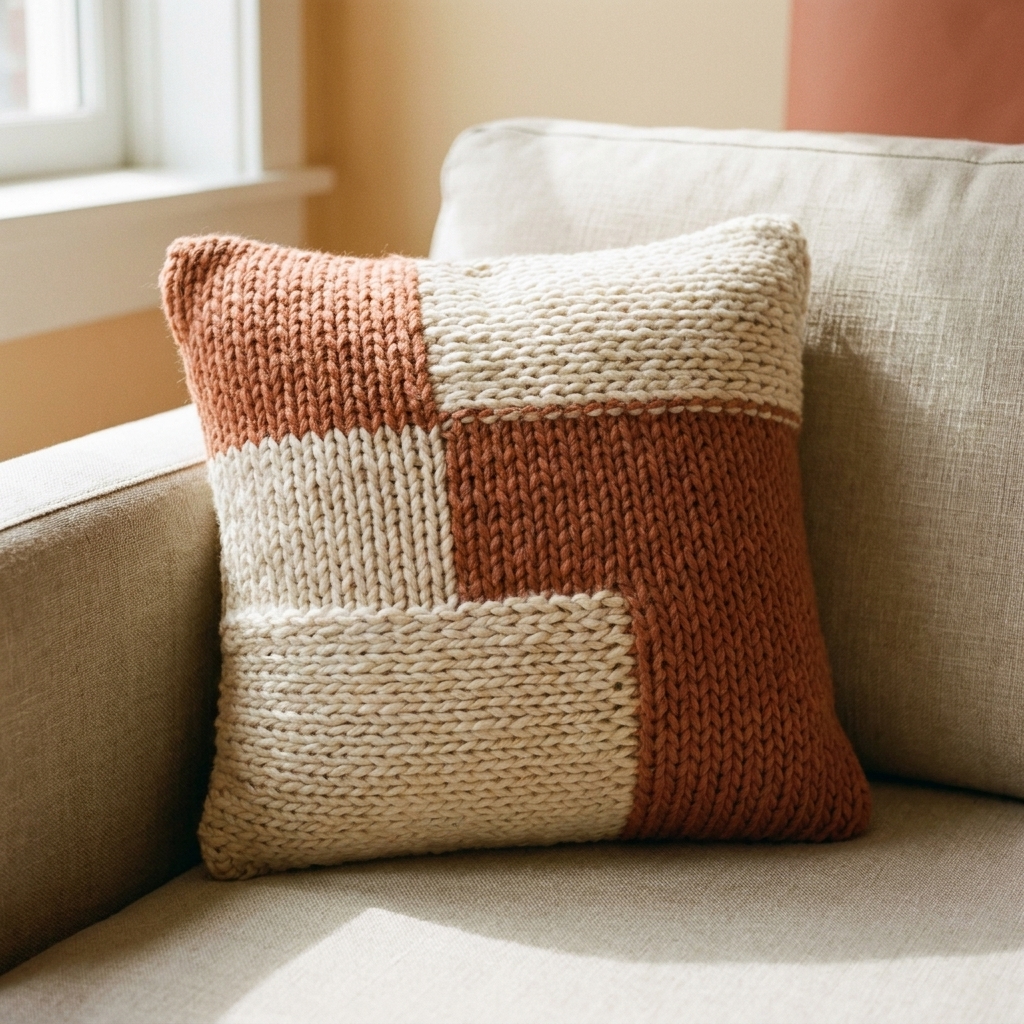
3) Seed stitch color block
Look: classic texture with modern color placement. Seed stitch hides minor tension wobbles, which is a win.
- Skill level: beginner
- Great yarns: wool blends, cotton blends
- Style idea: two-thirds cream, one-third terracotta, or sage with a thin charcoal stripe
4) Single cable pillow
Look: current cables are often simpler than traditional Aran, with one bold cable centered on an otherwise plain background.
- Skill level: intermediate, but confident beginners can try it
- Great yarns: smooth wool or wool blend for crisp definition
- Construction: knit flat, cable panel in the center, seam or zipper back
Clara tip: Put the cable only on the front panel and knit the back in stockinette or garter. You get the look without doubling the work.
5) Linen stitch pillow
Look: a sleek, grid-like texture that feels very “designer,” especially in solid neutrals.
- Skill level: advanced beginner (requires attention)
- Great yarns: worsted cotton, wool blends, yarns with good stitch definition
Reality check: Linen stitch is slower. It is absolutely worth it if you want that elevated, woven texture, but maybe do not start it at 10 pm if you are already sleepy. Ask me how I know.
Crochet pillow ideas
Crochet is a texture powerhouse. The key to a clean look is choosing stitches that make simple geometry and keeping the color palette intentional.
1) Half double crochet pillow
Look: simple, dense, and neat. Half double crochet (hdc) makes a sturdy fabric that wears well.
- Skill level: beginner
- Great yarns: worsted cotton blends, acrylic blends
- Clean upgrade: work hdc in the back loop only for subtle horizontal ridges
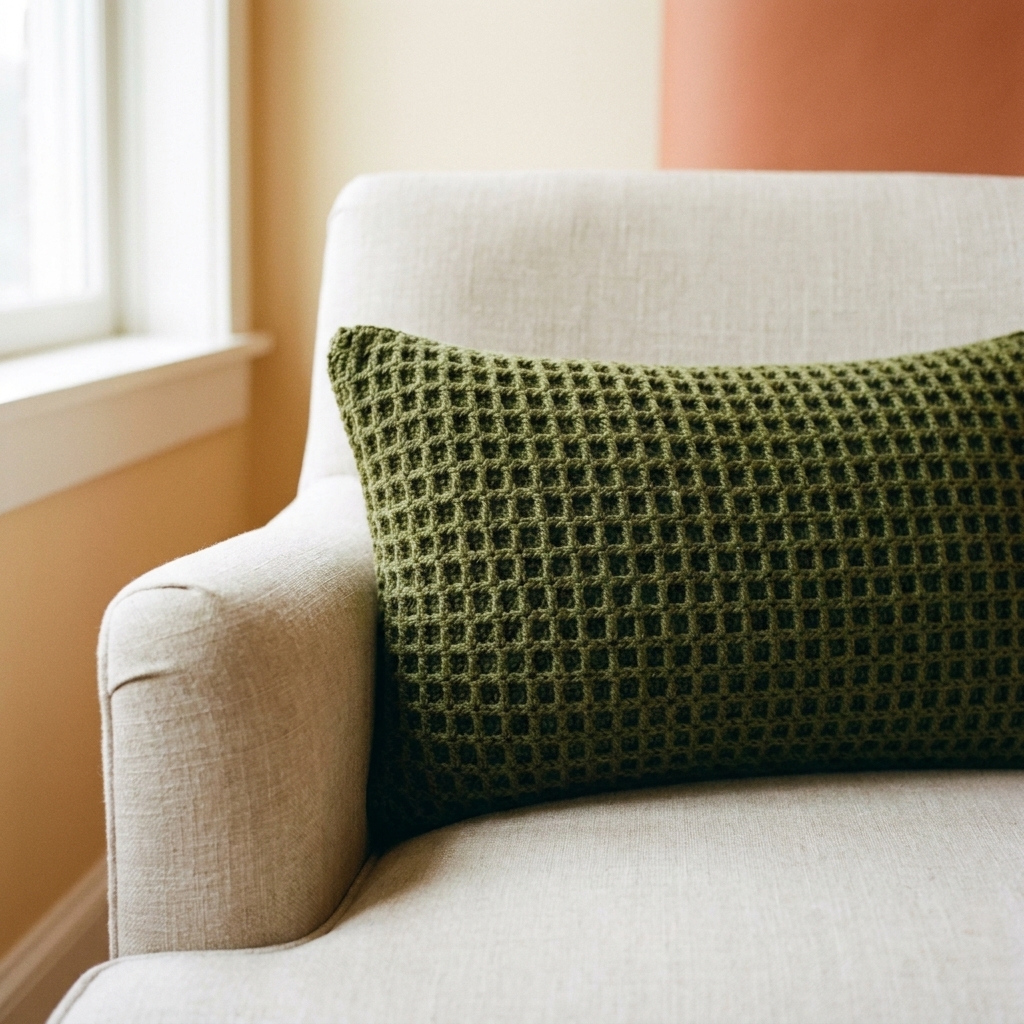
2) Waffle stitch pillow
Look: bold, graphic texture that still reads tidy when you keep the color simple.
- Skill level: intermediate (front post stitches)
- Great yarns: worsted wool blends, cotton blends
- Color idea: oatmeal, soft black, or deep olive for a sculptural look
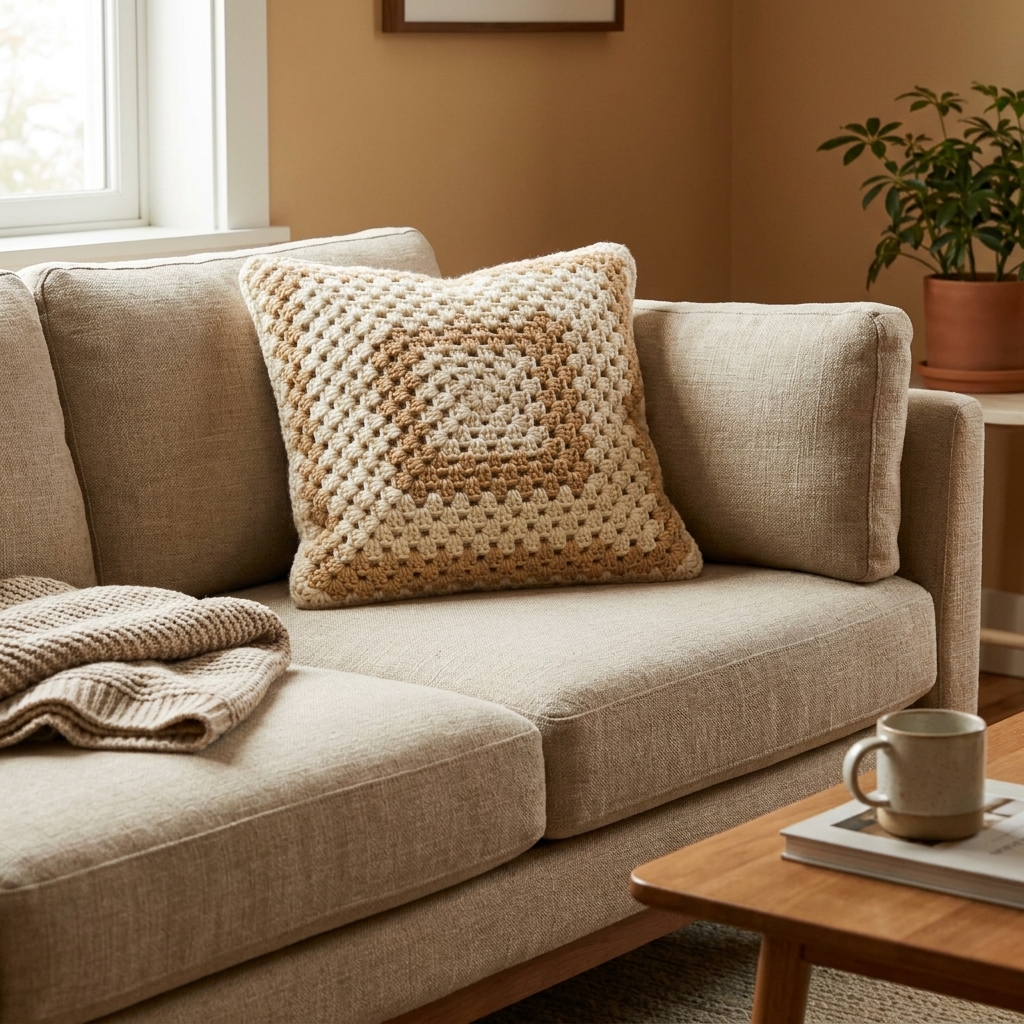
3) Minimal granny square
Look: granny squares can feel fresh when you keep them clean and graphic.
- Skill level: advanced beginner
- Approaches:
- Solid granny square in one color
- Two-color high contrast squares (cream and black is timeless)
- Oversized single square pillow front instead of a patchwork of many
Finishing tip: Block your squares before seaming. It is the difference between crisp corners and a slightly wiggly shape.
4) Moss stitch stripes
Look: moss stitch has a calm, pebbly texture that looks great in thin stripes or wide blocks.
- Skill level: beginner
- Great yarns: worsted, DK
- Color idea: cream base with a single stripe in rust, navy, or forest
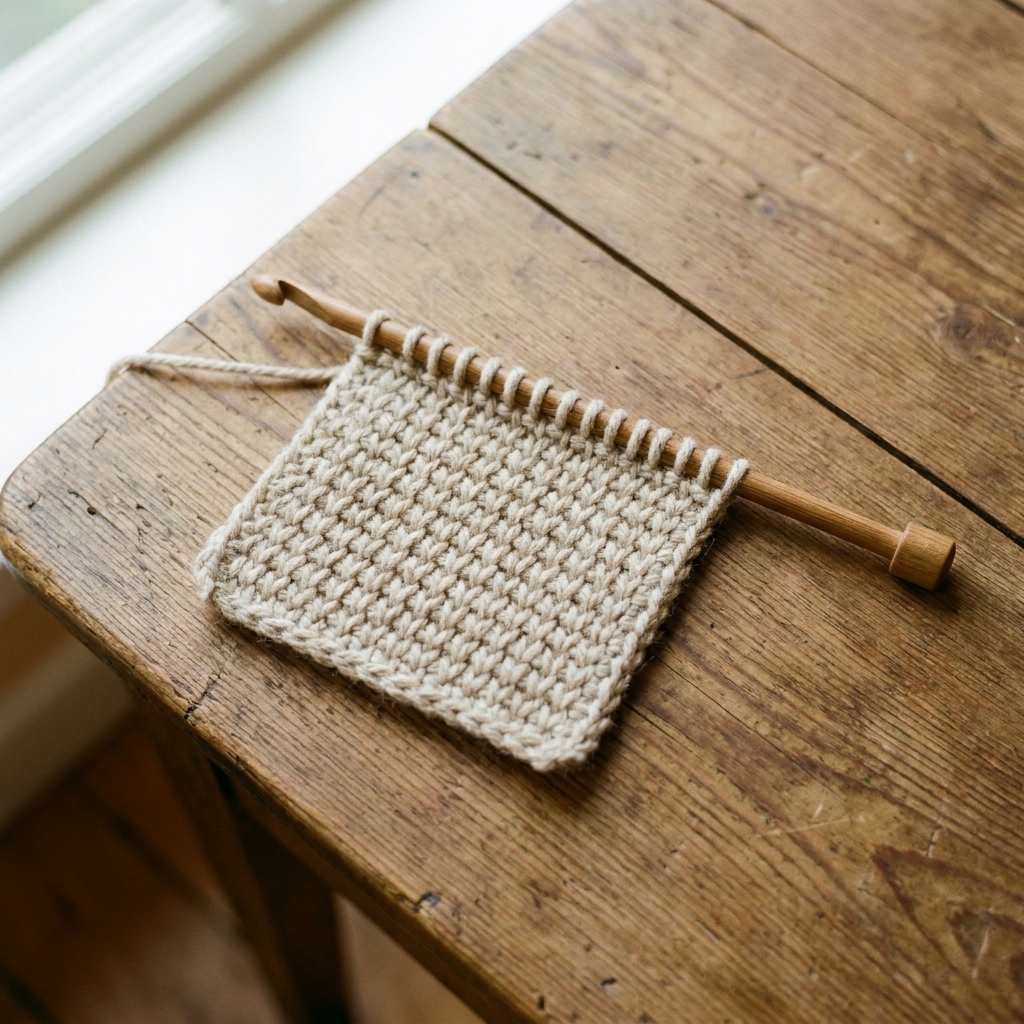
5) Tunisian simple stitch pillow
Look: tidy, structured, and knit-like, with clean lines.
- Skill level: intermediate (Tunisian hook and forward and return passes)
- Great yarns: smooth worsted wool blends
Beginner-friendly note: Tunisian fabric curls. Adding a single crochet border or choosing a stitch pattern with less curl will help.
Color palettes that rarely disappoint
If choosing colors makes your brain feel like it is buffering, you are not alone. Here are a few easy combinations that work in lots of homes.
- Warm neutrals: cream, oatmeal, camel, cocoa
- High contrast: cream and black, or ivory and charcoal
- Earthy: terracotta, clay pink, olive, sand
- Moody cozy: deep navy, forest green, espresso brown
- Soft coastal: fog gray, soft blue, warm white
Small-but-mighty trick: Repeat one accent color in two different pillows, then keep everything else neutral. It looks coordinated without looking matchy.
Closures and construction
Envelope back (beginner favorite)
An envelope closure is two overlapping back panels. It is beginner-friendly, no hardware, and easy to remove for washing if your yarn allows it.
- Best for: knit or crochet covers, especially textured fabrics
- Pro: forgiving sizing
- Con: insert can peek out if overlap is too small
Easy guideline: Aim for about 3 to 5 inches of total overlap for an 18-inch pillow, and more if your fabric is stretchy.
Seamed shut (quickest)
Make a front and back, seam three sides, insert pillow, seam the last side. Done.
- Best for: pillows you will not need to wash often
- Pro: clean look
- Con: not removable
Buttons or ties
Buttons look charming and can still feel clean and current if you keep them simple.
- Best for: cozy-minimal, Scandinavian-inspired decor
- Pro: removable cover
- Con: requires planning button bands or loops
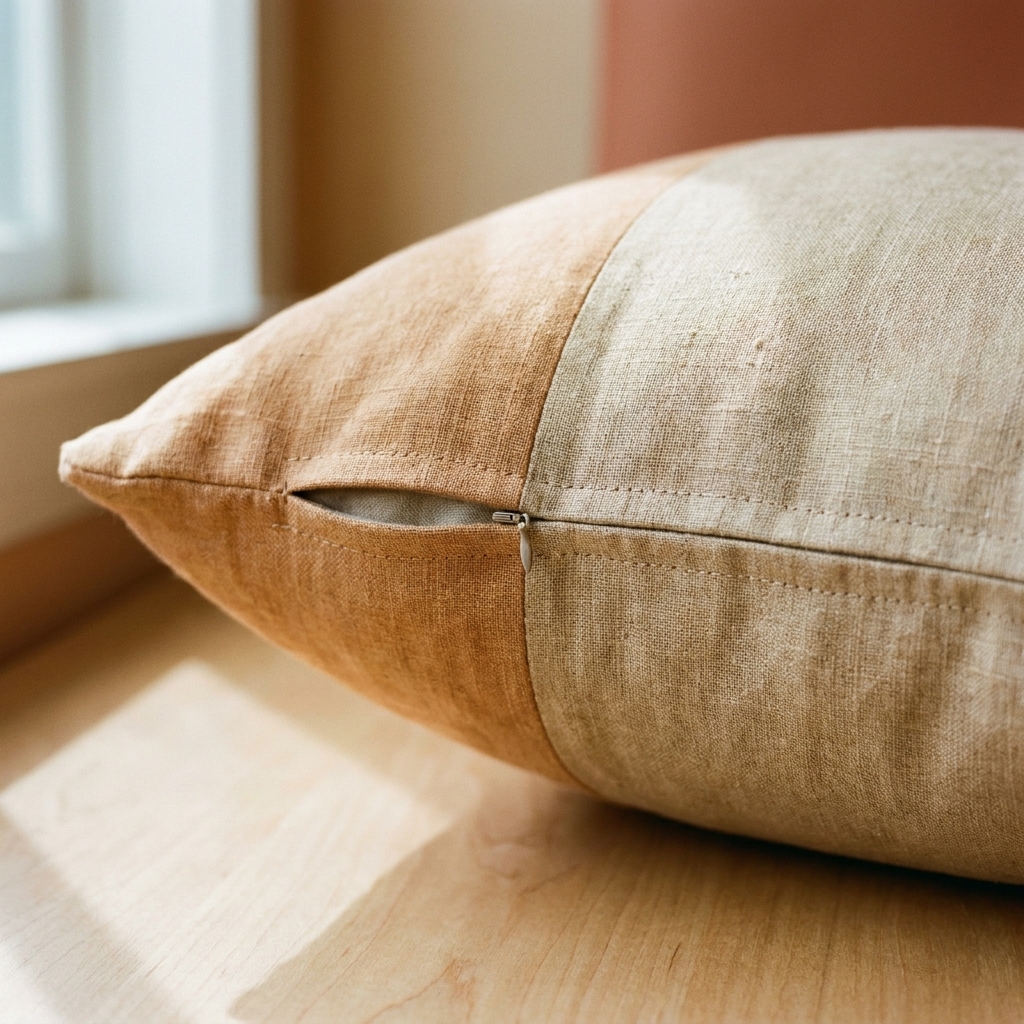
Hidden zipper
Zippers give you that store-bought finish. If sewing makes you nervous, you can still do this with a little patience.
- Best for: smooth knit or crochet fabrics, sleek minimal looks
- Pro: very tidy
- Con: requires basic sewing skills
Finishing details that look polished
- Block your pieces. Even a gentle block can straighten edges and even out stitches.
- Steam with care. Steam can relax wool beautifully, but too much heat can flatten acrylic permanently and agitation can felt some wools. When in doubt, test on a swatch.
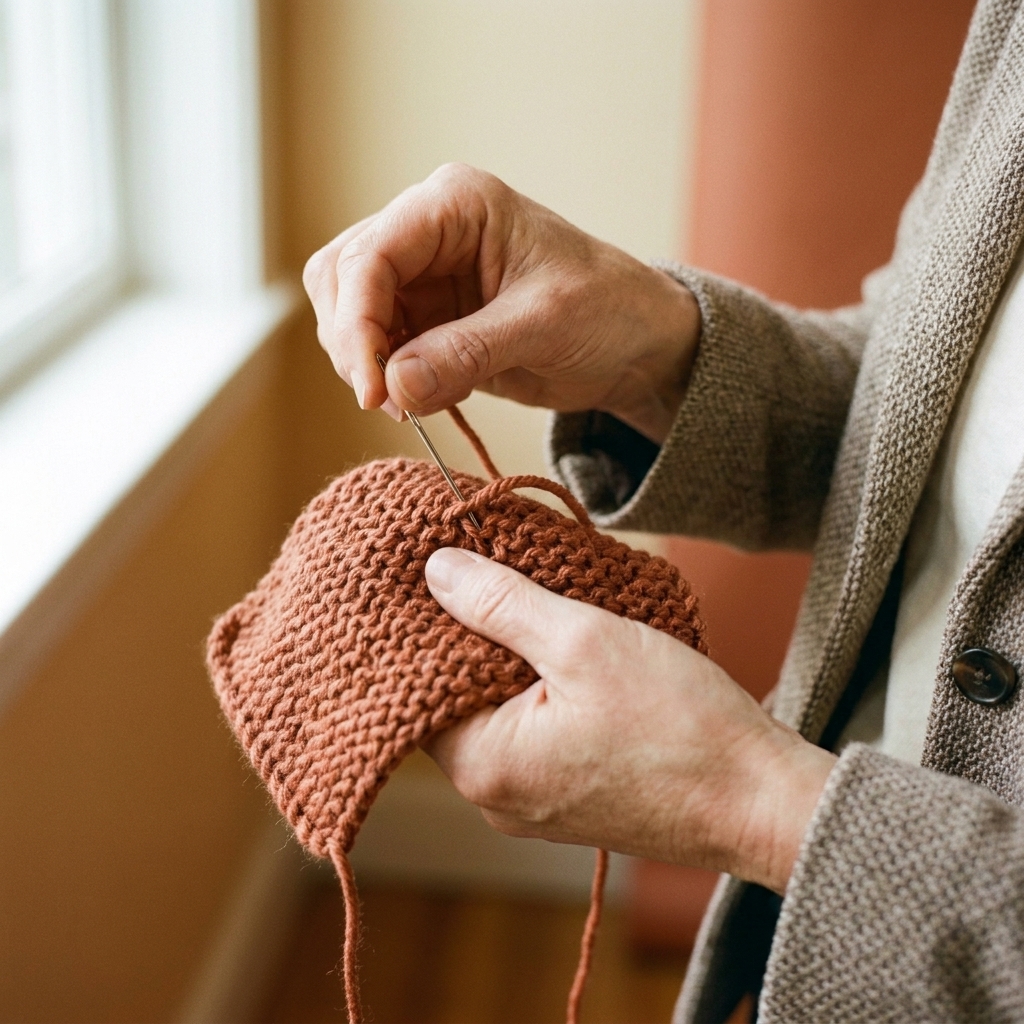
- Use mattress stitch for knit seams. It creates a nearly invisible join.
- Choose a slightly larger insert. This is the secret to that plush, filled-out look, as long as your fabric can handle it.
- Line it if needed. If your stitch pattern has gaps, sew a simple fabric liner to stop the insert from showing.
- Mind your corners. When seaming, pause at corners and make them crisp. Corners are where “handmade” shows first.
If corners intimidate you, you are in good company. The first pillow I ever made looked like a marshmallow that lost a fight. We learn, we seam, we improve.
Mix and match: a simple formula
If you are styling a sofa or bed, here is an easy way to combine patterns without overthinking it:
- One bold texture: waffle stitch crochet or a single cable
- One simple solid: garter ridge knit or hdc back loop only
- One accent shape: a lumbar pillow in rib or moss stitch stripes
Keep at least two pillows in the same color family, then let the third be the fun one.
FAQ
How much yarn do I need for a pillow cover?
It depends on stitch density, construction, and whether you are making a full front and back or just a patterned front with a simpler back. For an 18-inch pillow cover in worsted weight, a rough range is 200 to 450 yards.
- Lower end: simpler knit fabrics (like garter or stockinette) and a plain back.
- Higher end: textured crochet (like waffle), Tunisian, cables, or matching the texture on both sides.
If you are making a waffle stitch or Tunisian cover front and back, do yourself a favor and buy extra. Those stitches are beautiful and also politely ravenous.
Is knitting or crochet better for pillows?
Neither is better, just different. Crochet often makes a denser, sturdier fabric quickly, while knit can feel drapier and has that classic sweater look. Pick the texture you want and the technique you will enjoy most.
How do I stop my pillow cover from stretching out?
Use a firm gauge, consider a less-stretchy fiber (cotton blends help), and make sure your cover fits snugly. For knit rib pillows, consider adding a fabric liner or using a zipper back so the fabric is not constantly being tugged open.
Can I machine wash crocheted or knit pillow covers?
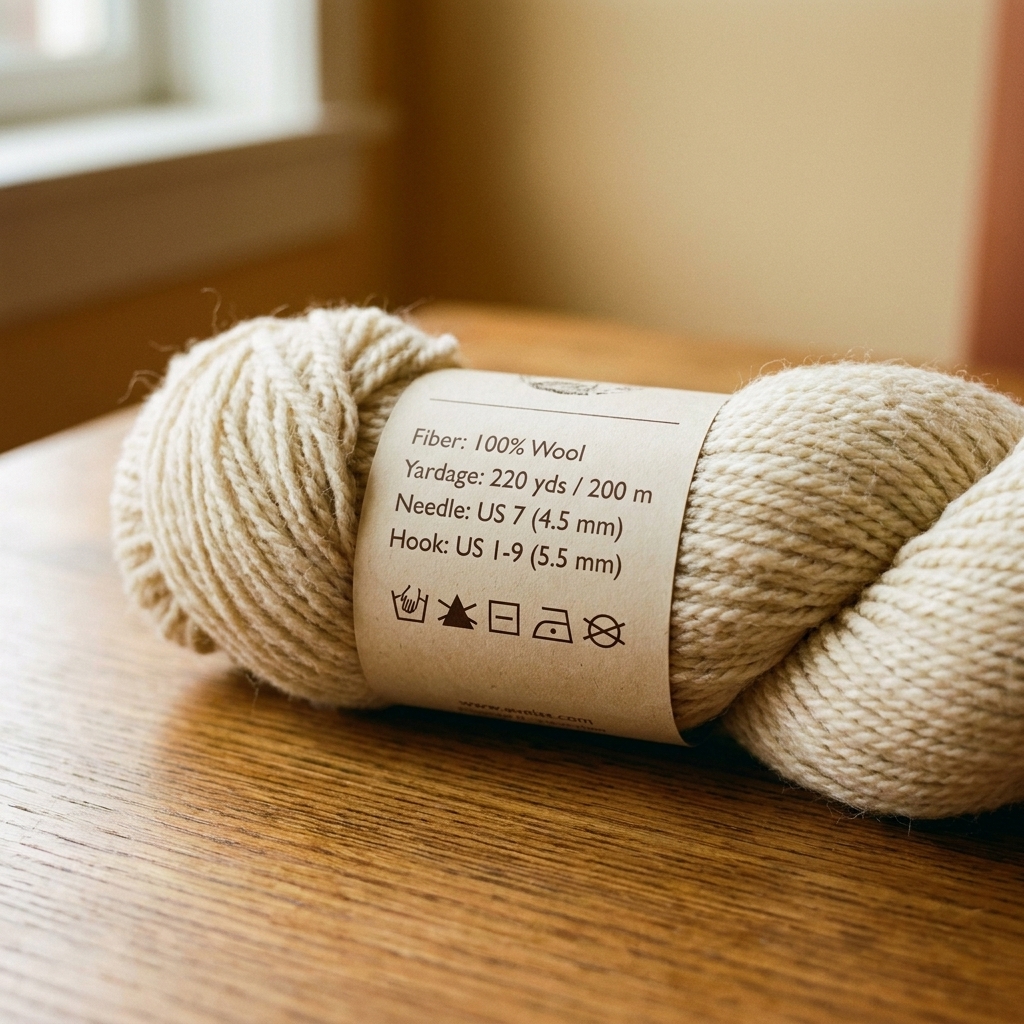
Sometimes. Check the yarn label first. If you want easy care, choose a machine-washable fiber and use an envelope closure so you can remove the cover. Even then, I recommend washing on gentle and laying flat to dry for the best shape.
Pick one pillow to start
If you are feeling overwhelmed by choice, here is my gentle nudge: start with a simple texture in a solid, updated color. A garter ridge knit pillow or an hdc back loop crochet pillow can look incredibly elevated when it is well-finished and nicely stuffed.
And if you make a mistake, welcome to the club. Every pillow is just a soft little lesson you get to squish.