One more row. Then just one more.
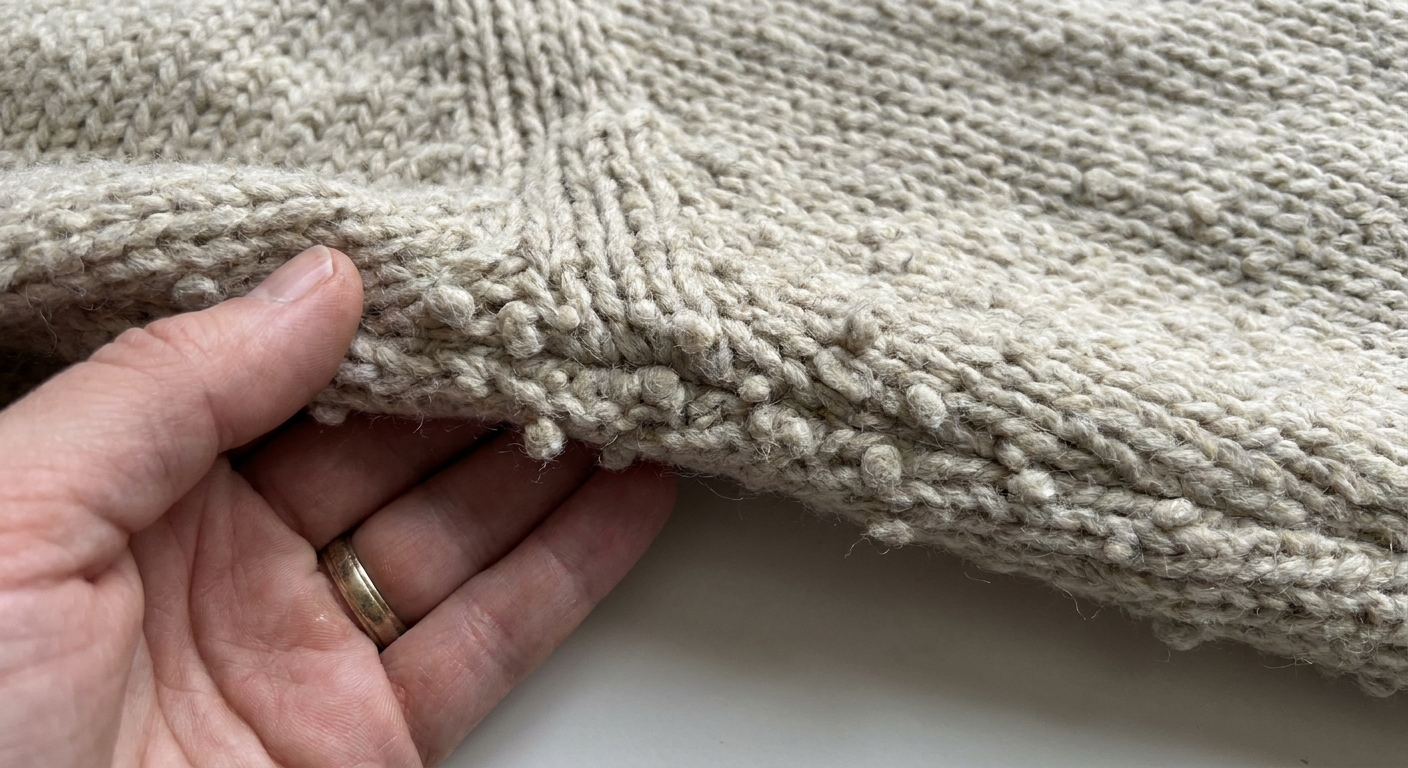
And then you notice it. Those little fuzzy bobbles under the arms, along the sides, or anywhere your sweater rubs against a bag strap or desk edge. Pilling can feel like an insult after all that stitching, but it is usually just a sign your sweater is being worn and loved.
Let’s smooth things out. Below, I’ll explain why pills form, how to remove them safely (without shaving your sweater into lace), and how to prevent them from coming back quite so quickly.
Why pills form in the first place
Pills are tiny tangles of loose fibers that work their way to the surface. Friction pulls fibers out, and movement twists them together into little balls that cling on.
The biggest culprits
- Friction: Underarms, cuffs, side seams, and anywhere a strap, seatbelt, or desk edge rubs.
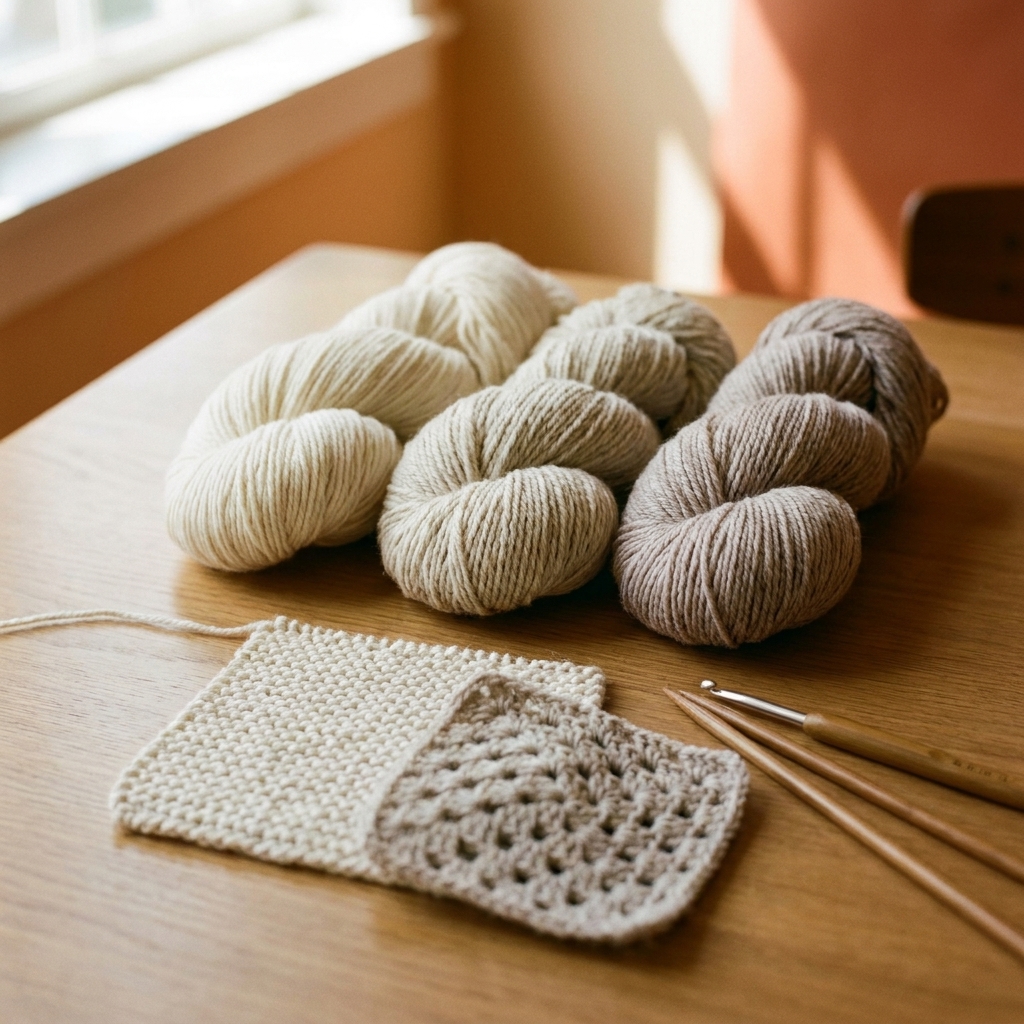
- Short fibers: Shorter staple lengths (common in some wools and many recycled fibers) can escape the yarn more easily.
- Loosely spun yarn: Soft, airy spins feel dreamy, but they can shed and pill because fibers are held less tightly.
- Blends that encourage pilling: Many blends pill more than you expect, especially when a strong synthetic fiber holds the pill in place instead of letting it break off. Acrylic, nylon, and polyester can make pills more stubborn because they do not snap and release as readily as some natural fibers.
- Gauge and fabric structure: A very lofty, open fabric gives fibers room to migrate. Dense fabrics can pill too, but pills may sit more on the surface instead of working their way out.
Worth remembering: pilling is not automatically a sign of “bad yarn.” Sometimes it is just the tradeoff for softness.
Before you de-pill
A few small prep steps make removal safer and more even.
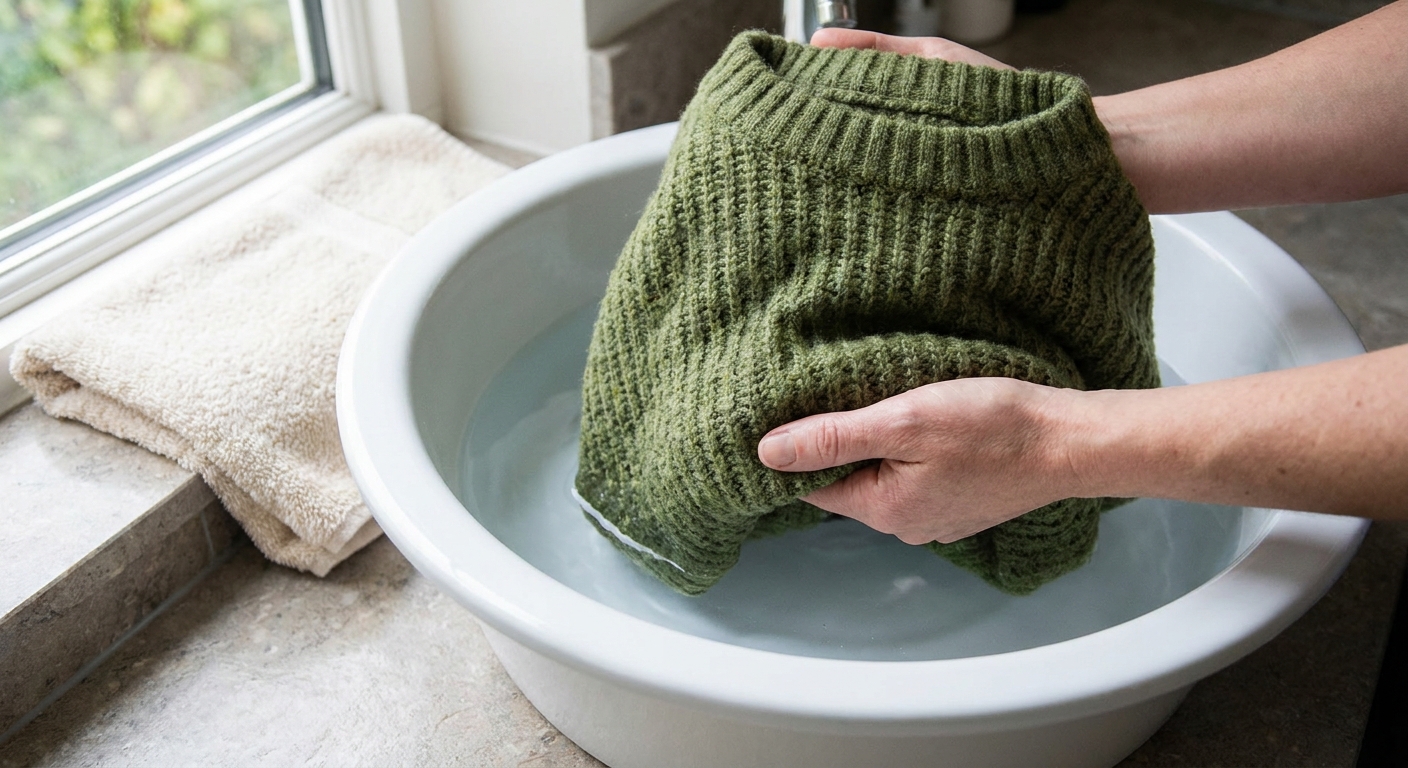
- Wash first if it is grimy: Dirt and body oils can make fuzz clump. If your sweater needs a wash, let it dry fully before de-pilling.
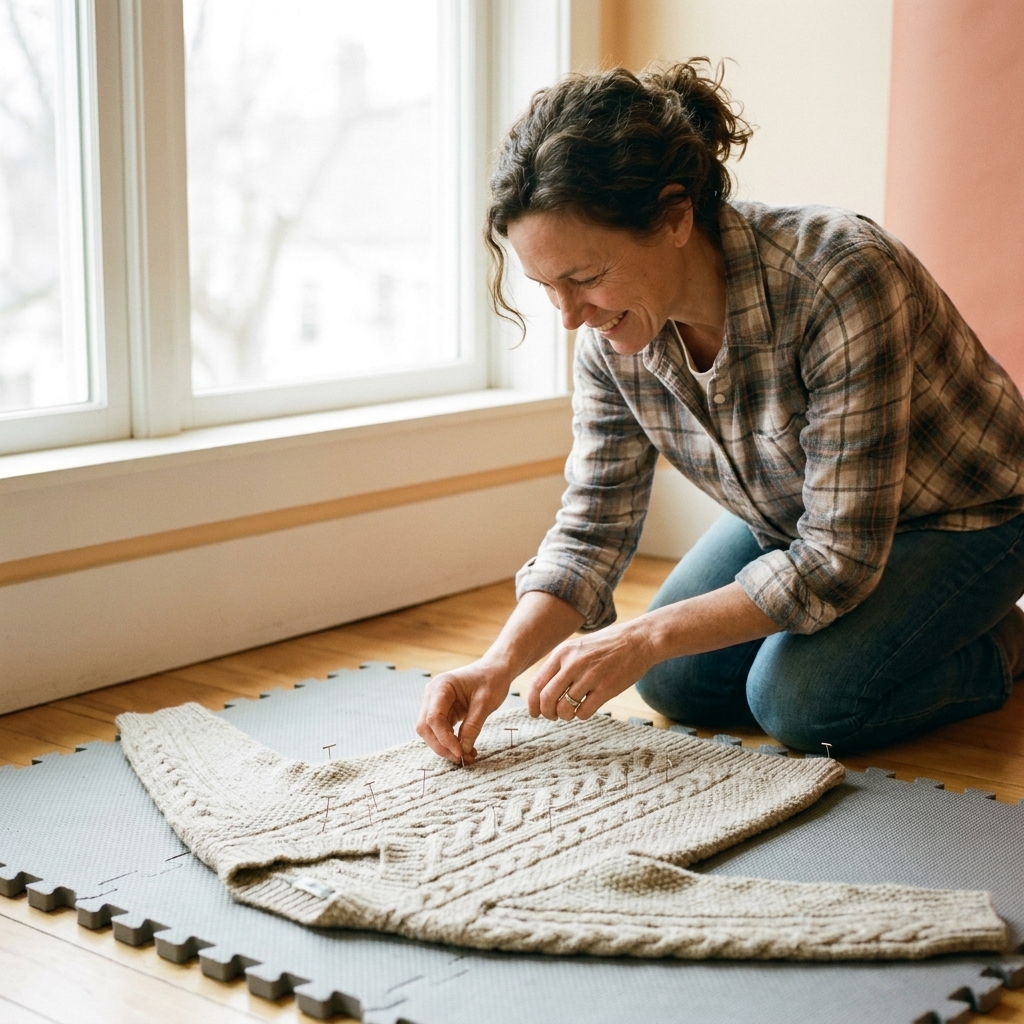
- Work on a flat surface: A table is safer than your lap. Lay the sweater smooth, no stretching.
- Pick a small test spot: Inside hem, lower back, or near a side seam. Different yarns behave differently.
- Good light helps: Pills hide in shadows. Daylight or a bright lamp makes your work more consistent.
Best ways to remove pills
There is no single perfect tool for every fiber. The safest method is the one that removes pills while removing as little sweater as possible.
Sweater comb
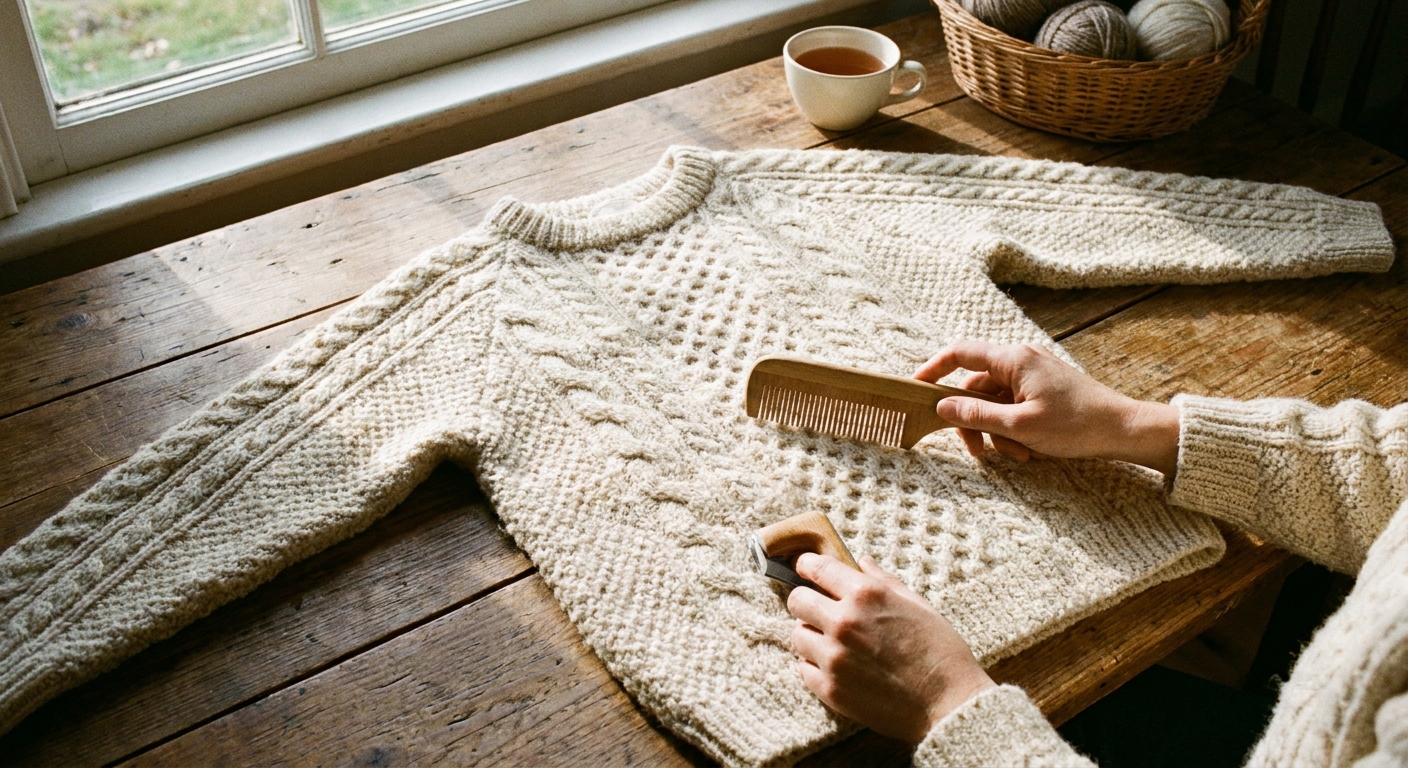
A sweater comb has fine teeth that catch pills and lift them away.
- Best for: Many wool and wool-blend knits, especially where pills are sitting on the surface.
- Use it like this: Hold the fabric taut with one hand (no stretching, just steady). With the other hand, make short, gentle downward strokes in the same direction.
- Go slow on: Halo-y yarns like mohair and suri alpaca. A comb can snag and pull out the haze you actually want.
- Tip from Tuft: Let the comb do the work. If you feel resistance, lighten up and reduce pressure.
Fabric shaver (battery or plug-in)
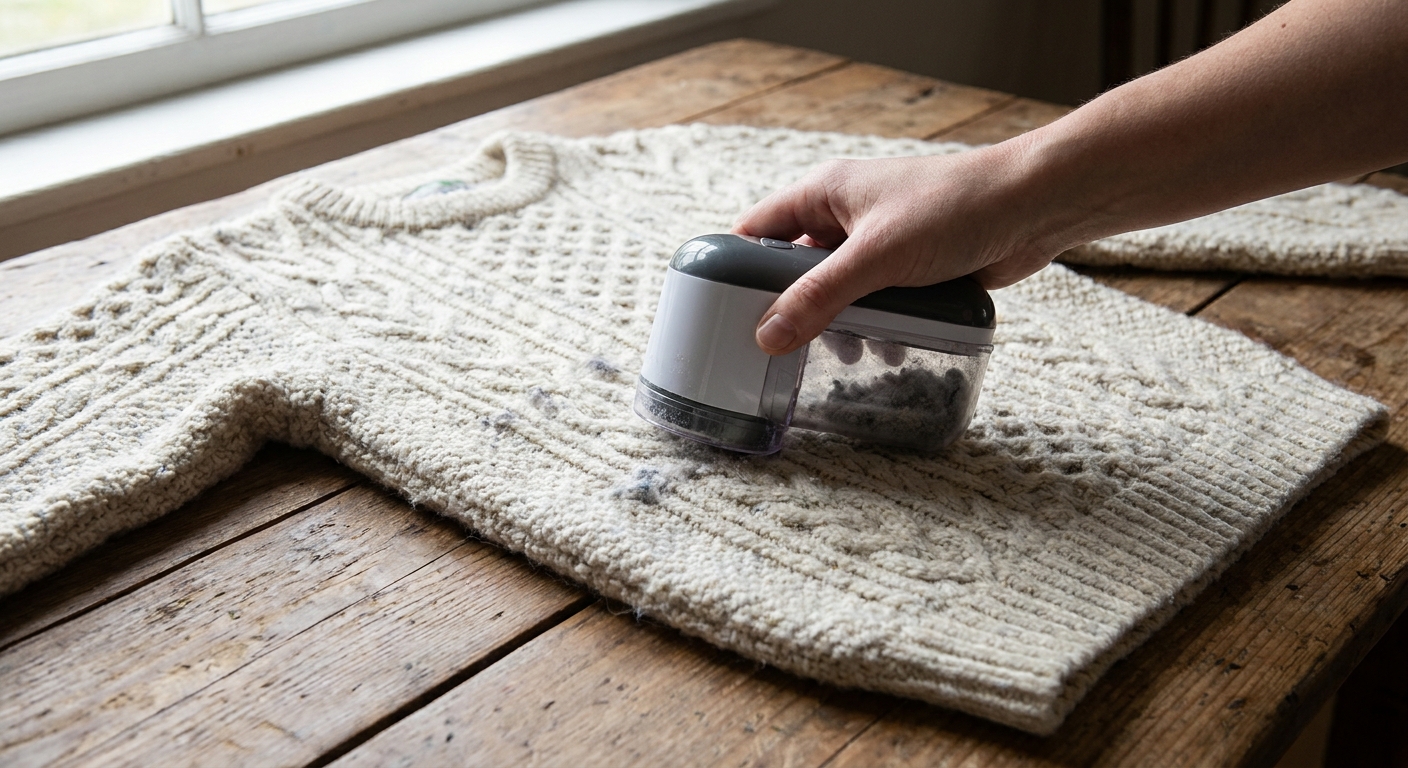
A fabric shaver trims pills with a guarded blade behind a perforated screen. Used carefully, it can be very effective and very fast.
- Best for: Stubborn pills on sturdy fabrics, especially where blending makes pills cling.
- Use it like this: Lay the sweater flat and smooth. Turn the shaver on first, then glide it lightly across the surface. No pushing. No hovering in one spot.
- Avoid using on: Very open lace, delicate crocheted motifs, or highly textured stitches where the screen can catch a raised loop.
- Safety check: Keep the fabric perfectly flat. If the fabric tents up into the shaver, that is when snips happen.
Pumice-style sweater stone
These stones gently abrade and grab pills. They can be surprisingly effective, but they are not for every yarn.
- Best for: Firm, hard-wearing knits where pills sit on the surface.
- Use it like this: Very light strokes, minimal pressure, check your progress often. Think “polish” not “scrub.”
- Be cautious with: Merino and other softer fibers that can fuzz up with abrasion. Also be cautious on crochet, where the stone can catch a loop edge.
- Tip: If you see the surface getting hazy, stop. Switch to a comb or hand-removal.
Removing pills by hand (pinch and lift)
Sometimes the gentlest approach is simply removing the pills with your fingers.
- Best for: Delicate fibers, halo yarns, and small isolated pills.
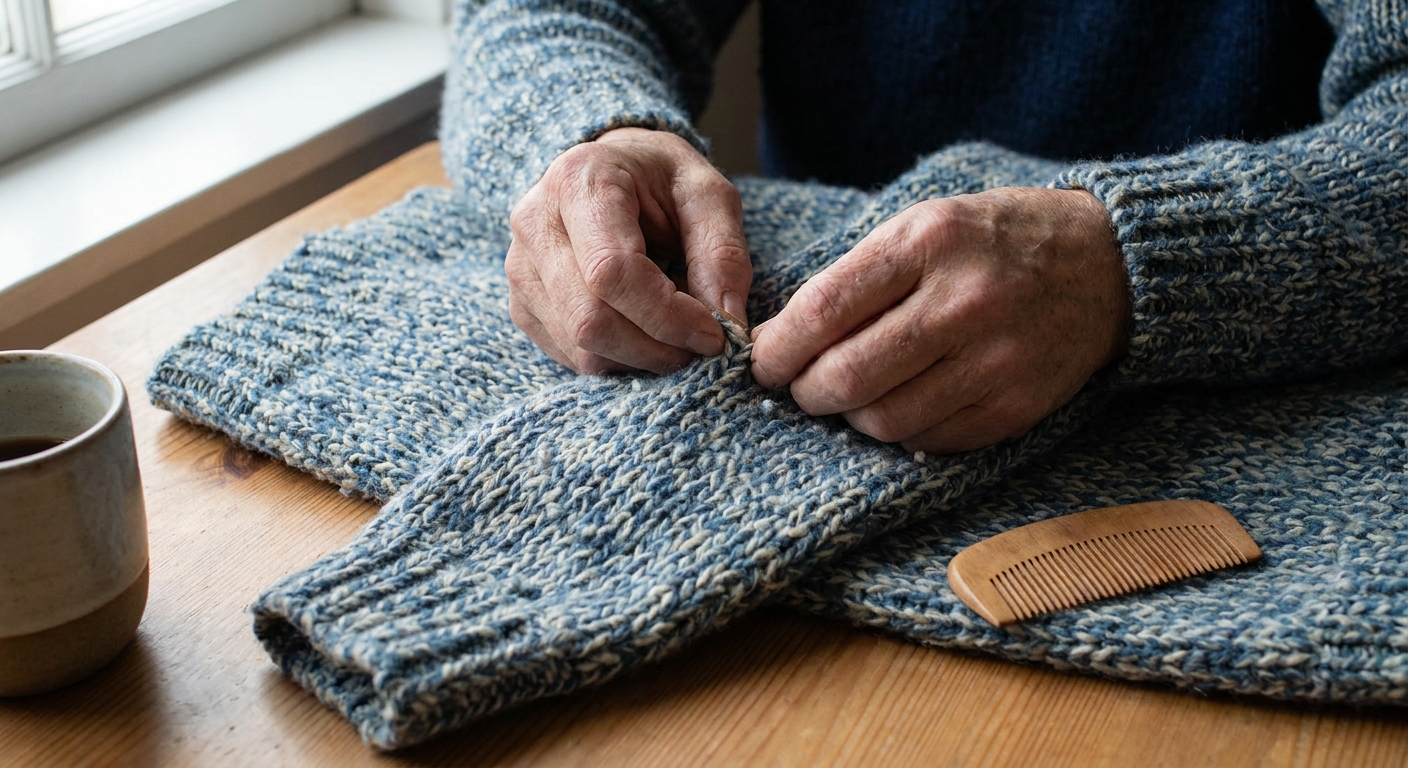
- Use it like this: Pinch the pill at its base and roll it slightly between your fingers to loosen it, then lift it away. If it is anchored, do not yank. Move on, or trim with small scissors.
- Optional tool: A small pair of sharp scissors can snip pills off. Keep the blades parallel to the fabric, and only cut the pill, not the sweater.
If you only take one thing from this section, let it be this: never stretch the fabric while removing pills. Stretching raises loops and makes it much easier to cut into the actual stitches.
Which method to choose
If you are standing in front of your sweater with a tool in each hoof, here’s a simple way to decide:
- Soft wool with light pilling: Start with a sweater comb or hand removal.
- Blends with stubborn, clingy pills: Try a fabric shaver, very lightly, on a flat surface.
- Sturdy, dense fabric that pills on contact points: A stone can work, but test first and use a light touch.
- Mohair, alpaca halo, brushed yarns: Hand removal first. If needed, a very gentle comb in a tiny test area.
- Crochet with raised texture: Hand removal is safest. A shaver can catch on bumps and loops.
Avoid thinning or cutting
De-pilling is a little like trimming a hedge. You want tidy, not bare.
- Use multiple light passes, not one heavy pass: Aggressive pressure removes good fiber along with pills.
- Keep tools moving: Especially fabric shavers. Hovering can create thin patches.
- Focus on high-friction zones: Underarms, sides, cuffs. You do not need to shave the whole sweater unless it is uniformly fuzzy.
- Pause often and look from different angles: A quick check helps you avoid overdoing one spot.
- Empty shaver lint traps: A full trap reduces performance and tempts you to press harder.
Prevention
You cannot banish pilling forever, but you can slow it down a lot.
Choose yarn that matches the project
- Look for longer fibers and firmer spins: These tend to pill less because fibers are anchored more securely.
- Consider construction: Plied yarns often pill less than single-ply, especially for high-wear sweaters.
- Know your blends: A touch of nylon can add strength, but it can also make pills hang on. For some garments, that is a fair trade. Just plan to de-pill occasionally.
Wash with less friction
- Turn your sweater inside out: Pills form on the outside, but the inside takes more abrasion in the wash. Turning inside out helps protect the face of the fabric.
- Use a gentle cycle or hand wash: Less agitation means fewer fibers pulled loose.
- Skip rough washing companions: Zippers, jeans, and towels are pilling party guests. Wash knits with other soft items.
- Dry flat: Heat and tumbling can increase fuzz and friction.
Store to reduce rubbing
- Fold sweaters, do not hang: Hanging can stretch shoulders, and stretched fabric is more vulnerable to abrasion.
- Keep pieces smooth in drawers or bins: Avoid overstuffing, which creates constant rubbing.
- Separate scratchy from delicate: A rugged wool cardigan can abrade a softer merino next to it.
Quick troubleshooting
My sweater got fuzzier after I tried to de-pill
That usually means too much abrasion or pressure. Stop, let the fabric rest, and switch to a gentler method like hand removal or a light combing. Washing and drying flat can help the surface settle again.
I’m seeing pills and long loops
Long loops are different from pills. If you spot snagged loops, do not cut them. Use a crochet hook or tapestry needle to pull the loop to the inside and redistribute the slack.
Will de-pilling damage my sweater?
Any pill removal removes a tiny bit of fiber. The goal is to remove pills with the least possible fabric loss. Gentle, occasional de-pilling is kinder than aggressive scraping once a year.
A cozy finishing touch
Pills are just little reminders that yarn is made of fibers, and fibers like to wander. A careful de-pill session can make your handmade sweater look freshly blocked again, smooth where it counts, still soft where it matters.
If you want a simple rhythm to remember: flat surface, light touch, slow passes. One more sweep. Then just one more.