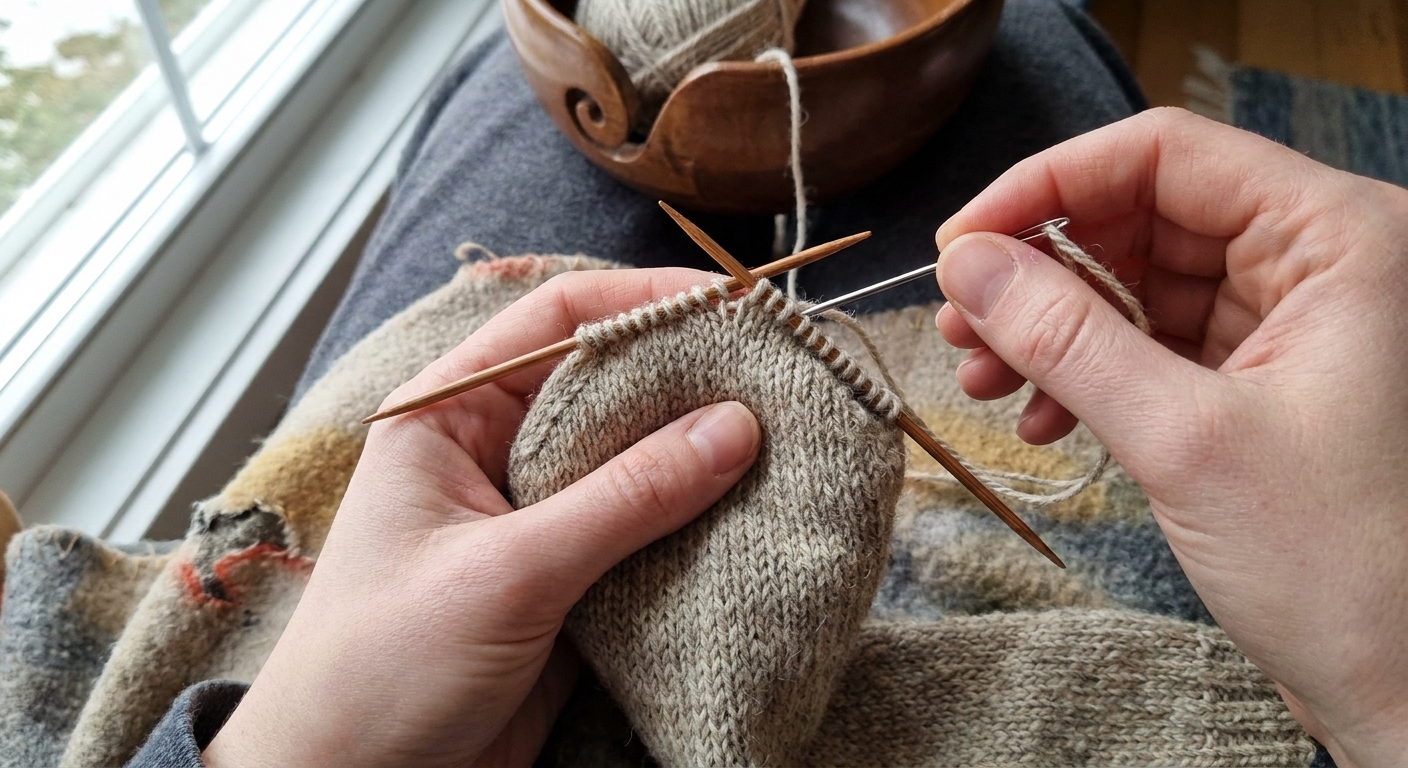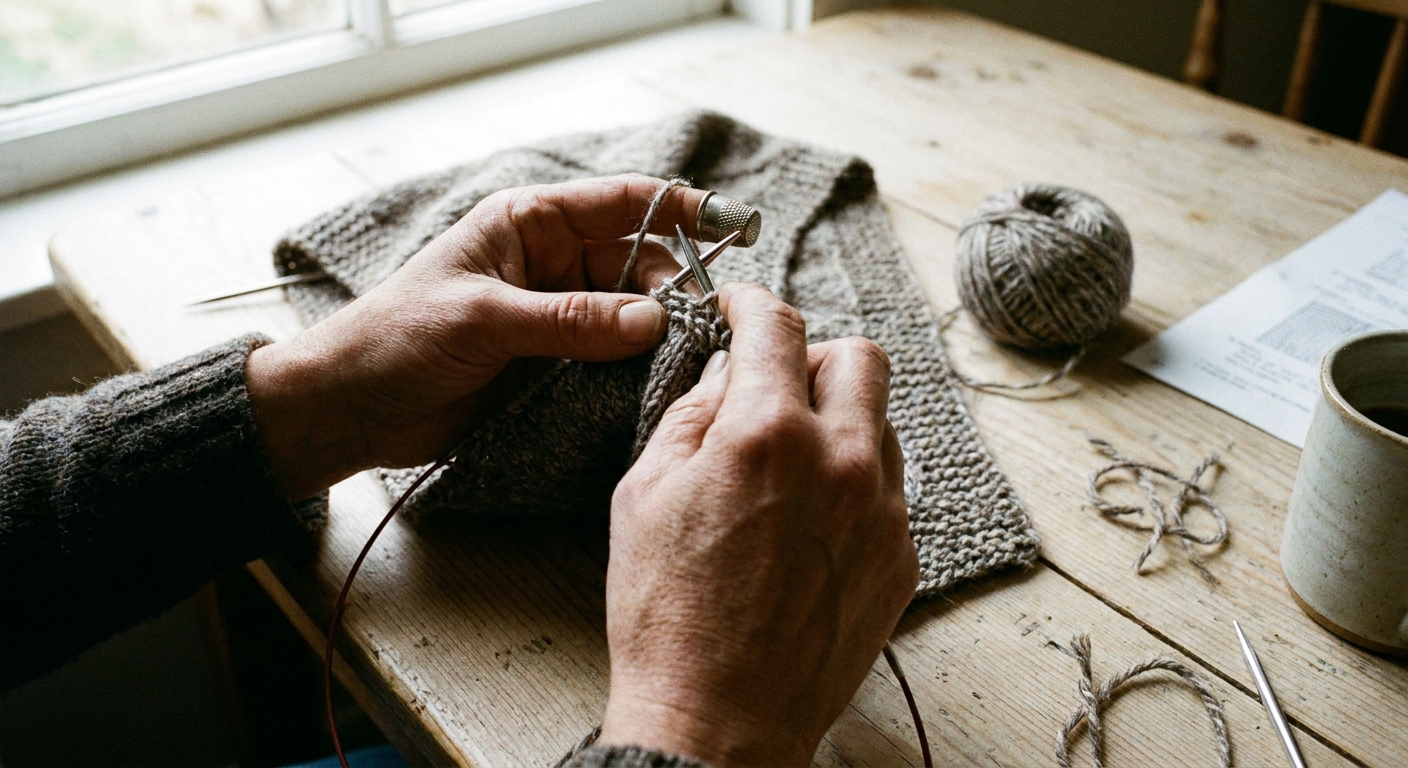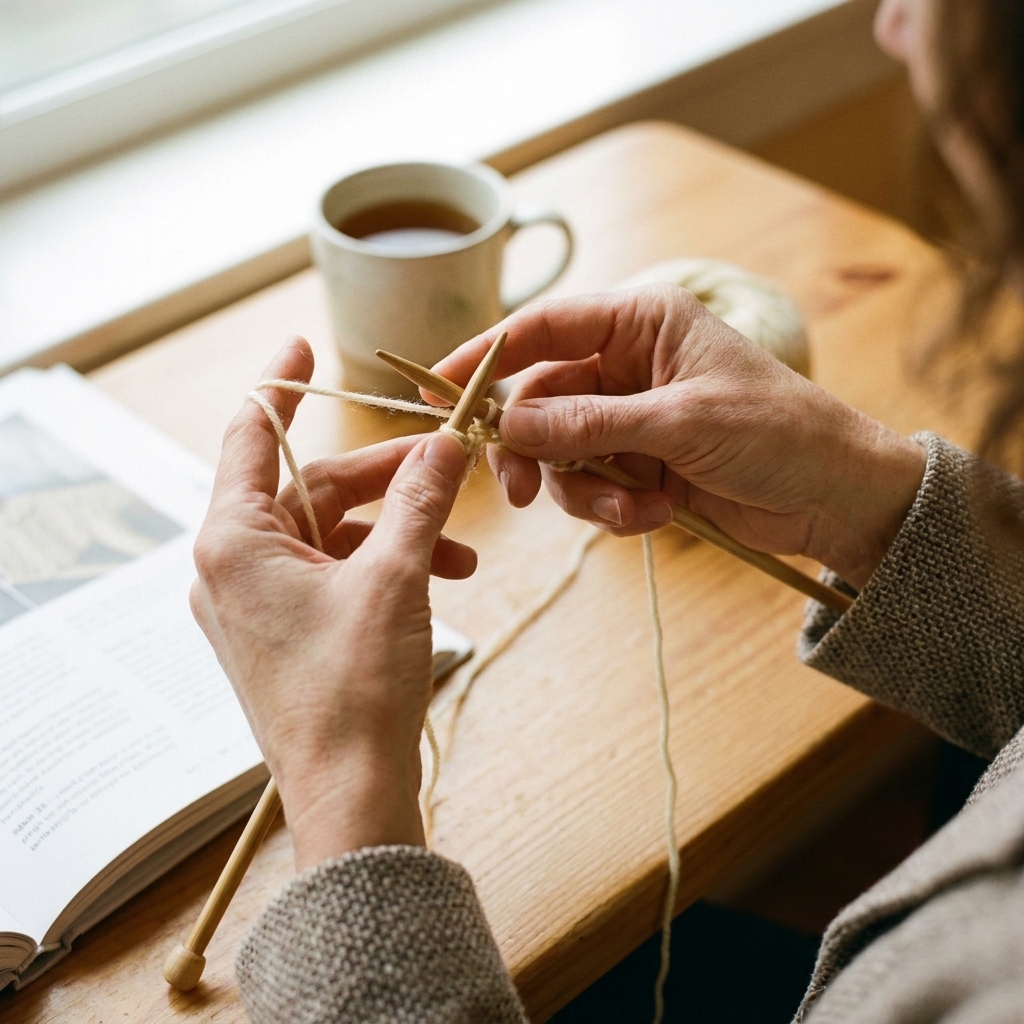
One more row. Then just one more.
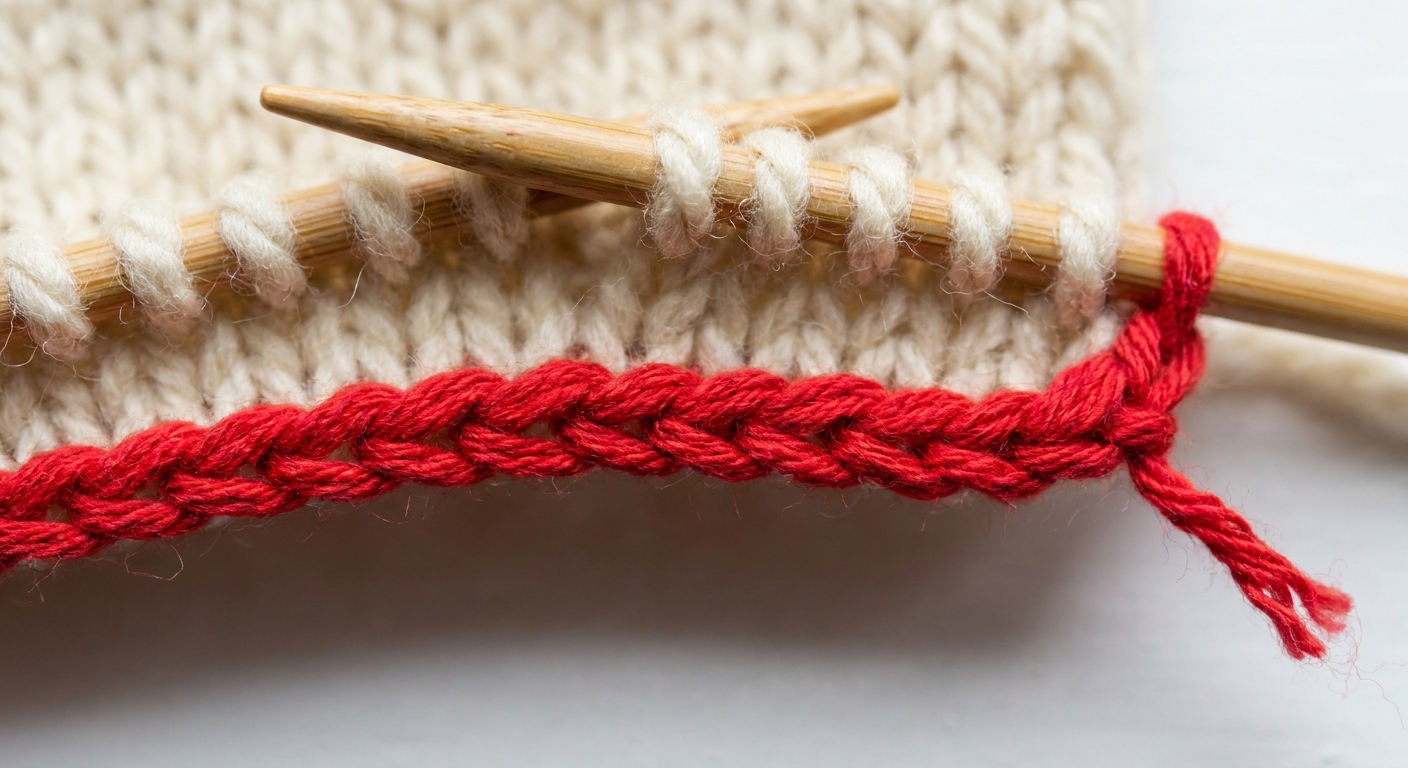
Sometimes, though, you do not want a “real” beginning at all. You want a starting edge you can peel away later, like a basting stitch. That is exactly what a provisional cast-on is for: a temporary cast-on made with waste yarn that you can unzip to reveal live stitches.
What a provisional cast-on is for
A provisional cast-on creates an edge that is meant to be removed. Once it is gone, the cast-on edge becomes live stitches again, ready to knit, purl, graft, or fold.
- Folded hems and double-thick hems: start at the fold line, then later free the live edge to knit the hem together.
- Borders: knit the body first, then come back and knit a border in the opposite direction.
- Grafting: keep the beginning live so you can graft it to another set of live stitches with Kitchener stitch.
- Two-direction shaping: begin in the middle of a piece, then work “down” and “up.”
What you need
- Waste yarn: smooth, strong, and a contrast color so you can see it clearly.
- Working yarn: the yarn for your project.
- Needle: your project needle, plus an optional crochet hook for the easiest method.
- Scissors and a tapestry needle (helpful for picking up stitches if you prefer).
Waste yarn tip: Choose something non-fuzzy and non-sticky. Mohair and grippy wool blends love to cling and can make unzipping feel like pulling Velcro apart. Smooth cotton, acrylic, or a firmly plied wool are usually friendly.
The easiest method: crochet chain provisional cast-on
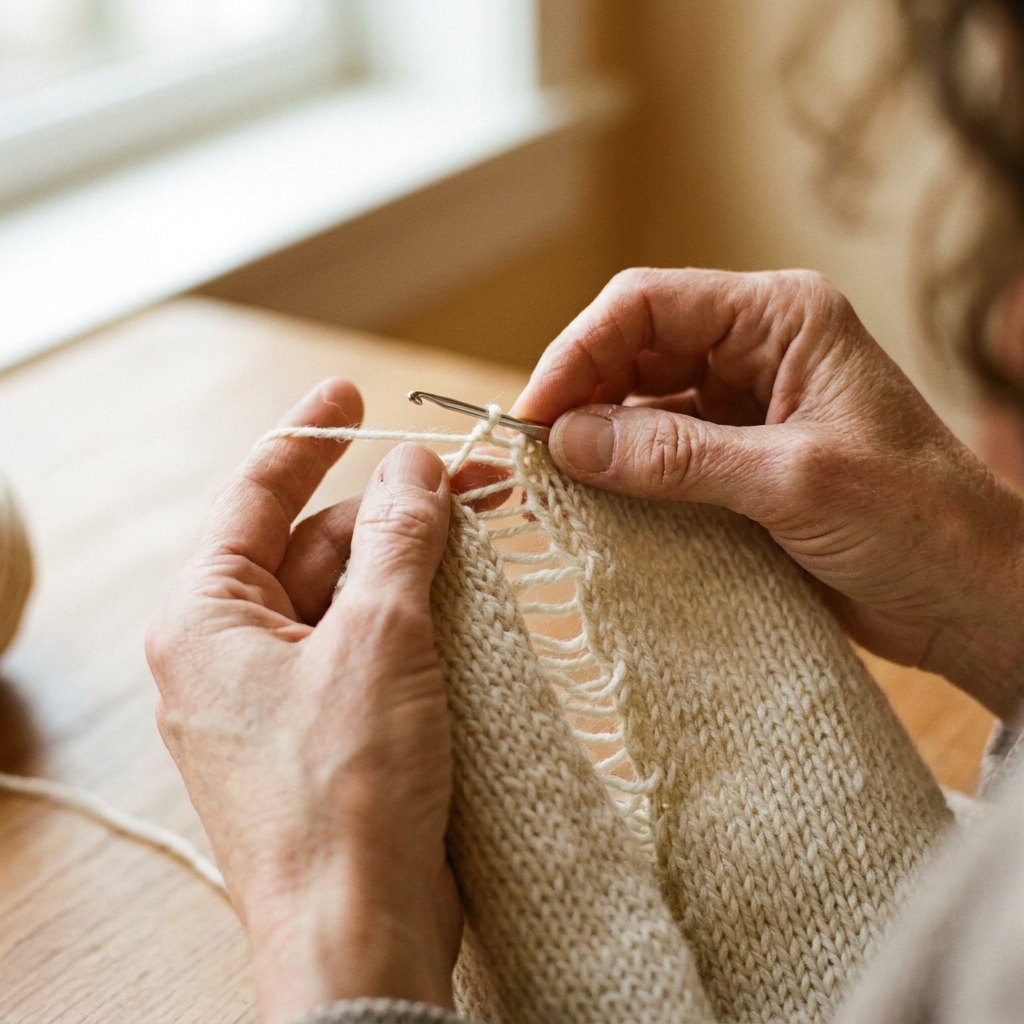
This is the classic “waste-yarn chain” method. You crochet a chain, then pick up stitches from it with your knitting needle. Later, you unzip the chain to release the live loops.
Crochet hook note: Hook size is not critical. Use any hook that makes a smooth chain with your waste yarn. If your chain feels tight and stubborn, go up a hook size. If it feels floppy, go down.
Step 1: Crochet a waste-yarn chain
With your waste yarn and a crochet hook, make a slipknot and crochet a chain.
Make the chain more stitches than you need. A good rule is: chain your cast-on count plus 5 to 10 extra.
Fasten off, leaving a small tail.
The chain has a front that looks like little “V”s, and a back that has bumps. We will pick up from the bumps because they unzip neatly.
Quick check: Lay the chain on the table before you pick up. Make sure it is not twisted or kinked, so the bumps stay easy to read.
Step 2: Pick up stitches from the chain
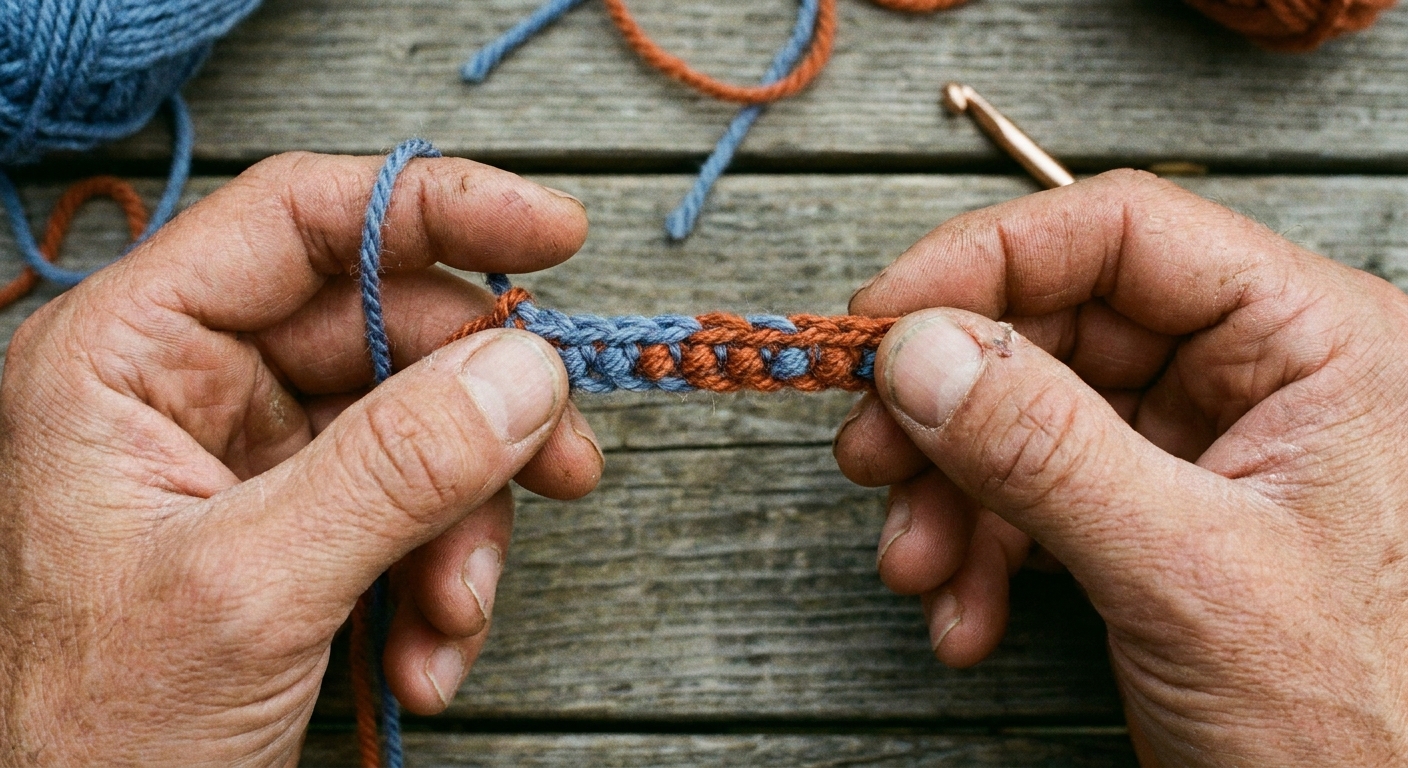
Turn the chain so you see the back bumps.
Starting a few chains in from the end, insert your knitting needle from back to front under a bump, wrap your working yarn, and pull up a loop.
Repeat until you have picked up the number of stitches your pattern calls for.
Stitch count helper: Place a removable marker in the first picked-up stitch. Then count twice: once as you pick up, and once again before you knit your first row. It is much easier to fix a count now than after a few rows.
Pattern note: If your pattern specifies a particular provisional cast-on or tells you where to pick up from the chain, follow that. Designers sometimes build the edge behavior into the method.
Step 3: Knit your project
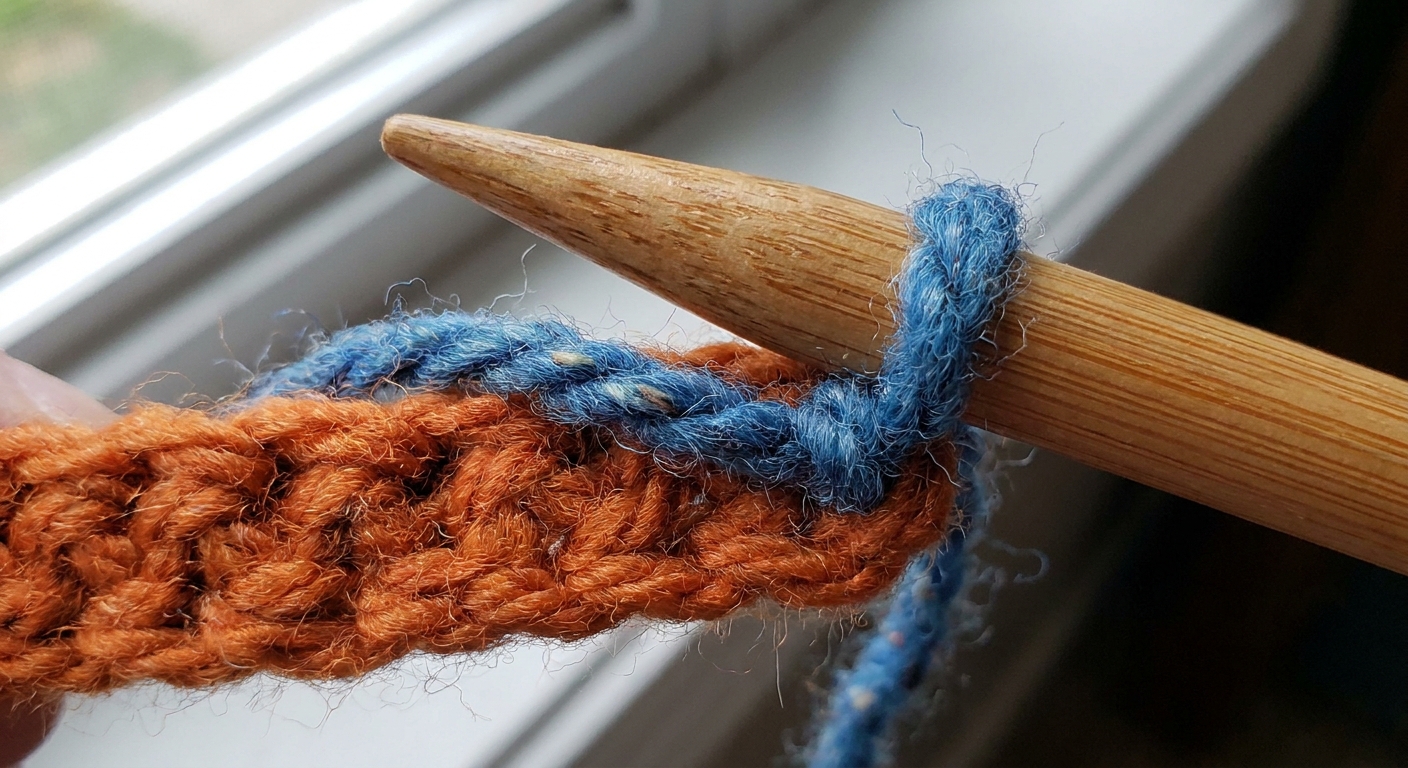
Once your stitches are on the needle, knit as your pattern directs. The waste yarn chain hangs along the bottom edge, quietly doing its temporary job.
How to unzip the provisional cast-on later
When your pattern says to remove the provisional cast-on, take a breath and take it slow. This step is simple, but it rewards a gentle touch.
Step 1: Decide how you will catch the live stitches
You have two common options:
- Put a needle through the live loops as you unzip (most controlled).
- Unzip first, then pick up the loops (faster, but easier to miss a stitch).
If you are new to this, I suggest the first option. It keeps every stitch accounted for as the chain comes out.
Step 2: Find the right end to pull
A crochet chain usually unzips from the fastened-off tail, not the slipknot end. If it does not want to pull smoothly, do not fight it. Try the other end.
Step 3: Unzip one stitch at a time
Locate the waste yarn strand that forms the next chain link at the edge.
Gently pull to release one loop of your working yarn.
As each live loop appears, immediately place it onto your needle.
Continue, one released stitch at a time, until the chain is removed.
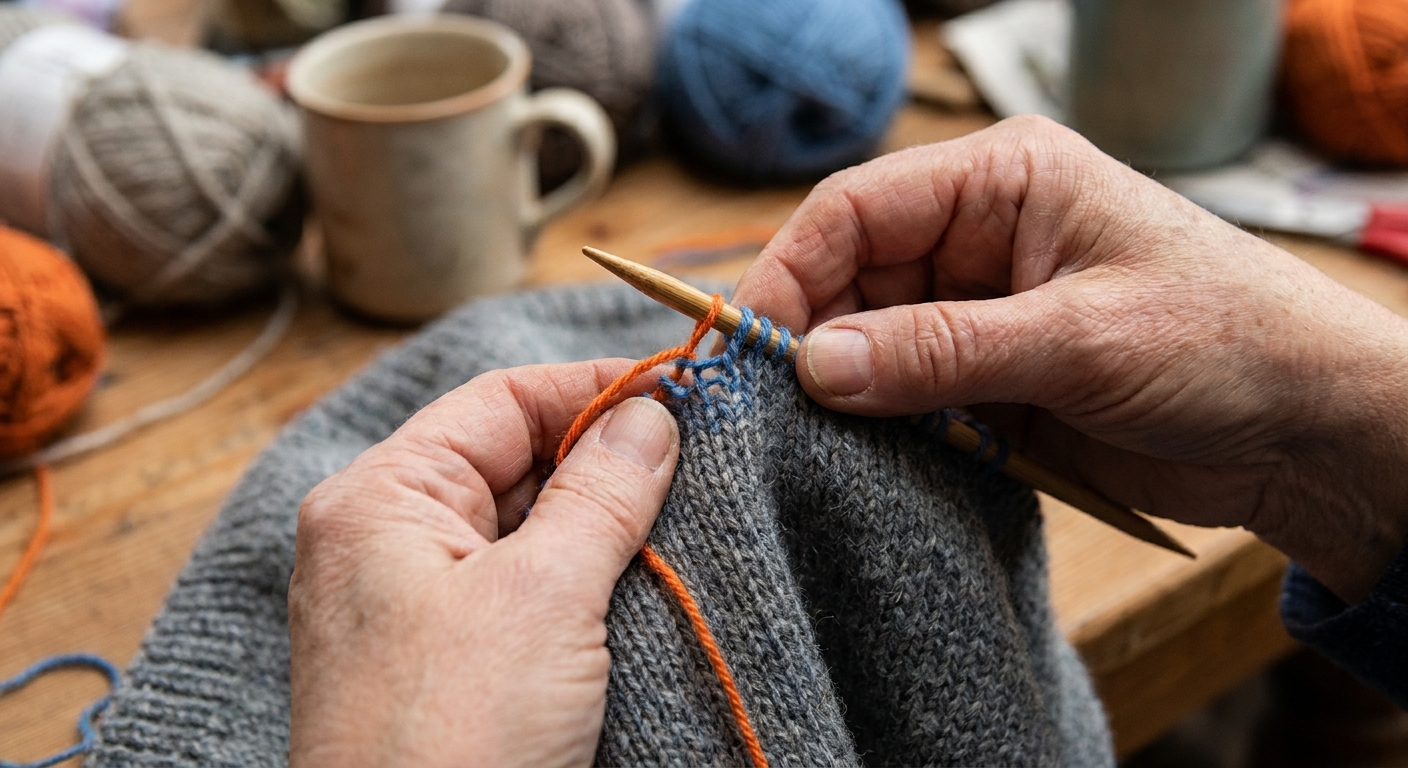
Orientation note: When those stitches are freed, they may sit “backwards” compared to stitches you normally knit. That is okay. If they look mounted backwards and you want to avoid a twisted first row, either remount them so the leading leg is in front, or knit the first row through the back loop for stitches that are reversed.
Keeping your stitch count steady
The most common provisional cast-on wobble is losing or gaining a stitch during the unzip. Here is how to keep the count tidy.
Use a lifeline approach
Before you unzip, run a smooth scrap yarn or a spare circular needle through the row of stitches you will be freeing. If something slips, it cannot run far.
Keep the bump rhythm
When you pick up from the chain bumps, each bump you pick up equals one stitch you will get back later. If you accidentally skipped a bump at the beginning, you will feel it at the end.
Count as you go
Unzip 10 stitches, count 10 stitches on your needle. Repeat. This is slow, yes. It is also wonderfully calm.
Waste yarn that releases cleanly
Provisional cast-ons are happiest when the waste yarn slides away without snagging.
- Best: smooth cotton, smooth acrylic, or a tightly plied, non-hairy wool in a lighter weight.
- Usually fine: standard sock yarn scraps, smooth worsted scraps, mercerized cotton.
- Often frustrating: mohair, brushed alpaca, novelty eyelash yarn, single-ply roving styles.
- Match the weight: waste yarn slightly thinner than your working yarn is often ideal, because it unzips easily and does not distort the first row.
Color tip: High contrast is not just pretty. It helps you see which strand is waste yarn and which strand is a real stitch you must protect.
Common problems and fixes
The waste yarn will not unzip
- Check the end: try the other tail.
- Find the chain path: use a tapestry needle tip to tease out the next waste-yarn loop, then pull.
- Too sticky: if the waste yarn is fuzzy and grabbing, go stitch by stitch with a needle tip rather than pulling hard.
I dropped a live stitch
- Stop unzipping.
- Pick the stitch up immediately with a crochet hook or needle tip.
- Check the neighboring stitches to be sure you did not split a strand.
The live stitches look twisted
That can happen depending on how you picked up from the chain. You can either remount the stitches so they all face the same way, or knit the first row by working into the correct leg (often that means knitting through the back loop for stitches that are mounted backwards). What matters is consistency.
Quick checklist
- Waste yarn is smooth and contrast-colored.
- Chain is longer than needed.
- Chain is not twisted or kinked.
- You picked up from the back bumps.
- Stitch count matches the pattern.
- You left tails long enough to identify the unzip end later.
FAQ
Can I do a provisional cast-on without a crochet hook?
Yes. Some knitters use a waste-yarn knitted cast-on or a method that wraps waste yarn around the needle and then knits into it. A crochet chain is simply the most reliable “unzips cleanly” option for many projects.
Do I have to remove the provisional cast-on right away?
No. You can leave it in place until the exact moment your pattern needs the live stitches. Some projects keep the waste yarn edge for quite a while.
What do I do with the live stitches once they are free?
It depends on your goal. You might knit a hem, add a border, or graft. The key is that you now have a row of stitches that behave just like stitches on a needle, because they are.