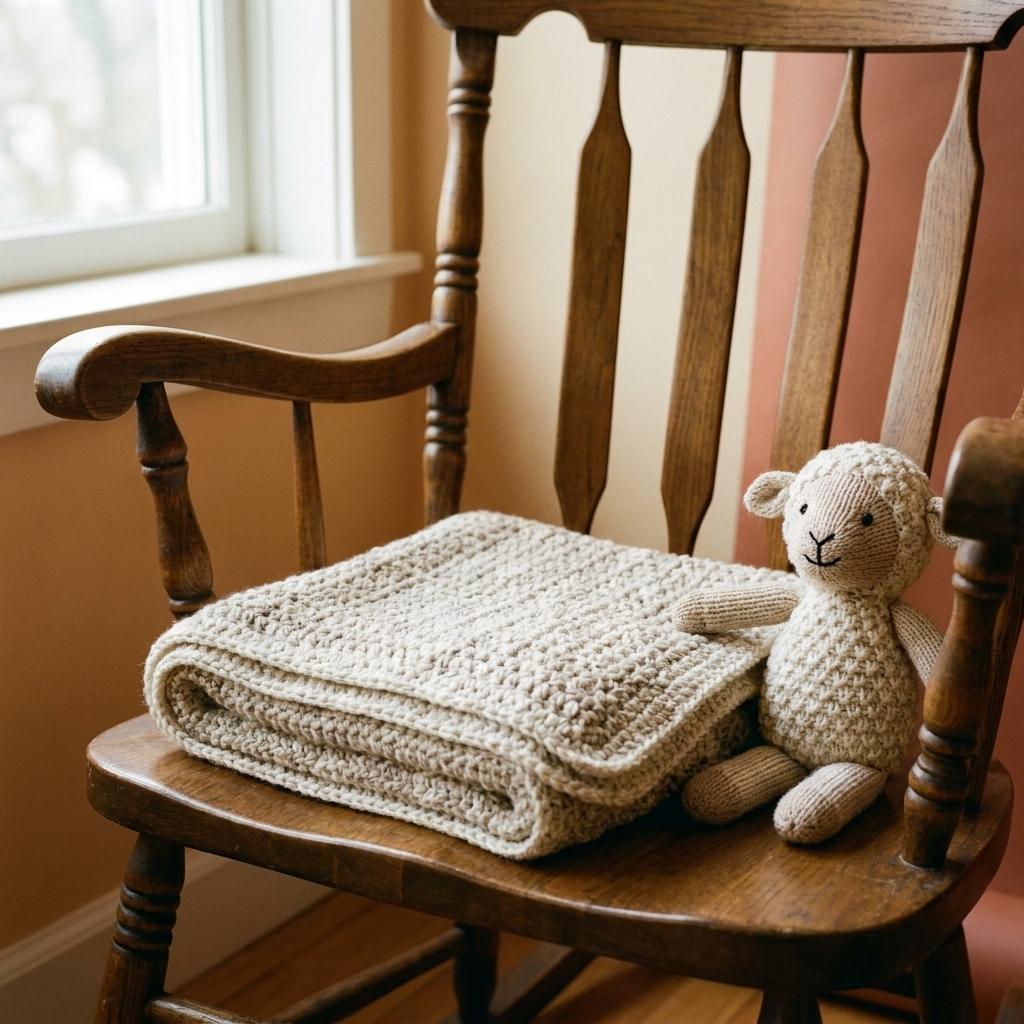
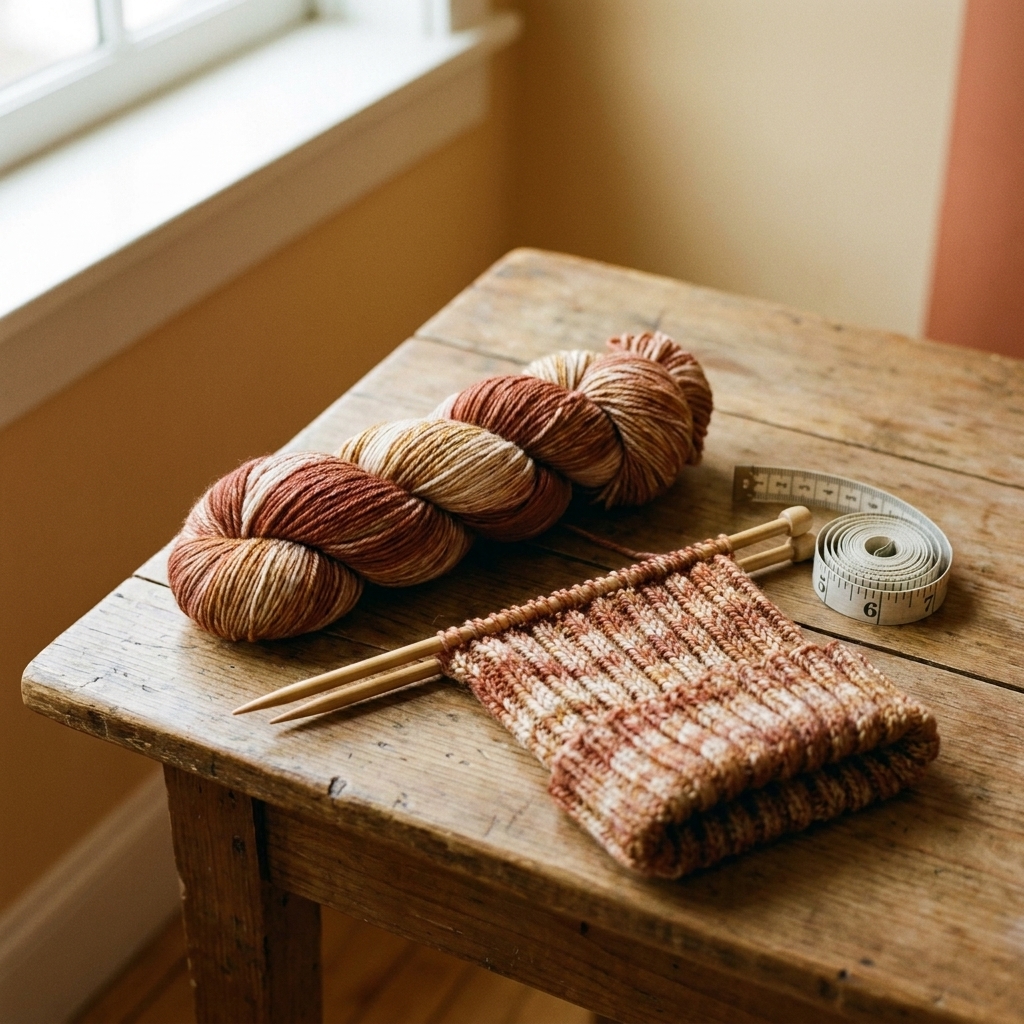
If you have ever wanted that squishy, modern chunky blanket look without committing to a month-long project, this is your sign. With jumbo yarn, big needles, and a simple stitch pattern, you can absolutely knit a cozy blanket in a weekend. No complicated charts. No fancy shaping. Just rhythmic, comforting stitches and a seriously satisfying end result.
I am going to walk you through the whole process like I am sitting next to you on the couch. Tea optional. Pep talks included.
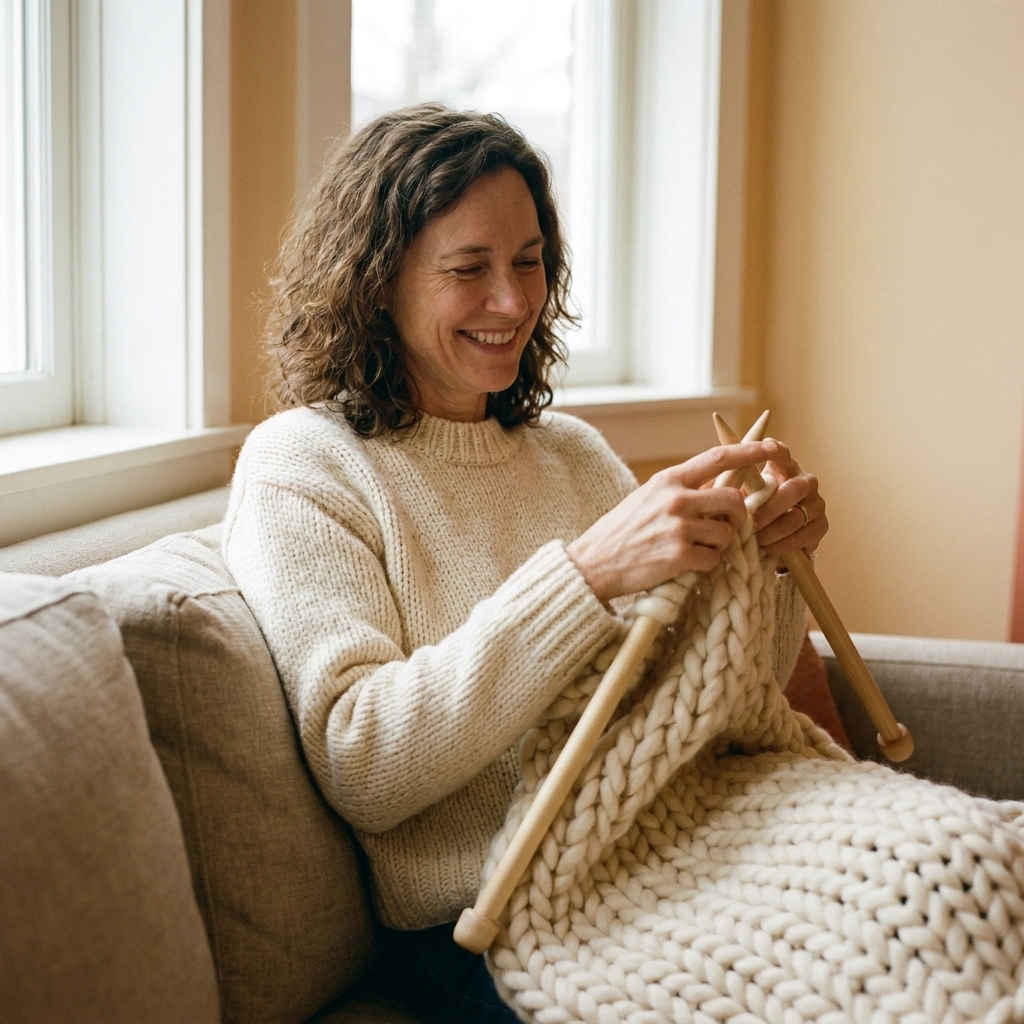
What you will make
This guide uses a simple garter stitch fabric (knit every row). It is beginner-friendly, lays flat without curling, and looks gorgeous in super bulky yarn. If you can knit, you can make this blanket.
- Skill level: Confident beginner
- Techniques: Cast on, knit stitch, bind off, weave in ends
- Time: 6 to 18 hours, depending on size and pace
Supplies (and how to choose the right ones)
Yarn: super bulky or jumbo
For a true chunky look that works up fast, aim for super bulky (#6) or jumbo (#7) yarn. The label matters, but so does the feel in your hands. You want something soft and springy, not scratchy or overly stiff.
- Best for beginners: Plied super bulky yarn (multiple strands twisted together). It is less likely to shed or split.
- Also popular: Tube yarn (a knitted tube with stuffing). It makes very plush blankets and is often less prone to shedding than roving, but some tube and chenille-style yarns can worm or shed depending on construction, so give it a good squeeze and tug test in the store.
- Use caution: Single-ply roving style yarn. It is dreamy-soft, but it can pill and shed with heavy use. If the blanket is for a sofa that gets daily snuggles (or pets), choose something sturdier.
How much yarn you need
Yarn math gets weird fast with chunky yarn because #6 and #7 cover a huge range. One super bulky yarn might be 108 yards per 6 oz. skein, another might be 220 yards per skein. Your needle size and how loosely you knit also matter.
Instead of guessing by yards alone, use a combo of total weight, approximate yardage, and skein counts, then sanity-check it with a quick swatch.
Helpful gauge anchors (recommended drape range): These are “cozy blanket” targets, not the full universe of possible gauges.
- #6 super bulky: about 1.25 to 1.75 stitches per inch
- #7 jumbo: about 0.9 to 1.2 stitches per inch
Starting-point yarn estimates by size: These assume garter stitch and a flexible fabric. The top ends below are for a very dense gauge, very thick jumbo yarn, or a “minimal drape” look (pretty, but it eats yarn).
- Throw (about 45 x 60 inches): roughly 1,200 to 1,900 g total (about 42 to 67 oz.).
- Big couch (about 50 x 70 inches): roughly 1,450 to 2,250 g (about 51 to 79 oz.).
- Twin (about 60 x 80 inches): roughly 1,900 to 3,000 g (about 67 to 106 oz.).
Reality check with common yarn examples (approximate):
- Bernat Blanket (super bulky #6, 300 g, 220 yards): many throws land around 4 to 7 skeins (1,200 to 2,100 g). This yarn is plush and can knit up heavier than some plied #6 yarns, especially if you use a smaller needle for a denser fabric.
- Lion Brand Wool-Ease Thick & Quick (super bulky #6, 170 g, 106 yards): throws often take 8 to 12 skeins (1,360 to 2,040 g).
- Jumbo tube yarn (#7 varies widely): throws commonly take around 1,200 to 2,000 g total. Check your ball band and do the mini swatch below to fine-tune.
My honest advice: buy one extra skein if you can. Dye lots can vary, and nothing ruins the vibe like yarn math panic at 9 p.m. on Sunday.
Needles: go bigger than you think
Needle sizes for chunky blankets vary a lot by yarn type and the drape you want. As a starting point:
- #6 super bulky: commonly US 13 to US 19 (9 to 15 mm)
- #7 jumbo: commonly US 19 to US 35 (15 to 19 mm), depending on yarn and drape
Check the yarn label first, then consider going one needle size up if you knit tightly or if your fabric feels stiff.
- Great all-around choice: 32-inch circular needles (even if you knit flat)
- Why circulars: the cable holds the weight of the blanket so your wrists and shoulders do not have to
Helpful extras
- Tapestry needle (big eye for thick yarn)
- Scissors
- Measuring tape
- 2 stitch markers (optional, but helpful for counting rows)
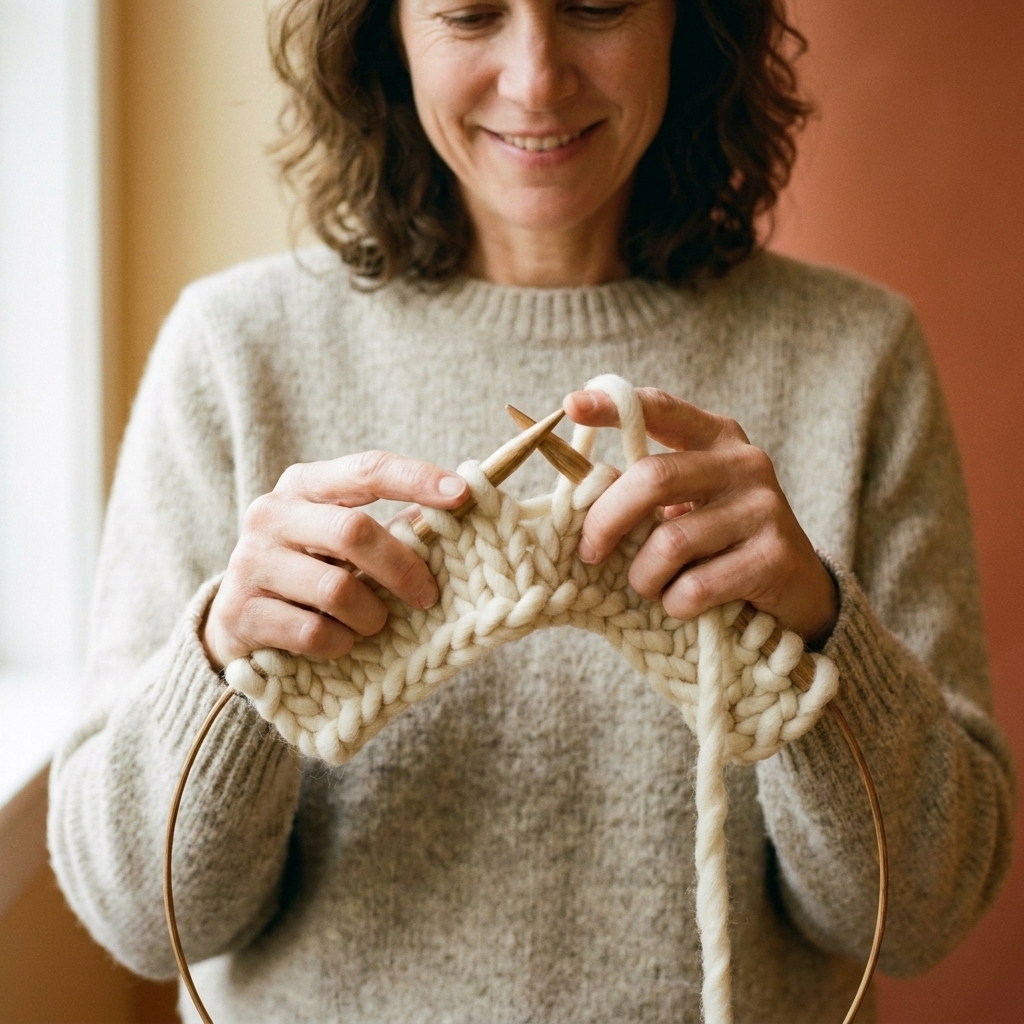
Pick your size and do the quick math
Chunky blankets are wonderfully forgiving, so we are keeping the sizing math simple.
Step 1: Knit a tiny swatch (yes, even for a weekend project)
I know, I know. Swatching feels like eating vegetables. But with jumbo yarn, a 10-minute swatch can save you hours and help you avoid ending up with a blanket that is more placemat than cozy throw.
Swatch: Cast on about 10 to 14 stitches and knit 8 to 10 rows in garter stitch. Lay it flat (do not stretch it), then measure how many stitches you have across 4 inches.
One more helpful note: garter stitch can relax and grow a little with use, especially in softer fibers. Some jumbo chenille and tube yarns can also grow under their own weight, especially lengthwise. Measure your blanket laid flat on a bed or the floor, not hanging off your lap, and check width and length as you go.
Step 2: Calculate your cast-on
Cast-on stitches = (stitches per inch) x (desired width in inches)
Example: If you get 2 stitches per inch and want a 50-inch wide blanket, cast on about 100 stitches.
Quick gauge examples (full common range)
Every yarn is different, but these are common garter stitch ranges with chunky materials. If your swatch lands outside my recommended “cozy drape” anchors above, it is still workable. It just tells you whether your fabric will be more airy or more dense.
- #6 super bulky: about 1.25 to 2.25 stitches per inch (often on US 13 to US 19)
- #7 jumbo: about 0.75 to 1.5 stitches per inch (often on US 19 to US 35)
No-swatch workaround: If you are truly determined to wing it, a common starting range for a throw-width blanket in jumbo yarn is 45 to 70 stitches depending on yarn thickness and needle size. Knit 6 rows, then measure your width laid flat. If it is not right, rip back now while it is easy. (Do not use the 45 to 70 stitch range for every project width. Always measure.)
The weekend chunky blanket pattern
This is the simple recipe you will follow from start to finish.
Abbreviations
- CO = cast on
- K = knit
Instructions
CO the number of stitches you calculated.
Beginner-friendly cast-on: long-tail cast-on gives a nice edge. If you prefer knitted cast-on, that works too and is very forgiving in thick yarn.
Row 1: K all stitches.
Repeat: K all stitches every row (this is garter stitch) until your blanket measures your desired length.
Bind off: Bind off loosely in knit.
Easy fix for tight bind-offs: switch to a needle one size larger for the bind-off row and keep your hands intentionally relaxed.
If you want a named option: Jeny’s Surprisingly Stretchy Bind Off can be a great choice if you tend to bind off tightly, even in jumbo yarn.
Finish: Weave in ends securely.
How long should you knit?
- Throw: 60 to 70 inches long
- Long couch nap blanket: 70 to 80 inches long
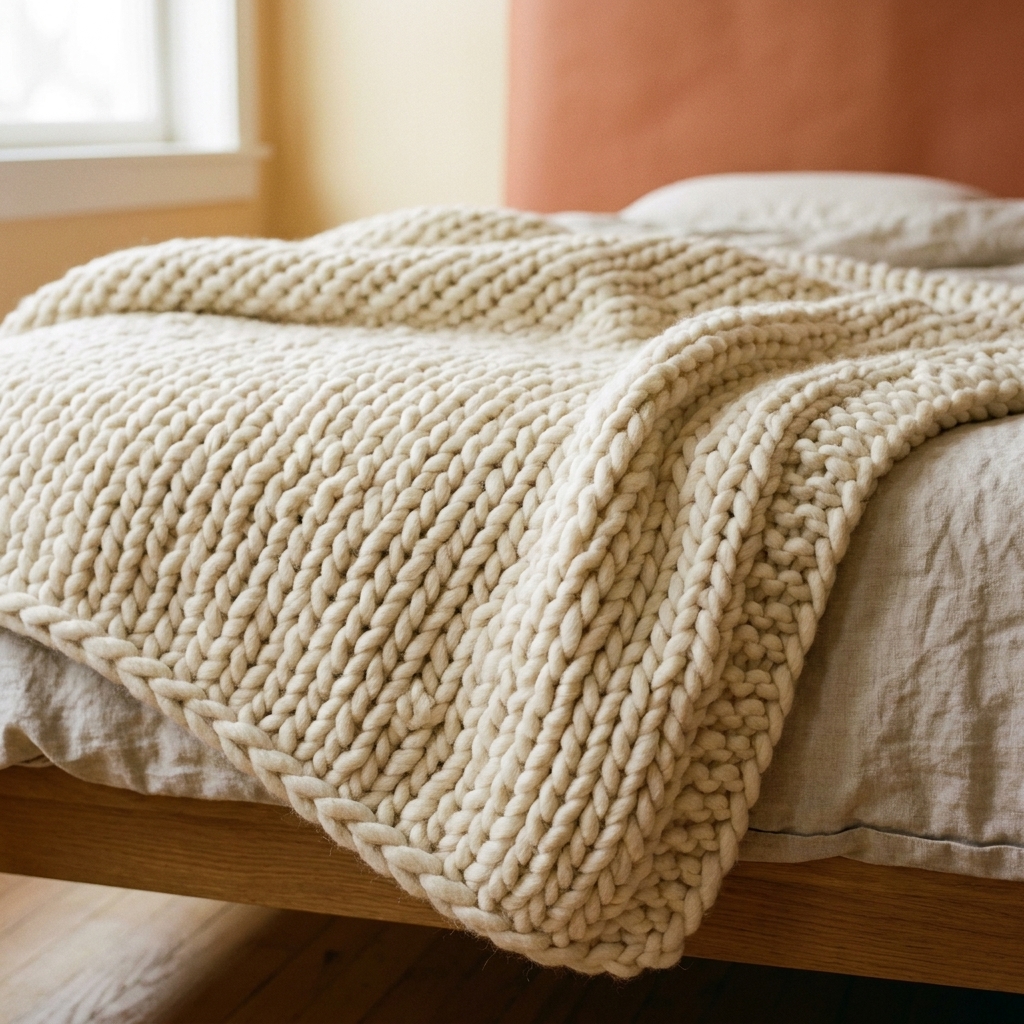
Make it look polished
Keep your tension even
With jumbo yarn, tiny tension changes look bigger. If your stitches are tight and your hands feel cranky, go up a needle size or consciously loosen your grip. I remind myself to relax my shoulders every few rows, like a very un-serious yoga class.
Edge stitches that behave
If your edges look a little wiggly, try this simple habit:
- First stitch: knit it normally, but do not yank the yarn tight after it
- Last stitch: knit it and give the working yarn a gentle snug, not a tug
This small change often makes edges look cleaner without adding any extra fancy steps.
How to knit faster (without feeling frantic)
- Use circular needles so the blanket weight sits on the cable
- Set a timer for 20 to 30 minutes and take a wrist break
- Count rows in sets of 10 using a stitch marker or a simple note on your phone
- If you are a tight knitter, let the needle tips do the work. Big yarn does not need to be wrestled into place
Finishing
Bind off loosely
A too-tight bind off is one of the most common ways a chunky blanket ends up with a sad, puckered edge. Work your bind off with a relaxed hand. If you know you bind off tightly, use a needle one size larger for the bind-off row and avoid tightening each new bind off stitch.
Weave in ends that stay put
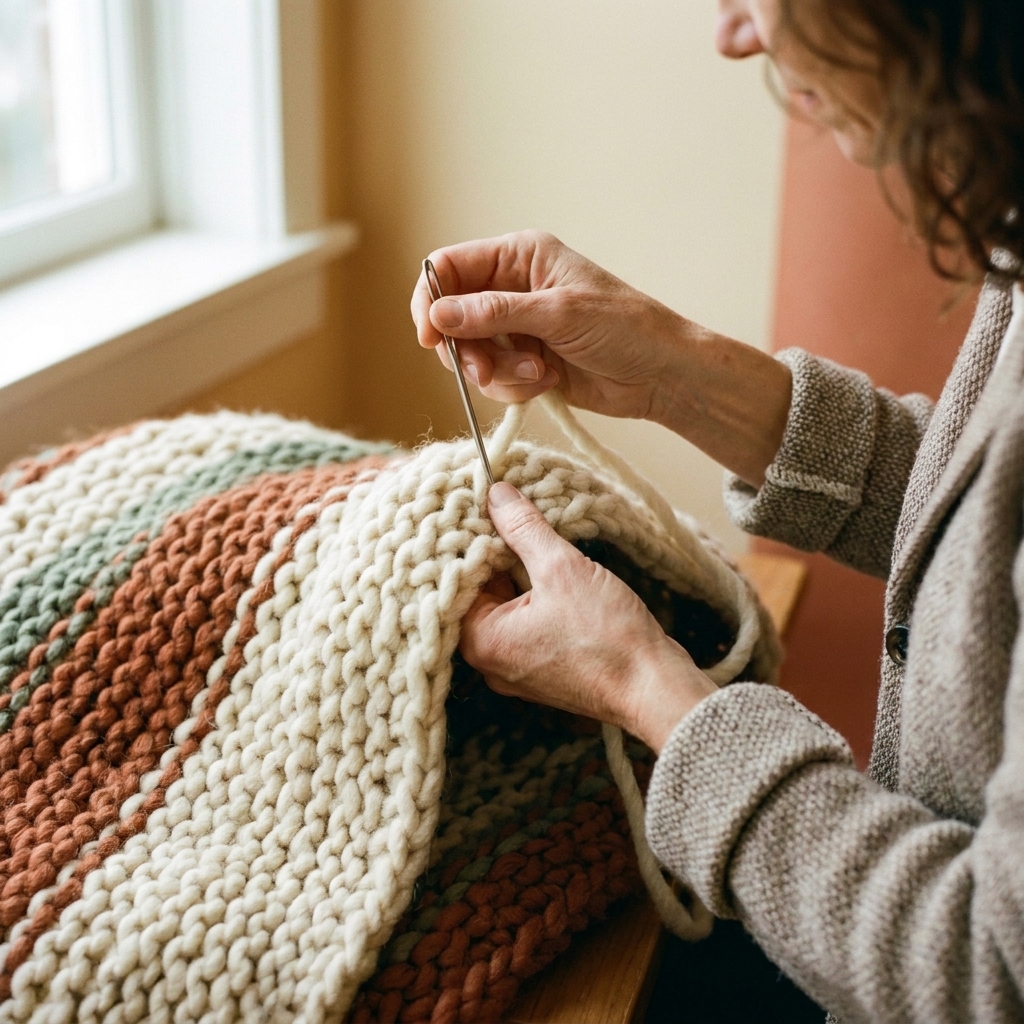
Chunky yarn can worm its way out if ends are not secured well. Thread your tapestry needle and weave the tail through the garter ridges in at least three directions:
- Go horizontally through a few bumps
- Go back the other direction
- Then turn and go vertically for a short distance
Gently tug the fabric to settle the yarn, then trim. Avoid trimming super close. Leave a short tail tucked inside the thickness.
Optional upgrades
Add a seed stitch edge
If you want extra structure, add a seed stitch edge along both sides by working the first and last 3 stitches in seed stitch. Because it is an odd number of stitches, the edge stays in seed stitch with the same sequence on every row:
- Every row: K1, P1, K1, knit across the middle stitches, then K1, P1, K1
This is optional. Garter stitch edges are already friendly and flat.
Make it striped
Switch colors every 10 to 20 rows. With jumbo yarn, fewer stripes look more modern. For a sturdy join, avoid relying on knots alone. The simplest approach is to leave a 6 to 8-inch tail and weave both ends in securely after, or weave the old and new yarn in as you go. For feltable wool, a spit splice can be wonderfully smooth.
Try crochet, too
If knitting feels slow or your hands prefer a hook, you can crochet a chunky blanket with jumbo yarn and a large hook (often 12 to 20 mm, or whatever gives you a flexible fabric). Check the label, then aim for drape, not a board-stiff fabric. A simple single crochet or half double crochet makes a dense, cozy blanket. The yarn and finishing tips in this guide still apply.
Troubleshooting
My blanket is getting wider or narrower
- Count your stitches every few rows. It is easy to accidentally add or drop one at the edges.
- If you keep losing edge stitches, place a stitch marker in the first and last stitch of the row to help you see them clearly.
I ran out of yarn
- If you have the same yarn in a different dye lot, alternate rows between old and new for a few rows to blend the transition.
- If you cannot match it, lean into it and add a contrast stripe as a design choice. Honestly, it works.
The fabric feels too stiff
- Go up a needle size
- Try a softer, more flexible yarn (tube yarn and plied acrylic-wool blends are often more drapey than some cotton jumbo yarns)
My hands hurt
Please listen to your body. Jumbo knitting is joyful, but it can be intense on wrists and shoulders.
- Use circular needles
- Knit in shorter sessions
- Support your arms with pillows
- Stretch your fingers and wrists gently during breaks
Care tips
Check your yarn label first, always. Then use these general guidelines:
- Machine-washable yarn: Wash on gentle, cool water. Lay flat to dry if possible to protect the texture.
- Hand-wash only yarn: Soak in cool water with a gentle wash, press out water in a towel, then lay flat.
- Avoid: Hot water and high heat drying for most chunky yarns. It can lead to felting, stretching, or a blanket that just feels a bit off.
Weekend plan
Saturday
- Morning: swatch, choose needle size, cast on
- Midday: knit the first half while binge-watching something cozy
- Evening: measure length laid flat, keep going until you hit your stride
Sunday
- Morning: finish length
- Midday: bind off and weave in ends
- Afternoon: quality control nap under your new blanket (highly recommended)
FAQ
Can I knit a chunky blanket with two strands held together?
Yes. Holding two strands of bulky together can mimic super bulky or jumbo weight. Make a small swatch to see if you like the thickness, then adjust needle size so the fabric is not stiff.
Do I need arm knitting for a chunky blanket?
Nope. Arm knitting is a fun option, but big circular needles are kinder on your shoulders and often make a more consistent fabric.
What is the easiest stitch for a chunky blanket?
Garter stitch is my top pick for beginners because it is all knit stitches, it lies flat, and it looks beautifully textured in thick yarn.
Why does my chunky yarn look fuzzy or pill quickly?
Some yarn types, especially roving-style yarn, are more prone to pilling and shedding. If durability matters, choose a plied or tube-style jumbo yarn and handle it gently during washing.
Wrap-up
A chunky blanket is one of my favorite big results, beginner steps projects. It is fast, calming, and incredibly wearable in the slow-fashion, cozy-home sense of the word. If you make one, take a moment to admire your work. Then promptly forgive yourself for wanting to buy more yarn for the next one. I get it.
If you are unsure about yarn quantity or cast-on numbers, leave a comment with your yarn brand, needle size, and the width you want, and I will help you do the quick math.