One more row. Then just one more.
But before we knit any rows at all, we need an edge that can stretch over toes and heels and still bounce back into a tidy cuff. That is where the German twisted cast-on shines. You might also hear it called the Old Norwegian cast-on. It looks like a long-tail cast-on, but it has a small twist that makes it noticeably stretchier and sturdier.
What is the German twisted cast-on?
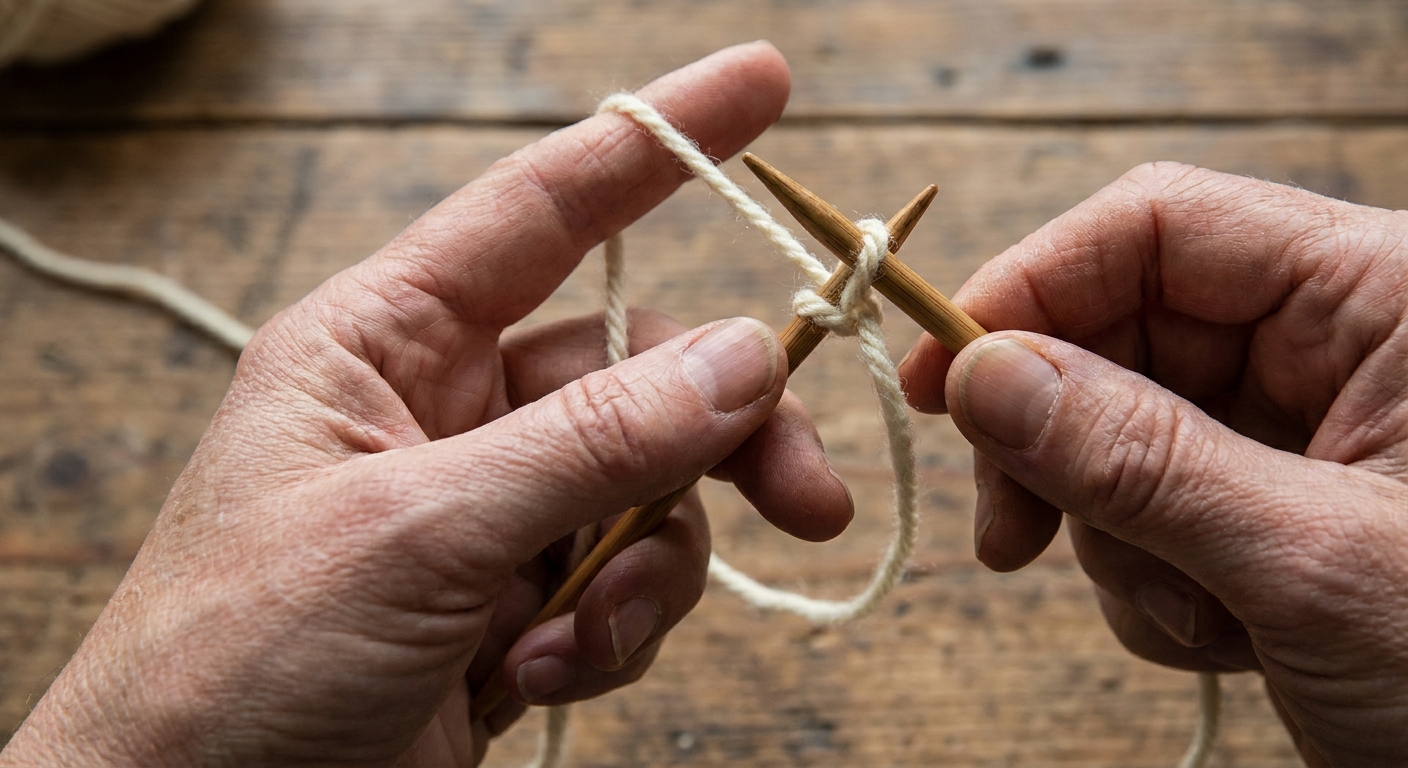
The German twisted cast-on is a variation of the long-tail cast-on. You still measure a yarn tail, you still hold the yarn over thumb and index finger, and you still scoop the needle through loops.
The difference is that the thumb loop gets an extra twist before the needle comes through. That extra wrap adds elasticity, which is why this cast-on is a favorite for:
- Sock cuffs (top-down socks especially)
- Hat brims
- Mittens and gloves
- Sweater hems that need a little give
- Any ribbing edge that feels too tight with a standard long-tail
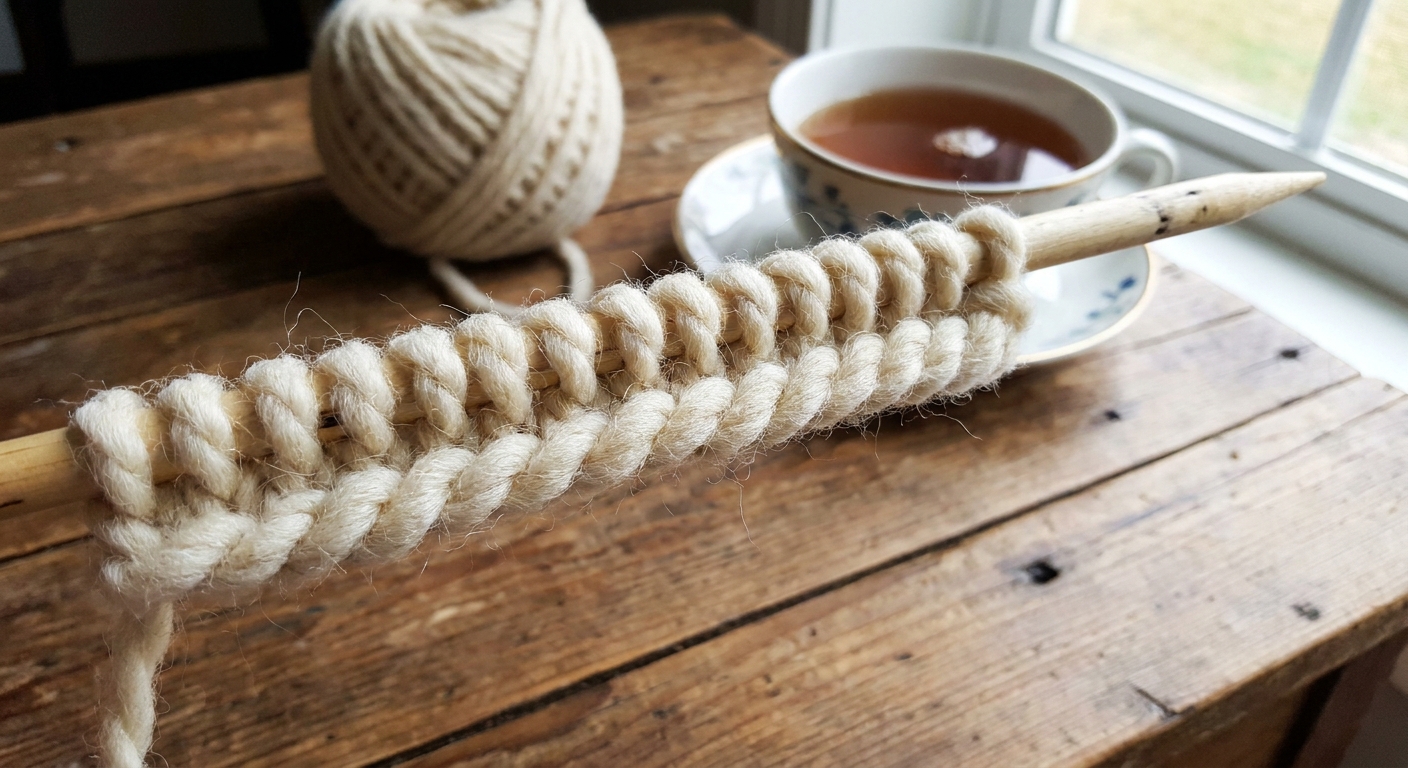
It creates a neat, rope-like cast-on edge that stretches comfortably without looking floppy.
What you need before you start
Yarn tail length (the long-tail question)
This is still a long-tail style cast-on, so you will need a tail long enough to make all your stitches.
- As a rough starting point, begin with a tail about 3 to 4 times the width of the edge you are casting on. Yarn weight, needle size, and how tightly you cast on all change the math, so think of this as a starting estimate, not a promise.
- If you are casting on for socks, it is often safer to be generous. Running out of tail at stitch 58 is a tiny tragedy.
If you want a more exact method, wrap the yarn around the needle about 10 times, measure that length, then multiply for your stitch count. Add extra for a tail to weave in.
Needles
Use the needle size your pattern calls for. If you tend to cast on tightly, you can use a needle one size larger for the cast-on only, then switch back for round one.
How to work the German twisted cast-on
These steps assume you are right-handed and casting stitches onto a single needle. If you knit left-handed, you can mirror the hand positions.
1) Make a slip knot (or start knotless if you prefer)
Place a slip knot on your needle and snug it gently. Many knitters count the slip knot as the first stitch. If your pattern is particular about stitch counts, follow the pattern’s preference.
If you prefer not to count it, cast on one extra stitch, then drop the slip knot when you work the first row or round (or replace it with a standard stitch at the join).
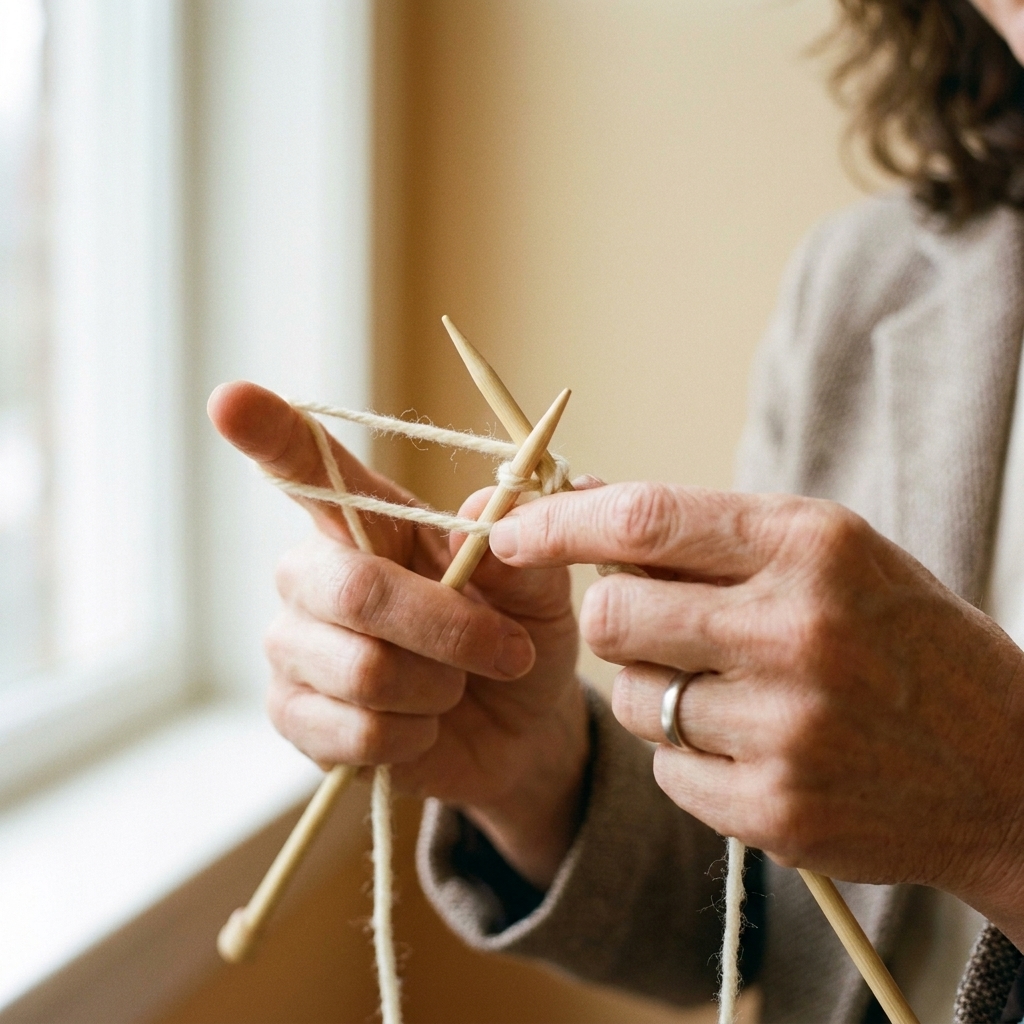
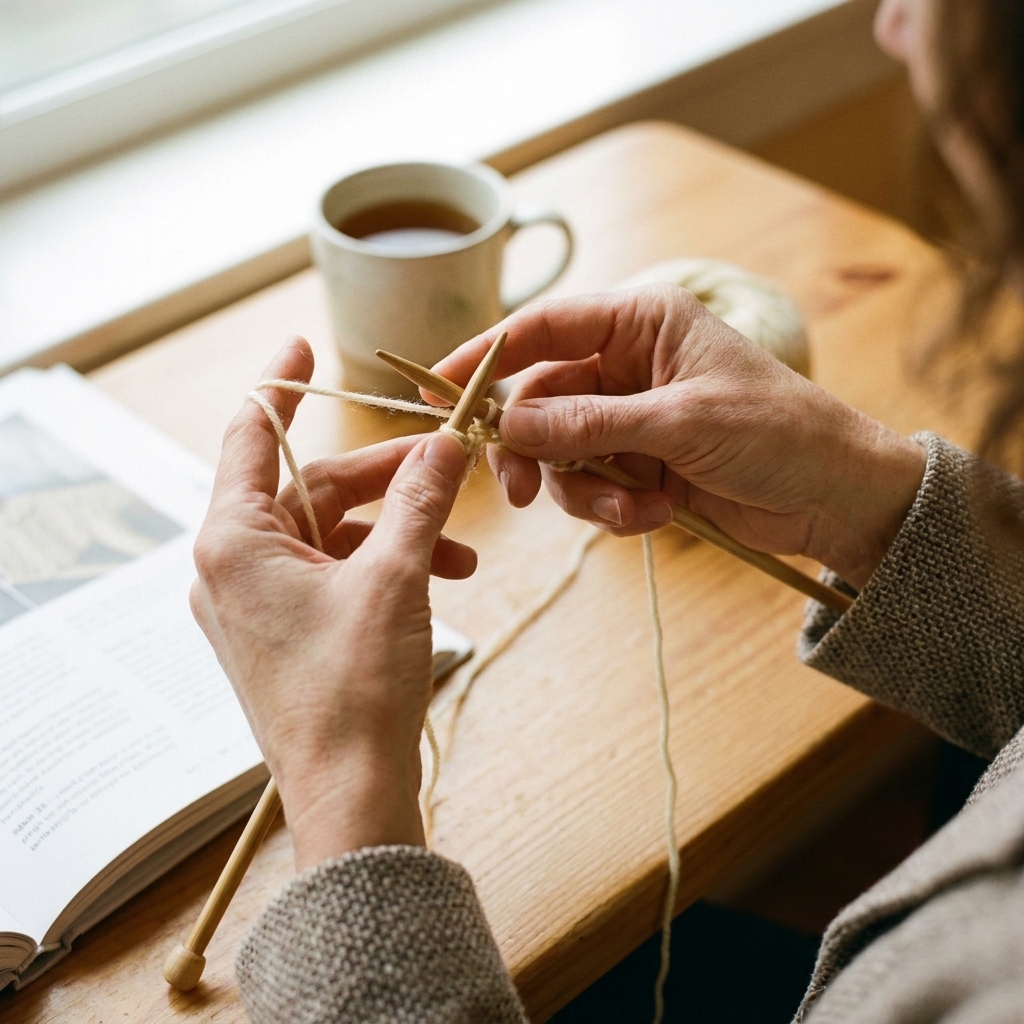
2) Hold the yarn in the long-tail position
Hold the needle in your right hand. With your left hand:
- Drape the tail over your thumb.
- Drape the working yarn (attached to the ball) over your index finger.
- Let both strands run over your palm and hold them with your other fingers.
When you look at your left hand, you should see a strand running down the front of your thumb and a strand running down the front of your index finger, with a little “V” of yarn between them.
3) Go under the thumb strand from front to back
Bring the needle tip down and under the strand on your thumb (from the front of your thumb toward the back). This is similar to long-tail so far.
4) Make the twist: go under the second thumb strand too
Here is the German twisted part.
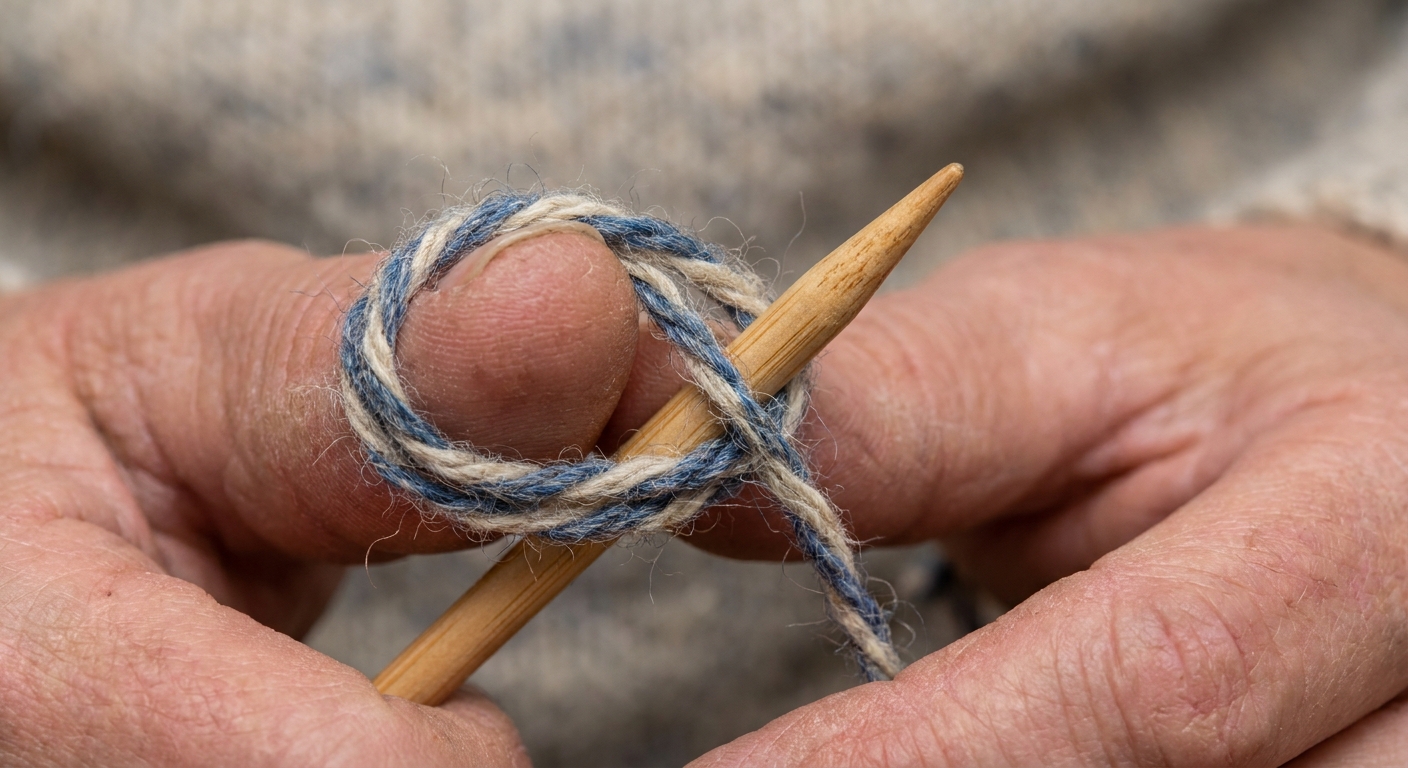
Your thumb is holding a loop with two “legs” of yarn: one strand on the front of your thumb, and one strand on the back.
After you go under the front thumb strand, keep moving the needle tip so it also goes under the back thumb strand. You are scooping up both thumb strands before you go to the index finger. That creates the twist and adds stretch.
If it helps, think: under, under on the thumb.
Tip: Keep the thumb loop relaxed while you do the under-under. If you clamp down on it, the cast-on can end up tighter than you wanted.
5) Catch the index-finger strand
Now swing the needle tip up to your index finger and catch the working yarn strand (the one on your index finger), just like you would in long-tail.
6) Bring that strand back through the thumb loop
Pull the strand you caught on your index finger back down through the thumb loop on the needle. You should see the new stitch forming on the needle.
7) Drop the thumb loop and snug the stitch
Let the yarn slip off your thumb, then gently tighten the stitch by pulling both strands until it sits neatly against the previous stitch.
Snug, not strangled. You want the stitches to touch, but you still want the edge to stretch.
8) Repeat
Repeat steps 3 through 7 until you have the number of stitches you need.
How to read your stitches
A cast-on edge is like a tiny border fence. If you can read it, you can spot problems early, before you knit three rounds and wonder why it feels odd.
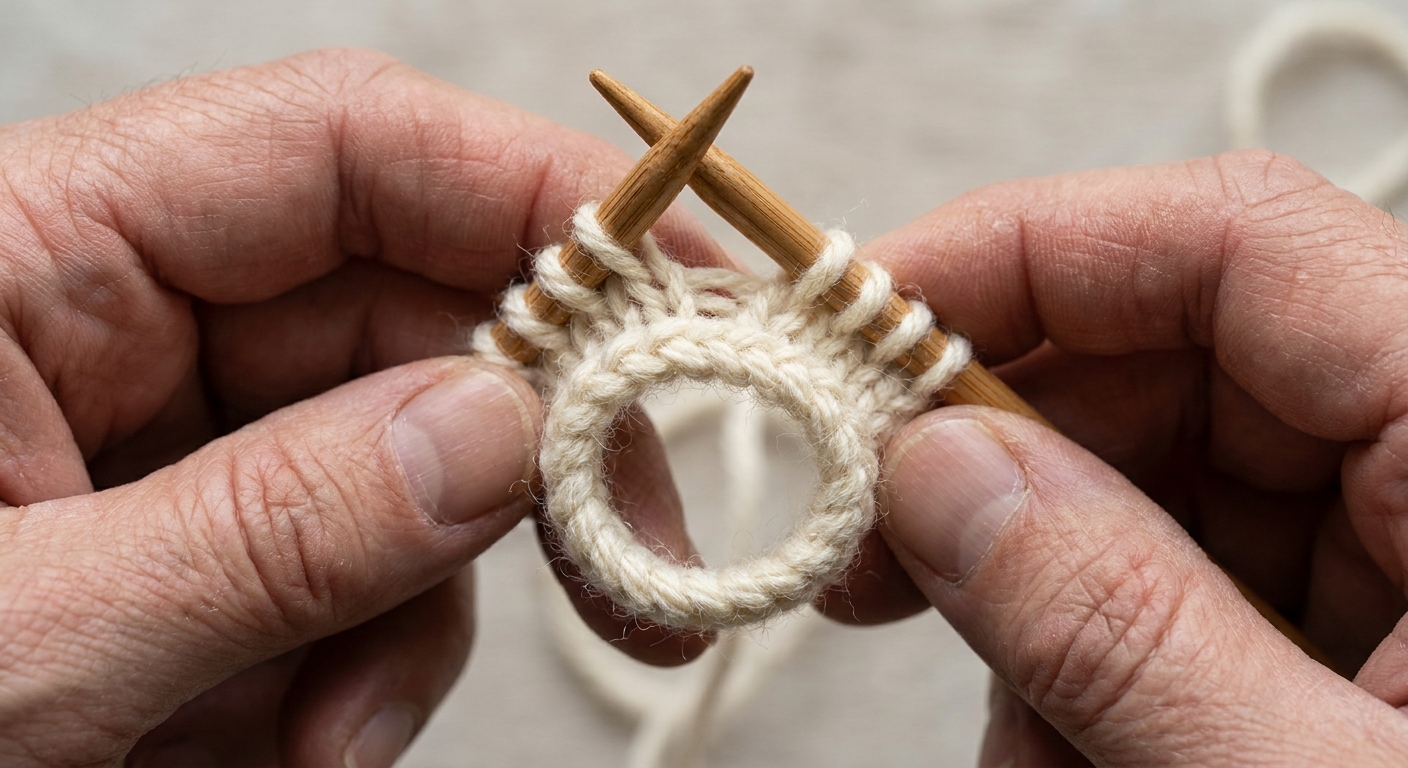
What you should see
- Neat V’s sitting on top of the needle, like any cast-on.
- A rounded, rope-like edge along the bottom, slightly fuller than a standard long-tail.
- When you gently stretch the cast-on, it should open up smoothly without looking like it is fighting you.
Common reading clues
- If the bottom edge looks like it has a little extra wrap or a subtle braided look, that is the twist doing its job.
- If your stitches on the needle look uneven in size, it usually means the snugging step is inconsistent. Slow down and snug each new stitch the same way.
German twisted vs long-tail
They are cousins. If you can do one, you are very close to doing the other.
- Stretch: German twisted is typically stretchier, especially for cuffs and ribbing.
- Look: Both look clean, but German twisted often has a slightly rounder bottom edge.
- Speed: Standard long-tail is a bit faster. German twisted has an extra scoop on the thumb.
- Stability: German twisted tends to feel sturdy and resilient, which is lovely for socks that get pulled on and off.
If your long-tail cast-on tends to snap back and feel tight over the widest part of your foot or hand, German twisted is a strong upgrade.
Best uses
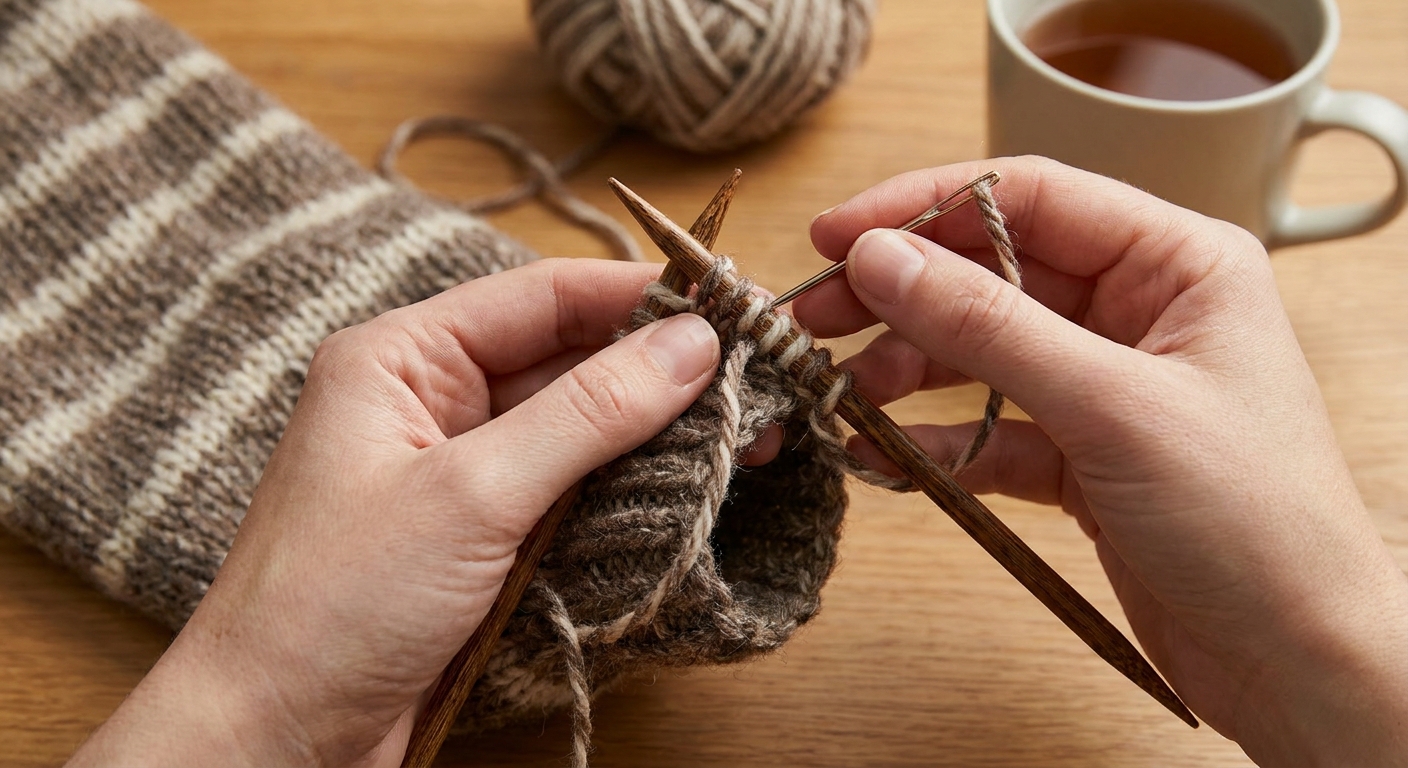
Top-down sock cuffs
For top-down socks, the cast-on must stretch over your heel when you pull the sock on. German twisted is a popular pick because it stretches without flaring out.
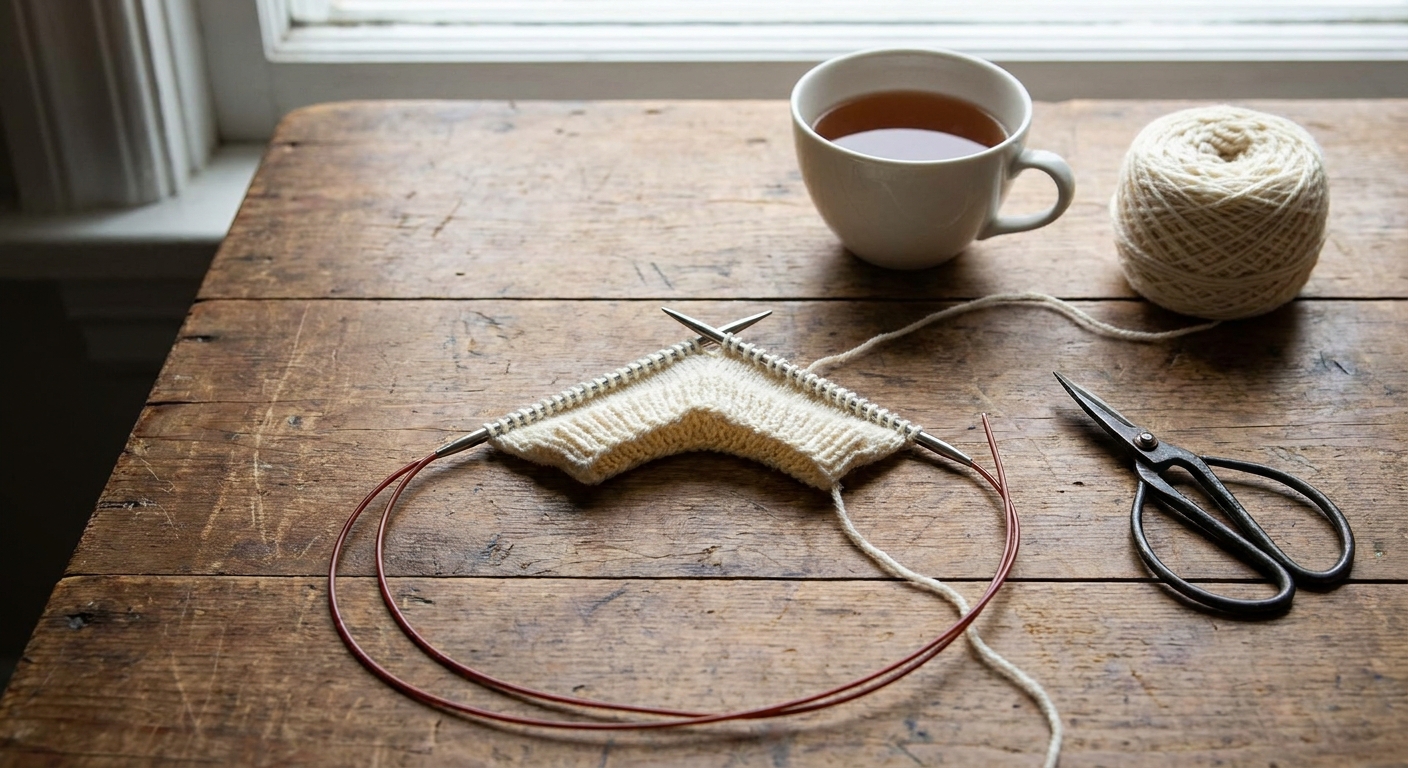
After you cast on, you can distribute stitches onto DPNs or arrange them for magic loop. Keep the rope-like edge oriented the same way all around the needle so your join looks tidy.
Bottom-up socks (toe-up) and other edges
If you are knitting toe-up socks, this cast-on is not the start, but you can use the same idea at other places like cuffs on afterthought heels, or for any separate piece that needs an elastic beginning.
Ribbing on hats and mitts
Ribbing wants to stretch. A too-tight cast-on can make a hat brim pinch or a mitten cuff feel like a rubber band. German twisted usually plays nicely with 1x1 and 2x2 rib.
Troubleshooting
My cast-on edge is still too tight
- Try casting on over two needles held together, then pull one out.
- Or cast on with a needle one size larger, then switch back.
- Make sure you are not yanking the tail hard when you snug each stitch.
- Relax your thumb loop during the under-under step. That is where tightness sneaks in.
My edge looks loose and wavy
- Snug each stitch until it sits close to its neighbor, without gaps.
- Check that you are holding the yarn with steady tension over your palm.
- If you cast on very loosely, you may not need the larger needle trick.
I keep twisting stitches when I join in the round
This cast-on edge is a little rounder, which can make the first join feel fiddly. Before you join:
- Lay the needle down and make sure all cast-on bumps are facing the same direction.
- After you distribute stitches on DPNs or set up magic loop, double-check again. It is easy to flip one needle segment while rearranging.
- Consider knitting the first round flat (back and forth) for one row, then joining in the round on the next round if your pattern allows.
I cannot tell which strand is the tail and which is the working yarn
The working yarn is the one attached to the ball. In the long-tail hold, it should run over your index finger. The tail should run over your thumb.
My first row looks a little messy
That first worked row can look slightly uneven with most long-tail family cast-ons. Knit another round or two (especially into ribbing), then take another look. It usually settles beautifully.
Quick checklist
- Tail over thumb, working yarn over index finger
- Needle goes under the front thumb strand, then under the back thumb strand
- Catch the index finger strand
- Pull it through the thumb loop
- Drop thumb loop and snug
If it helps, whisper the rhythm: under-under, grab, through, snug.
FAQ
Is German twisted cast-on the same as Old Norwegian?
They are often used interchangeably, and many knitters mean the same cast-on when they say either name. Some sources do teach slightly different needle paths under those labels, but the core idea is the same: the thumb loop gets an extra twist to add elasticity.
Do I knit the first row differently after this cast-on?
No special first row is required. Knit (or work your pattern) as written. If the first row feels tight, that is usually normal cast-on stiffness and will relax after a round or two, especially with ribbing.
Does it work for crochet?
This is a knitting cast-on for stitches on a needle. For crochet projects that need a stretchy start, you would use a crochet foundation chain alternative like foundation single crochet or foundation double crochet, depending on the stitch.
Can I use it for 1x1 rib cuffs?
Absolutely. It is a cozy match for ribbing because the edge stretches with the ribs instead of fighting them.